Contract vs No-Contract Internet?
The salesperson offers $20 off per month if you sign a two-year contract — or full price with no strings. Contracts trade flexibility for a lower rate, and the wrong choice costs either money or freedom. Here is how to decide based on how long you will actually stay and what the fine print hides.
TL;DR / Quick Fix
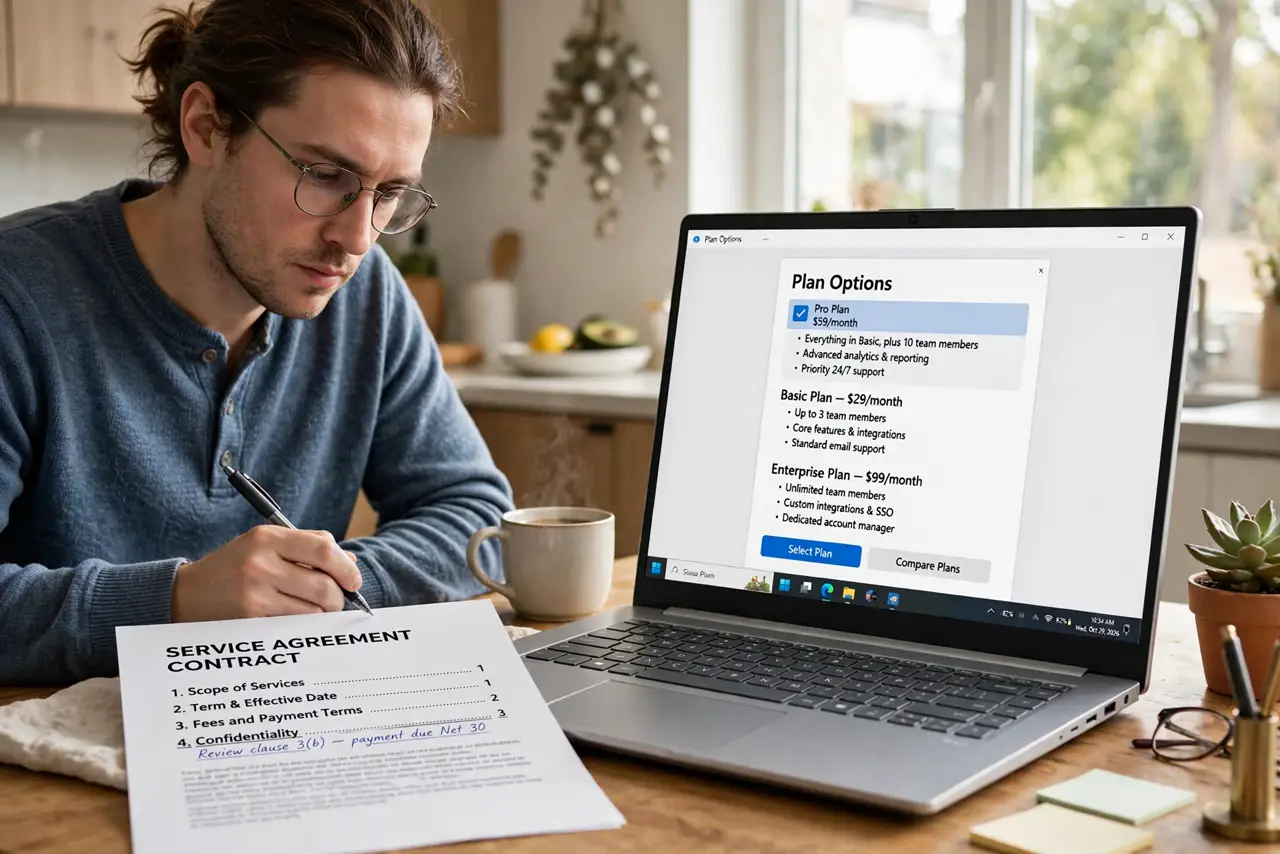
Quick fix: take the contract only if the monthly savings clearly beat the early termination fee and you will stay the full term. Month-to-month costs more but lets you switch when a better deal appears. Read the ETF amount before signing — it is the real price of the discount.
Follow these steps
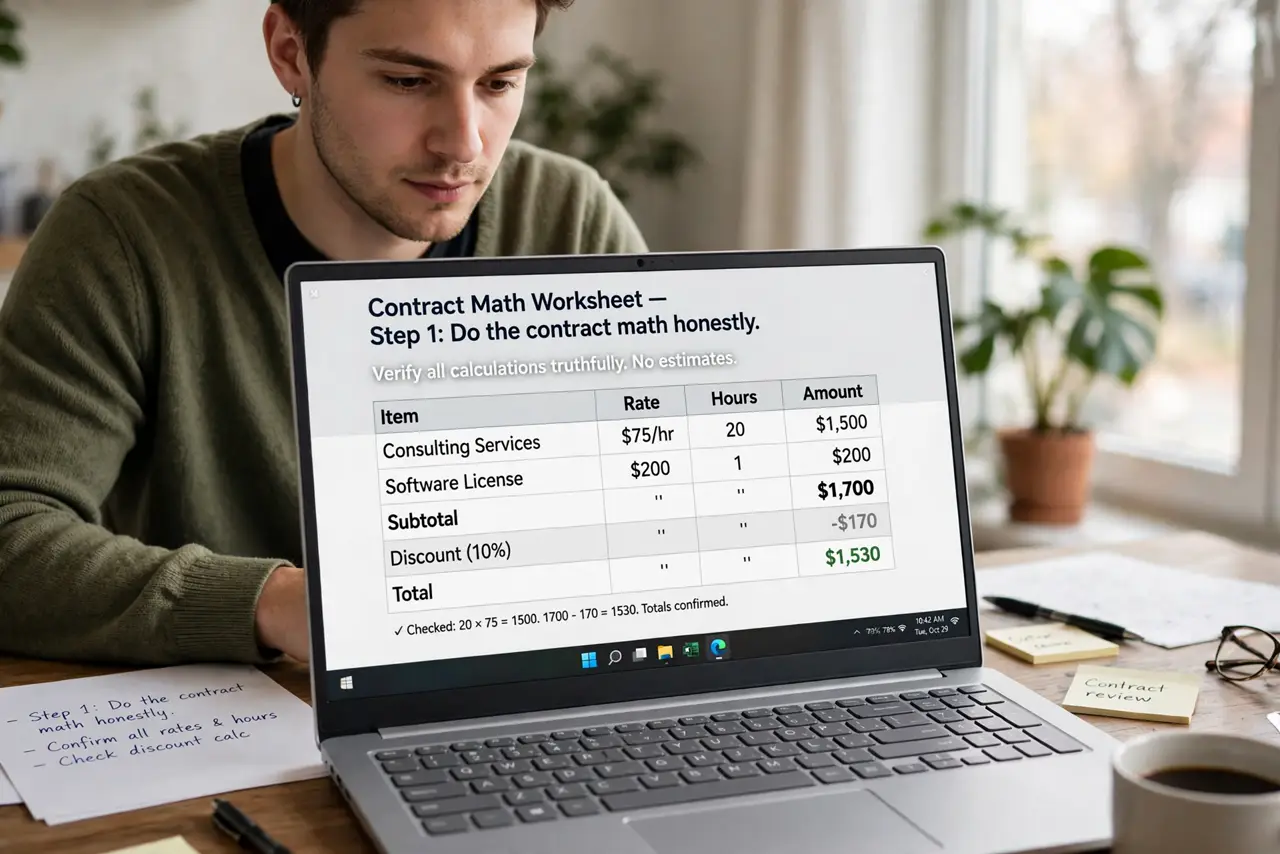
- Do the contract math honestly. Monthly savings times contract months, minus the early termination fee. If you might move or switch in year one, the 'savings' often evaporate.
- Read the early termination fee schedule. ETFs usually shrink over the contract term. Know the month-one number — that is your worst case — and how it declines.
- Check what the price becomes after the term. Many contracts roll into a higher month-to-month rate at expiry. Mark that date; the post-contract price is the number that actually matters long-term.
- Weigh your moving odds. Renters, job-changers, and anyone eyeing a move should think twice. Some contracts waive the ETF for moves outside the service area — verify, do not assume.
- Compare against no-contract promos. No-contract plans run their own 12-month promos. The gap between contract and no-contract pricing is often smaller than the sales pitch suggests.
- Negotiate the no-contract price too. Retention deals exist without contracts. A bill negotiation call can shrink the gap to nearly nothing.
What NOT to do
- Do not sign for the free gift. A $50 gift card is not worth a two-year lock-in with a $200 ETF.
- Do not assume the ETF is the only penalty. Some contracts also claw back 'free' installation or equipment discounts on early exit.
- Do not sign under sales pressure. The offer will still exist tomorrow — take the paperwork home and read it.
- Do not forget the contract's end date. Auto-renewals and rate jumps at expiry are where the real money leaks.
Frequently asked questions
Is no-contract internet always more expensive?
Usually slightly, month to month. But with annual negotiation, the real-world gap shrinks — and you keep the freedom to leave.
Can I cancel a contract if I move?
Sometimes — many providers waive the ETF for moves outside their coverage. Get it in writing before you count on it.
Do contracts lock the speed too?
They lock the price and term, not the speed. You can usually upgrade speed mid-contract; downgrading may trigger fees.