Get Wi-Fi in the Backyard? Options
Working from the patio or streaming by the pool sounds great until the Wi-Fi dies at the back door. Outdoor walls, distance, and weatherproofing make backyards tricky — but a few purpose-built options cover them well without heroic DIY.
TL;DR / Quick Fix
Quick fix: mount a weatherproof outdoor access point under the eaves, wired back to the router with ethernet. For casual use, a mesh node placed at the nearest indoor window can also reach a small patio — see [[extending to the garden|extend-wifi-garage-garden]].
Follow these steps
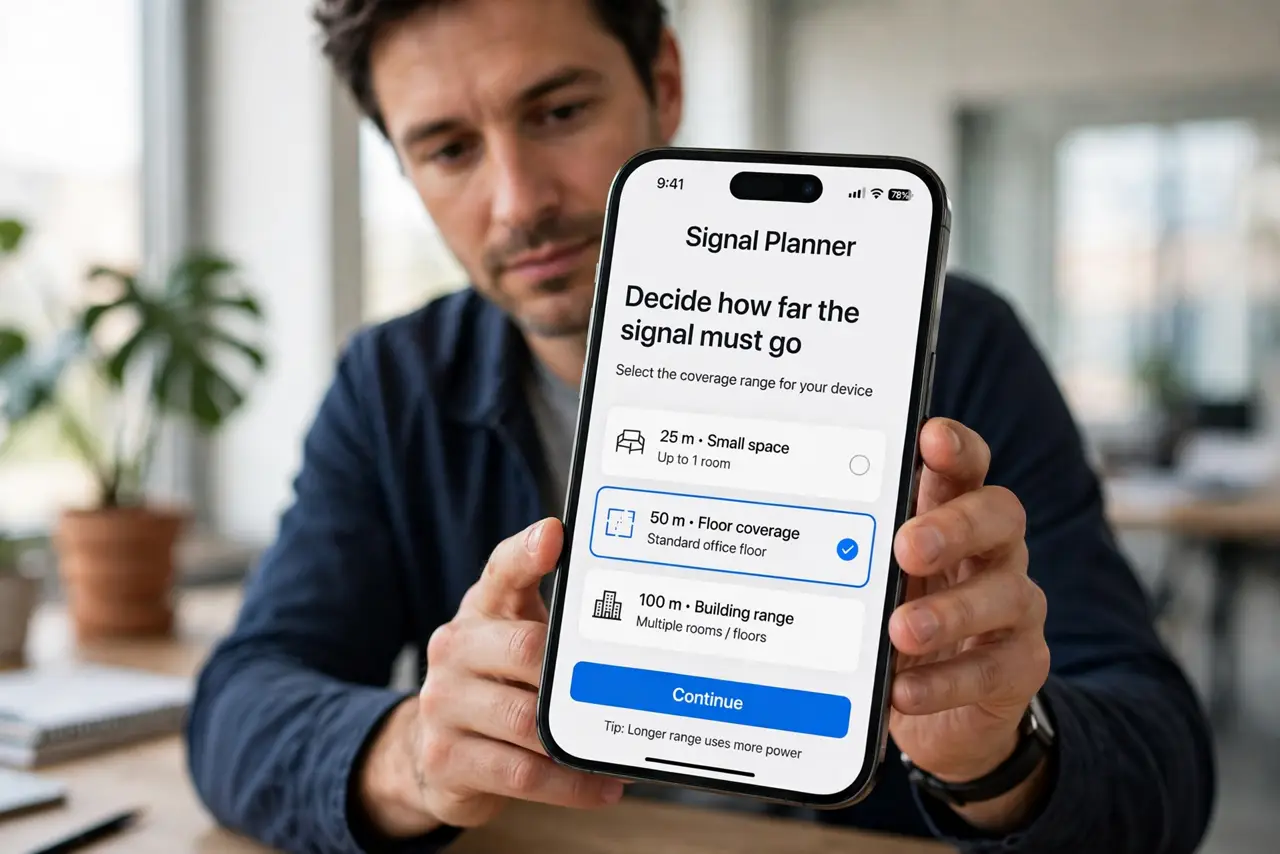
- Decide how far the signal must go. A small patio needs 10 meters; a big yard needs 30+. Measure honestly — the right gear depends entirely on the distance.
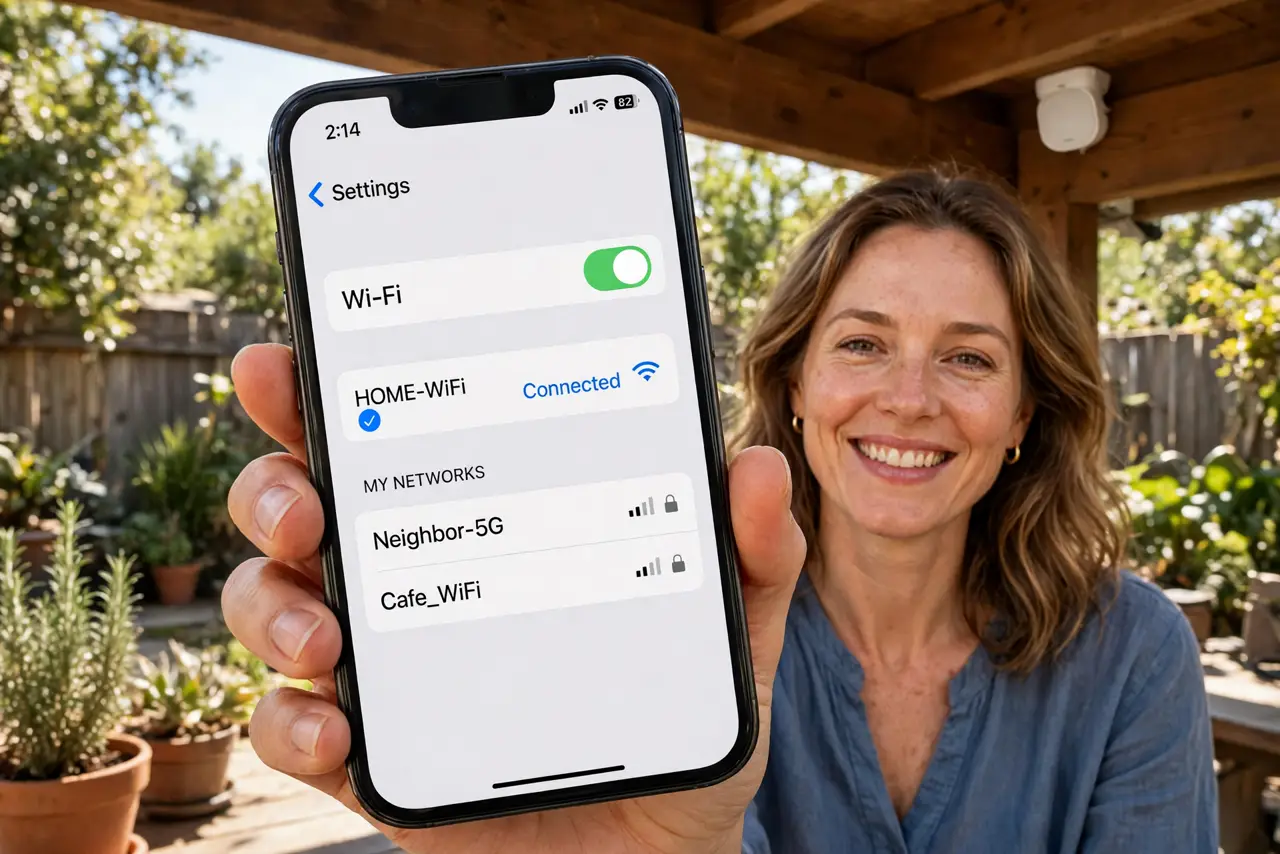
- Start with a mesh node at the back window. Place a mesh node at the indoor spot closest to the yard. Glass is kinder to Wi-Fi than walls, and this covers small patios with gear you may own.
- Use a real outdoor access point for real coverage. Outdoor-rated access points survive rain and heat and throw signal across yards. Mount under eaves, aimed at where you sit.
- Run ethernet to the outdoor point. Outdoor units need a wired backbone for best results. One buried or eave-run cable beats any wireless hop across the yard.
- Keep indoor gear indoors. Regular routers and extenders die quickly in heat, cold, and humidity. Only outdoor-rated hardware belongs outside, even under cover.
- Secure the outdoor network like the indoor one. Use the same strong password and WPA2/WPA3. An outdoor signal reaches the street, so do not leave it open.
What NOT to do
- Do not put an indoor extender in a 'waterproof' bag outside. Heat buildup kills it faster than rain would have, and it is a fire risk.
- Do not aim the router at the yard through three walls. Signal that crosses the whole house first arrives exhausted — get the source near the back wall.
- Do not leave an outdoor network unsecured. Backyard Wi-Fi reaches neighbors and the street; an open one invites freeloaders and trouble.
- Do not forget lightning and power. Outdoor gear should be properly grounded and on a surge protector — a strike can travel the cable inside.
Frequently asked questions
Can I just put my old router on the porch?
Not for long. Indoor routers are not sealed against humidity and temperature swings, and they fail within months outside.
How far can an outdoor access point reach?
Typically 30–60 meters of usable signal in open air. Walls, trees, and fences shorten that, so mount it with line of sight.
Do I need a special outdoor ethernet cable?
For buried or sun-exposed runs, yes — outdoor-rated cable resists UV and water. Indoor cable degrades and cracks within a year outside.