Position Router Antennas
Your router has antennas you can aim, and their position genuinely changes your coverage — radio waves leave antennas in specific patterns, not magic spheres. Most people leave them however the box shipped, which is rarely ideal. Two minutes of aiming can fix a weak corner.
TL;DR / Quick Fix
Quick fix: point router antennas straight up for the best coverage on one floor, since the signal spreads outward like a donut around each antenna. For multiple floors, angle one antenna sideways. Keep the router out in the open, not inside a cabinet.
Follow these steps
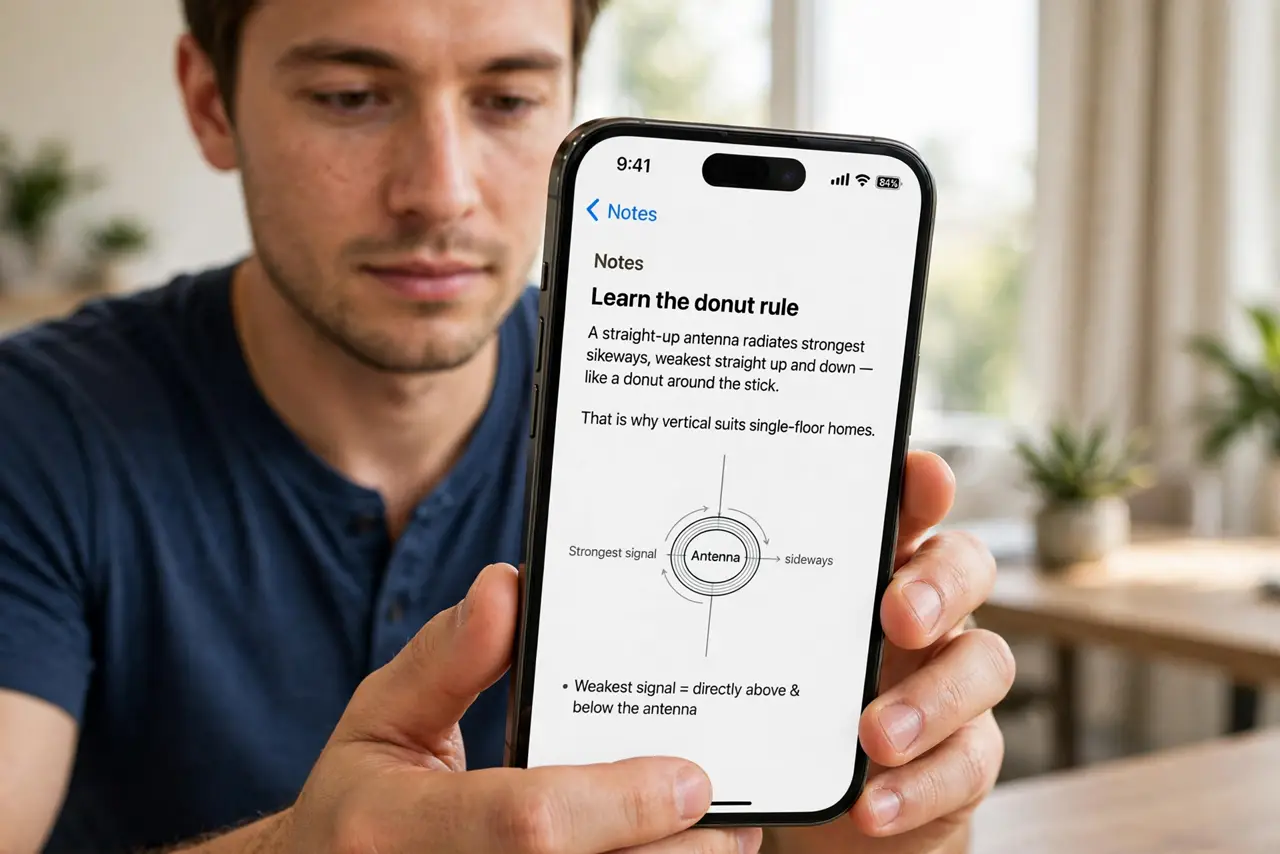
- Learn the donut rule. A straight-up antenna radiates strongest sideways, weakest straight up and down — like a donut around the stick. That is why vertical suits single-floor homes.
- Point them straight up for one floor. Vertical antennas give the widest horizontal coverage. This is the right default for apartments and ranch homes.
- Angle one sideways for two floors. A horizontal antenna pushes signal up and down. With three or more antennas, try one horizontal and the rest vertical.
- Spread multi-antenna routers. Fan them at slight angles rather than parallel. Diversity helps — see the antenna position myths for what actually matters.
- Mind the router's location too. Antennas cannot fix a router locked in a basement closet. Central, elevated placement beats perfect aiming — check the router placement rules.
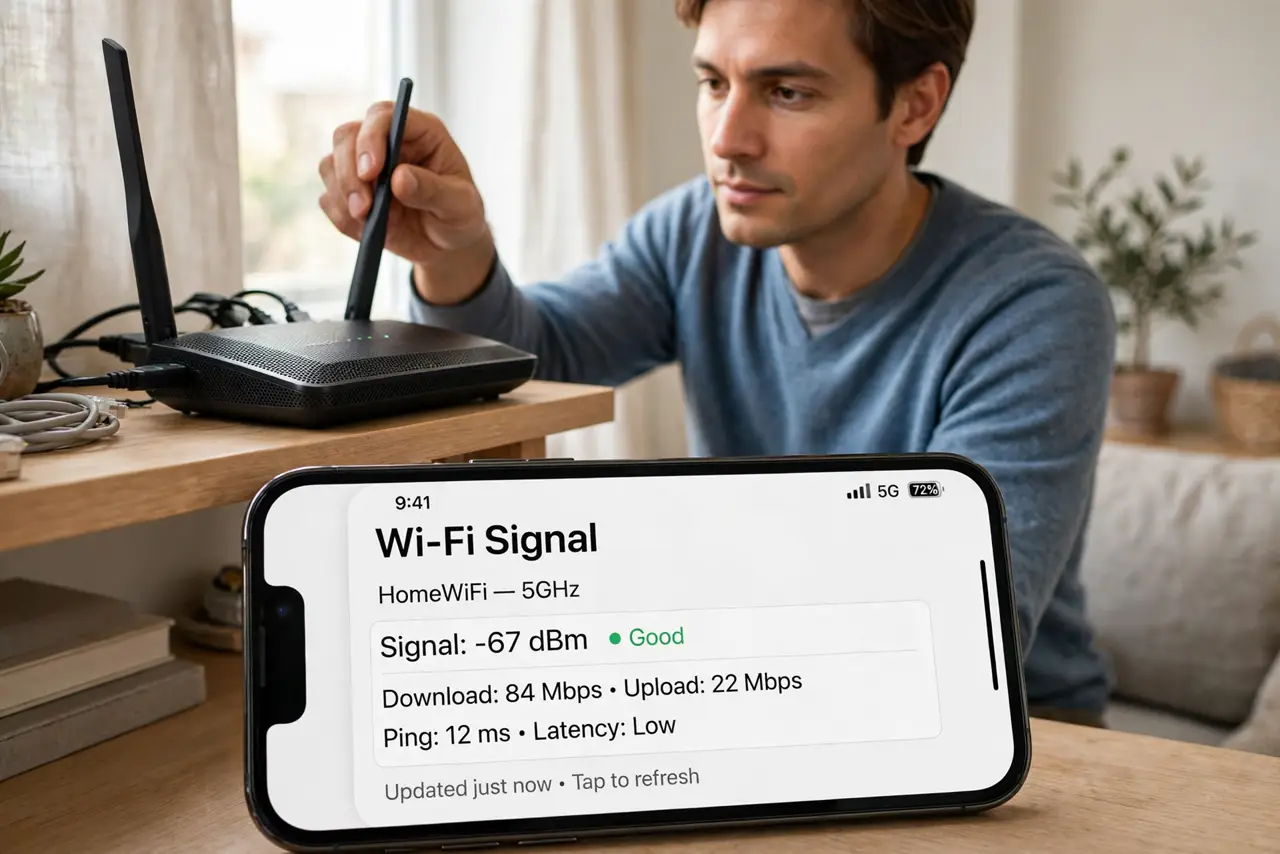
- Test with a real device. Walk to your weak spot with a speed test after each change. Signal bars lie; measured speed does not.
What NOT to do
- Do not point all antennas at the weak spot. Antennas do not beam where they point — they radiate around their axis.
- Do not leave them flat against the router. Folded-down antennas radiate into the shelf, not the room.
- Do not expect miracles from aiming alone. Antennas optimize coverage; they cannot create signal through thick concrete.
- Do not snap them forcing adjustments. They pivot gently — if one resists, check for a locking mechanism first.
Frequently asked questions
Do more antennas mean faster Wi-Fi?
Not directly — more antennas improve range and multi-device handling, not raw speed to one device.
Should antennas be vertical or horizontal?
Vertical for single-floor coverage, mixed angles for multiple floors. There is no universal perfect position.
Do aftermarket antennas help?
Sometimes marginally, but placement and a modern router matter far more than bigger sticks.