Try 25-Minute Meetings
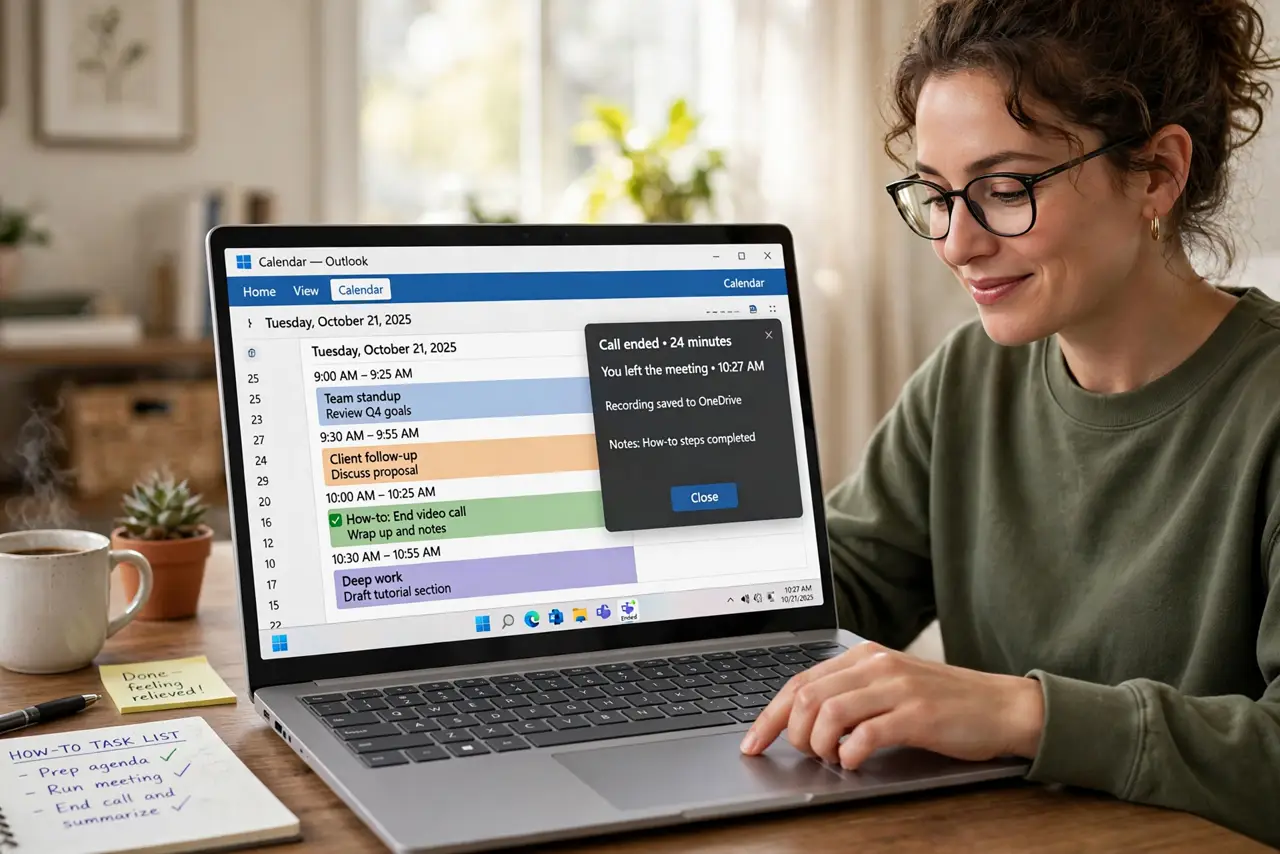
Meetings scheduled for 30 minutes take 30 minutes; scheduled for 25, they take 25 — and everyone gets five minutes back to breathe, refill coffee, and arrive on time to the next one. It is the smallest calendar change with the biggest quality-of-life payoff.
TL;DR / Quick Fix
Quick fix: change your default meeting length to 25 minutes instead of 30 (and 50 instead of 60). The shorter slot forces focus and builds in buffer time. Set it as the default in your calendar so every new invite inherits it.
Follow these steps
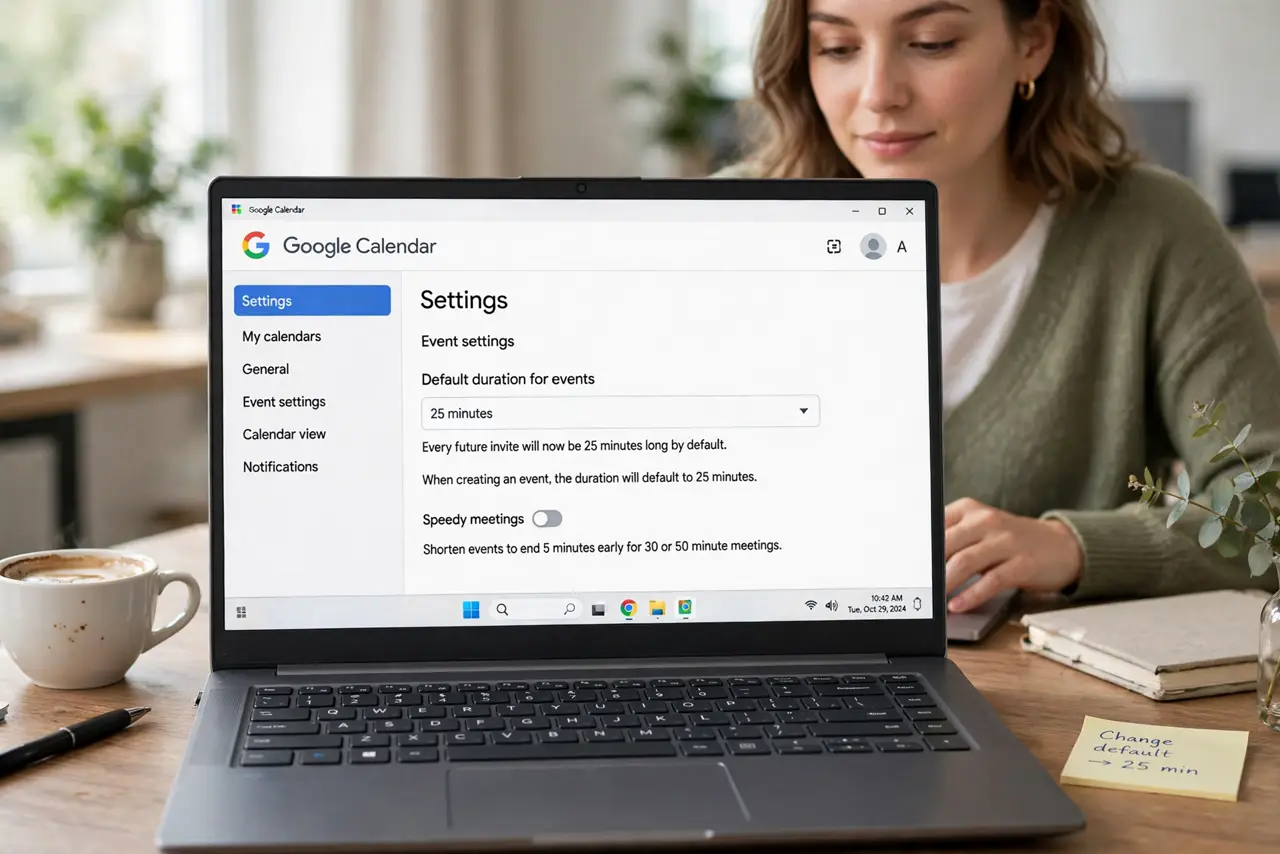
- Change your calendar default. In Google Calendar or Outlook settings, set new events to 25 minutes. Every future invite inherits the shorter length automatically.
- Pair it with an agenda. Short meetings need sharper focus — a written agenda keeps 25 minutes from becoming 25 rushed minutes.
- Start on time, end early. The five saved minutes are the point — guard them. Ending at :25 instead of :30 is a feature, not rudeness.
- Use the buffer deliberately. Stand up, get water, glance at notes for the next meeting. Back-to-back calls without gaps are what burn people out — buffer time is the science behind it.
- Apply 50 for hour-longs. The same trick scales: 50-minute defaults for hour meetings. The principle is identical.
- Convert the team. One person with 25-minute defaults slowly converts the team — people notice the breathing room and copy it.
What NOT to do
- Do not just rename 30-minute meetings. The calendar default must actually change, or nothing changes.
- Do not fill the saved five minutes with another meeting. Buffers only work if they stay empty.
- Do not run over just this once. Every overrun teaches the team the 25 minutes were fictional.
- Do not skip the agenda. Short meetings punish wandering more than long ones do.
Frequently asked questions
Why 25 and not 20?
Twenty-five keeps the familiar half-hour rhythm while carving out a real buffer. It is a nudge, not a revolution — which is why it sticks.
What about meetings that need the full 30?
Use 50/25 as defaults, not laws. A deep working session can still be an hour — defaults guide, they do not govern.
Will people think I am being rude ending early?
No — ending early is universally loved. Starting late is the rude one.