'Tentative' Accept? What It Means
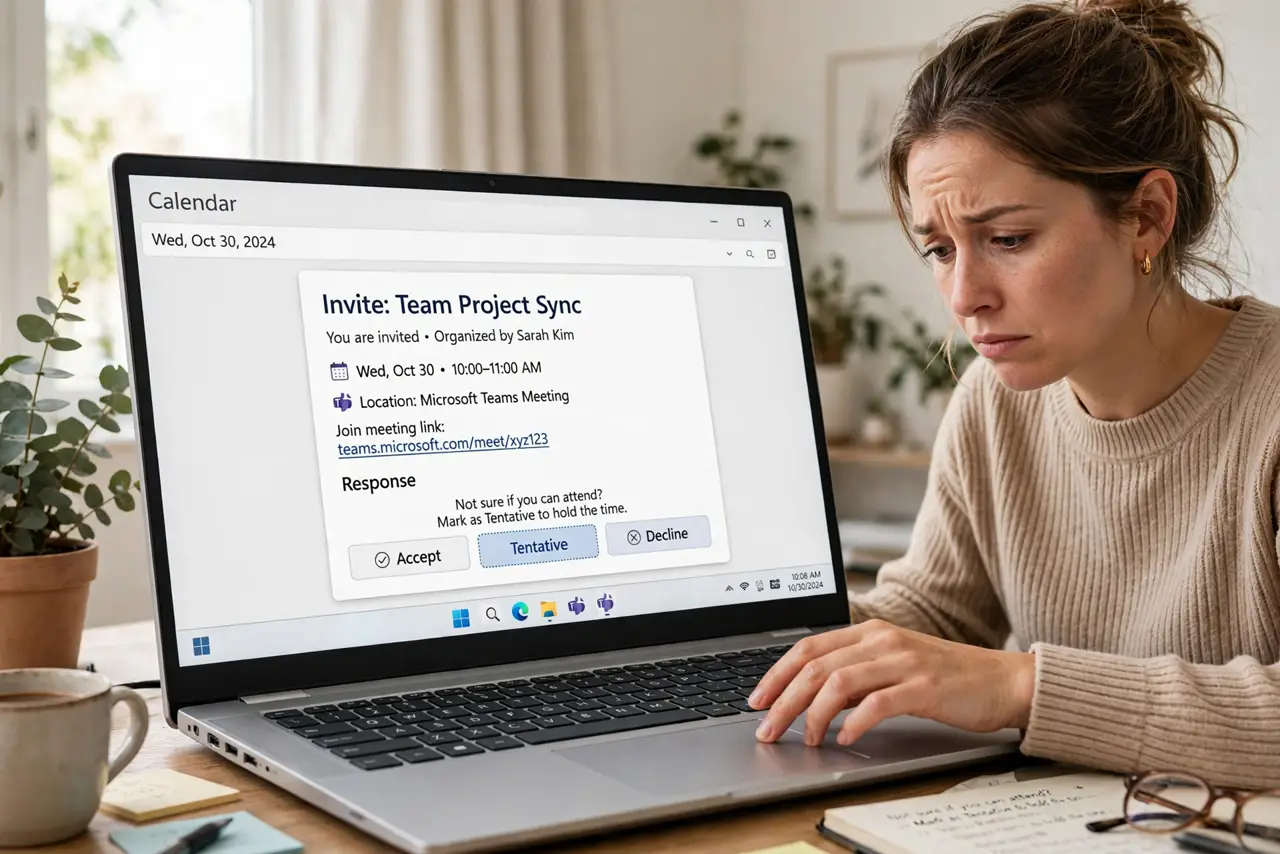
You are invited to something you will probably attend — but a conflict might appear, or you are waiting on one detail. Accept feels like a lie, Decline feels premature. That is what Tentative is for: the calendar's honest 'maybe.' It holds the time while signaling uncertainty. Here is what it means and when to use it.
TL;DR / Quick Fix
Quick fix: marking Tentative means maybe — you will attend but are not committing. Choose Tentative on the invite instead of Accept. It blocks the time on your calendar while signaling uncertainty to the organizer. Update to Accept or Decline once you know; a tentative that never resolves helps nobody.
Follow these steps
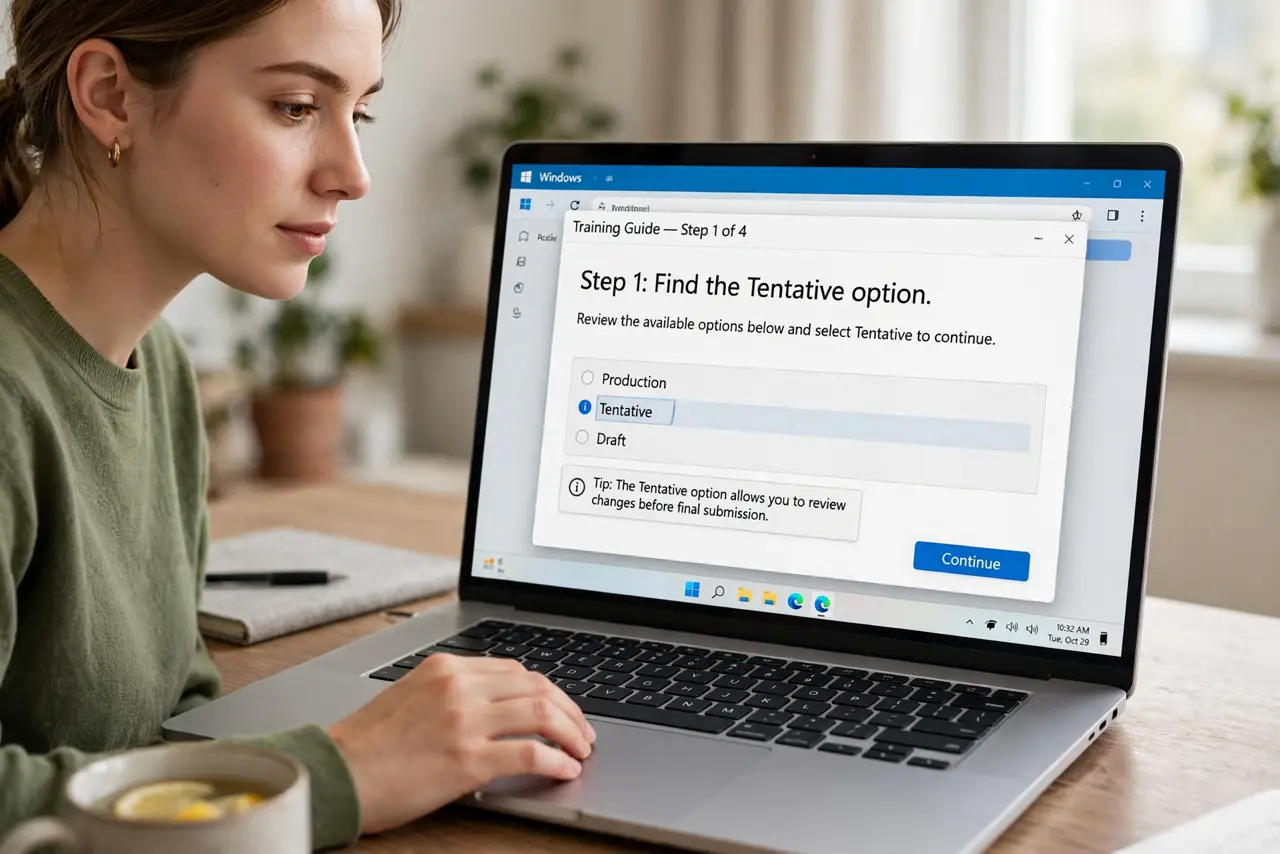
- Find the Tentative option. On the invite, alongside Accept and Decline, sits Tentative (sometimes 'Maybe'). Choose it for genuine uncertainty.
- Understand what it signals. The organizer sees you as a maybe — not a yes. It is honest, and organizers prefer it to a false Accept.
- Know it blocks your time. A tentative event still occupies the slot on your calendar, preventing double-booking while you decide.
- Update it when you know. The whole point is temporariness. Once decided, change to Accept or Decline with a message — do not leave it hanging.
- Use it sparingly. A calendar full of tentatives is a calendar full of non-decisions. Reserve it for real maybes, not chronic indecision.
- Check tentative status before big planning. When finalizing headcounts or rooms, organizers chase tentatives first — expect a nudge if yours lingers.
What NOT to do
- Do not use Tentative as a soft no. If you know you are not going, decline honestly — a lingering maybe wastes the organizer's planning.
- Do not leave tentatives unresolved for weeks. Set yourself a reminder to decide; stale maybes help nobody.
- Do not assume tentative means the same everywhere. Most apps treat it as 'maybe attending,' but confirm how your platform displays it.
- Do not stack tentatives on the same slot. One maybe per time slot — overlapping tentatives are just indecision with extra steps.
Frequently asked questions
Does the organizer see my Tentative response?
Yes — it shows in their tracking as tentative/maybe, distinct from accepts and declines.
Will I get meeting updates if I am tentative?
Yes. Tentative attendees still receive updates and reminders like accepted attendees do.
Is Tentative the same as not responding?
No. No response leaves the organizer guessing; Tentative is an explicit maybe. Always better than silence.