Cash Flipping Offers? Scams
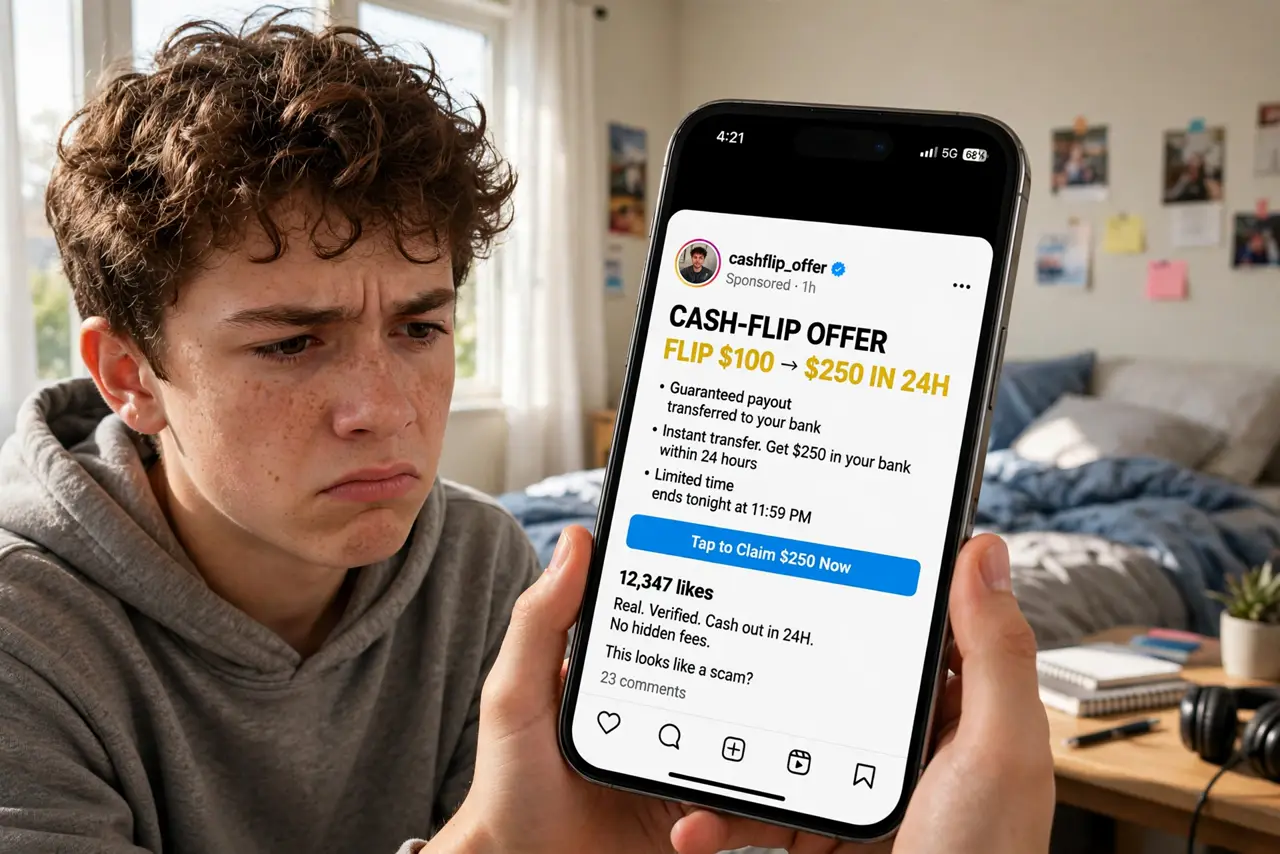
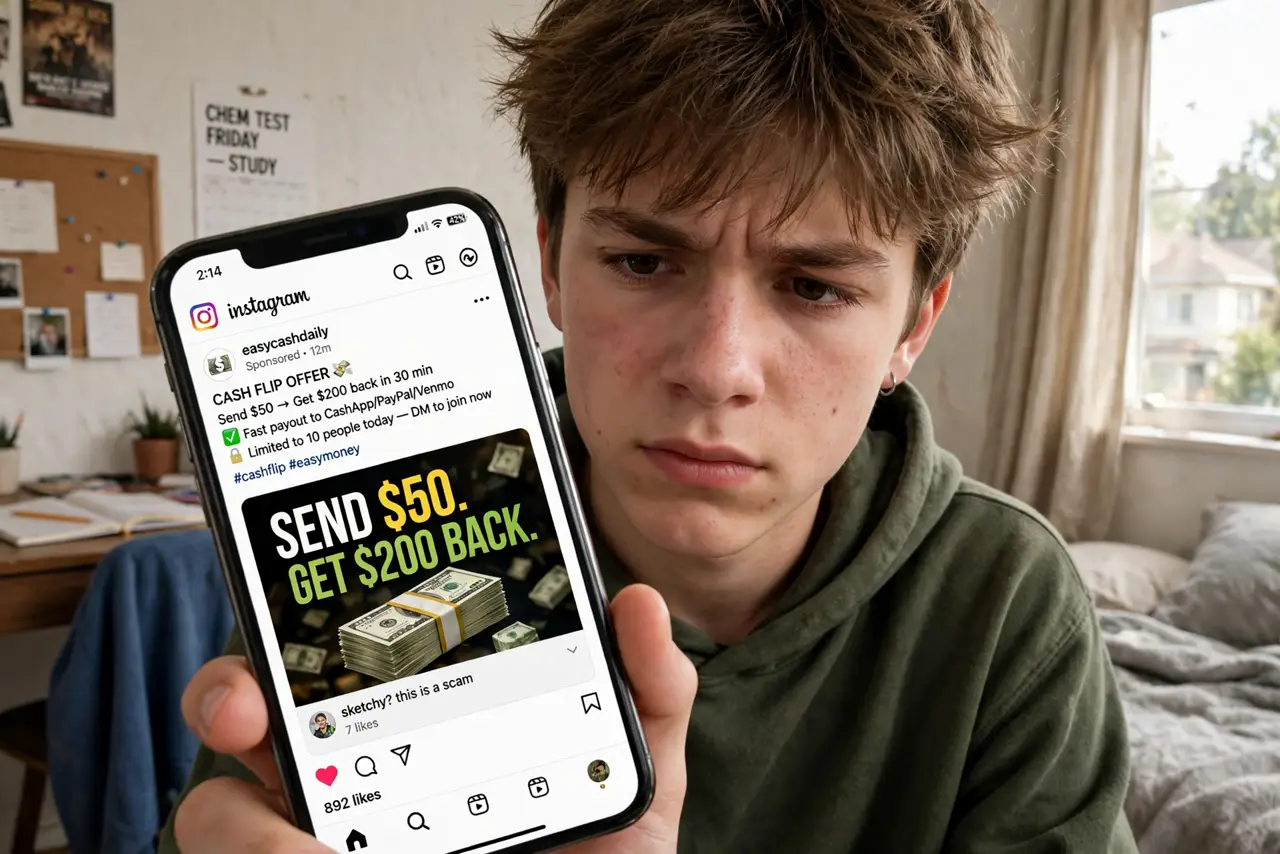
'Send $50, get $500 back in ten minutes!' The posts flood social media, sometimes from hacked accounts of people you know. Cash flipping is pure fiction — there is no investment, no flip, no return. Your deposit goes straight into a scammer's pocket, and the 'testimonials' are fake.
TL;DR / Quick Fix
Cash flipping promises to turn your $50 into $500 — it is always a scam. There is no investment that multiplies money overnight; 'flippers' just keep your deposit. Anyone advertising flips on social media is stealing. Report the account and never send money to strangers promising returns.
Follow these steps
- Recognize the pitch. Send X, get 10X back, fast. Screenshots of payouts, urgent timers, 'only 3 spots left.' Every element is engineered pressure — see the guru version too.
- Know hacked accounts promote it. When the offer comes from a friend's account, their account was hacked. Call the friend — they'll be horrified, not offended.
- Never send the 'starter' amount. There is no flip, no pool, no investment. The first deposit is simply stolen; follow-up 'fees to release profits' steal more.
- Report the account and post. Report on the platform for fraud. If it's a friend's hacked account, tell them so they can recover it.
- Warn younger family members. Teens are prime targets — the pitch is tuned to them. A two-minute conversation inoculates better than any filter.
- Check for the money-mule twist. Some 'flips' ask you to receive and forward funds — that's money laundering through your account, with legal consequences.
What NOT to do
- Do not believe payout screenshots. They're fabricated in minutes — or show the scammer paying one victim with another's deposit.
- Do not send a 'test' amount. Small tests don't verify anything; they just mark you as a willing sender for bigger asks.
- Do not forward money for a flipper. Receiving and resending funds makes you the money mule — banks close accounts over this.
- Do not engage to 'waste their time.' Scam-baiting strangers can expose your own details; report and block instead.
Frequently asked questions
My friend posted a flip offer — is it real?
No — their account was compromised. Real friends don't offer 10X returns; message them another way to confirm the hack.
I sent money — can I get it back?
Report to the payment app and your bank immediately. Recovery is unlikely, but fast reports occasionally freeze funds.
Why don't platforms stop these?
They try — but new accounts spin up faster than takedowns. User reports are the fastest detection signal they have.