Spot Catfishing
Their photos look like a magazine shoot, the conversation is perfect, but they always have a reason they cannot video chat — and soon there is an emergency that needs your money. Catfishing is a fake identity built to earn trust and then exploit it. The signs are consistent once you know them, and checking takes minutes.
TL;DR / Quick Fix
Quick fix: reverse-image-search their photos — stolen model shots are the tell. Watch for refusals to video chat, fast declarations of love, and any request for money or gift cards. Never send money or intimate photos to someone you have not met in person, no matter how convincing the story.
Follow these steps
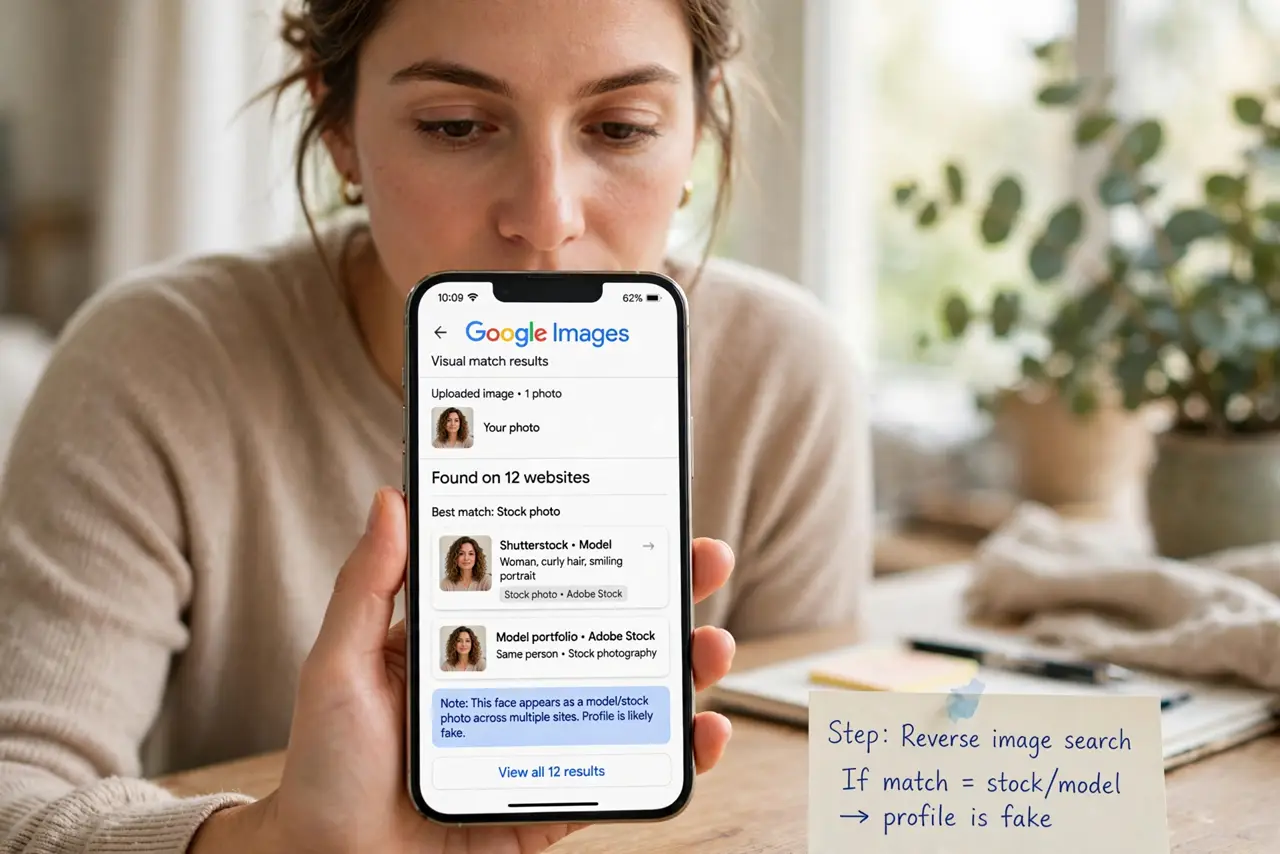
- Reverse-image-search their photos. Save a profile photo and search it in Google Images or TinEye. If the same face appears as a model, influencer, or stock photo, the profile is fake.
- Demand a live video chat. A real person can hop on video for two minutes. Endless excuses — broken camera, bad connection, always traveling — are the brightest red flag there is.
- Watch the love-bombing timeline. Declarations of deep love within days, poetry-level messages, and future-planning with a stranger are manipulation tactics, not romance.
- Never send money. Ever. Emergency surgery, a stuck package, a plane ticket to finally meet — the story changes, the request does not. Real romantic interests do not ask strangers for wire transfers.
- Guard intimate content. Never share intimate photos or videos with someone unmet. They become leverage — and sextortion is where that road leads.
- Report and block decisively. Report the profile on the platform, block everywhere, and warn friends if the scammer contacted them too. Learn to block online harassers so they cannot return under a new name.
What NOT to do
- Do not send money to someone you have not met, for any reason. No emergency story survives this rule — that is exactly why the rule exists.
- Do not share intimate photos with an unmet person. Once sent, you lose all control over where they go.
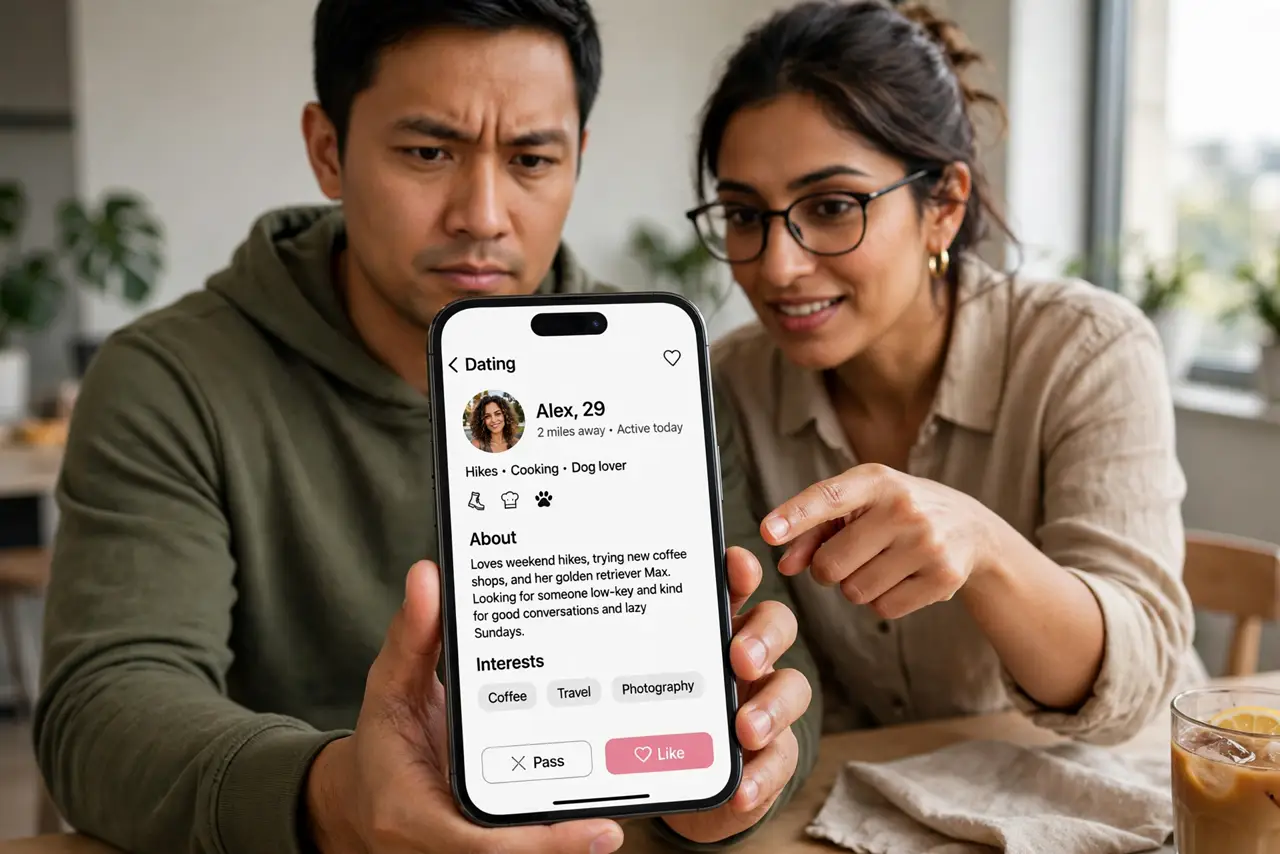
- Do not ignore your friends' doubts. Outsiders see the red flags clearly — if everyone says it looks fake, listen.
- Do not continue 'just to see.' Curiosity keeps victims engaged for months — cut contact at the first confirmed lie.
Frequently asked questions
What if I've already sent money?
Stop immediately, save all messages and receipts, report to the platform and local police, and contact your bank about reversing the transfer.
Can catfishers steal my identity too?
Yes — personal details you share (birthday, hometown, pet names) feed identity theft and password guessing. Share minimally until trust is earned in person.
Are all long-distance online relationships scams?
No — real ones exist. The difference is verifiable identity: video chats, consistent details, and zero money requests.