Keep a Clean Desk Policy
Client contracts on the desk, passwords on sticky notes, salary printouts in the recycling bin — after hours, the cleaning crew, a lingering visitor, or a dishonest colleague sees it all. A clean desk policy isn't about tidiness; it's about nothing sensitive being visible when you're not there. Here's the habit.
TL;DR / Quick Fix
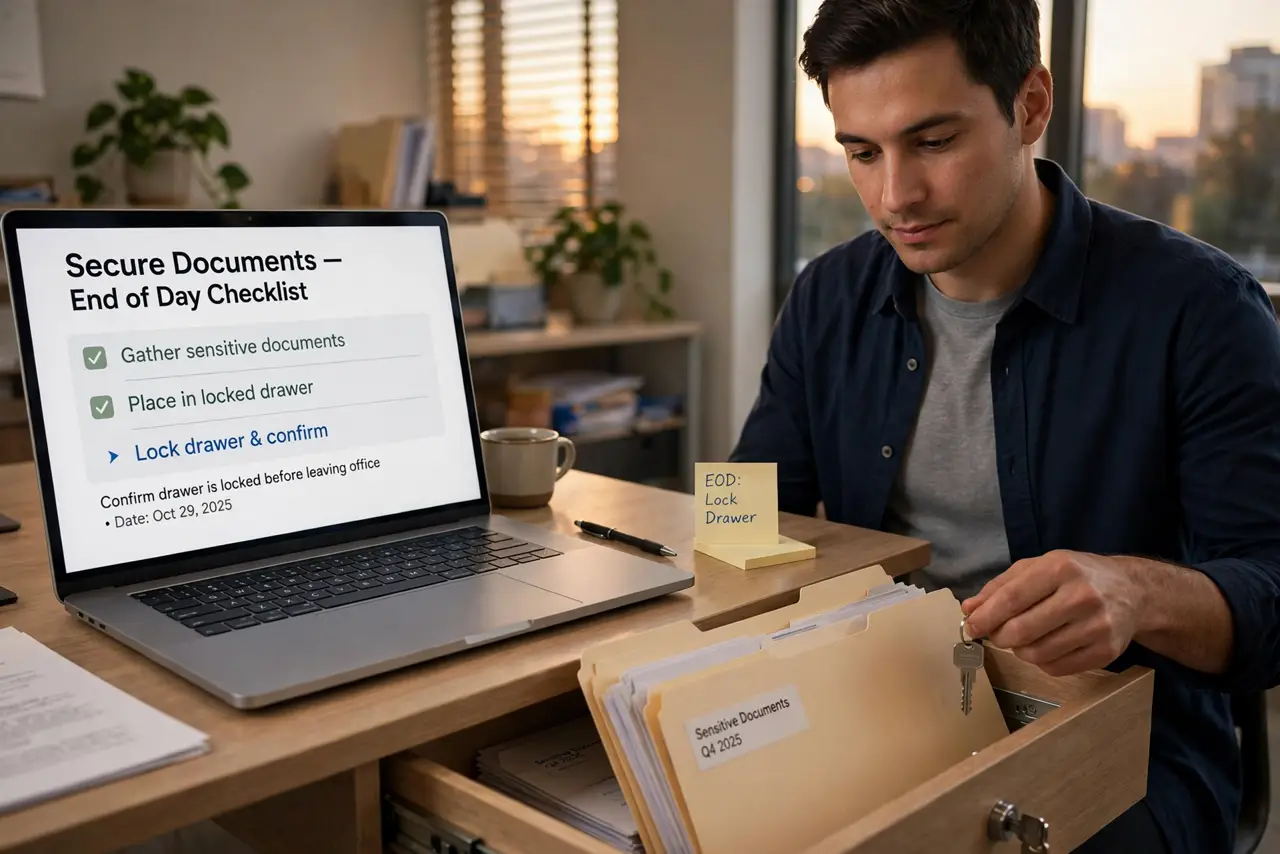
Quick fix: at day's end, file or lock away every paper with names, numbers, or business details — nothing sensitive stays on the desk overnight. Shred what you don't need to keep. A clear desk plus locked drawers defeats after-hours snooping completely.
Follow these steps
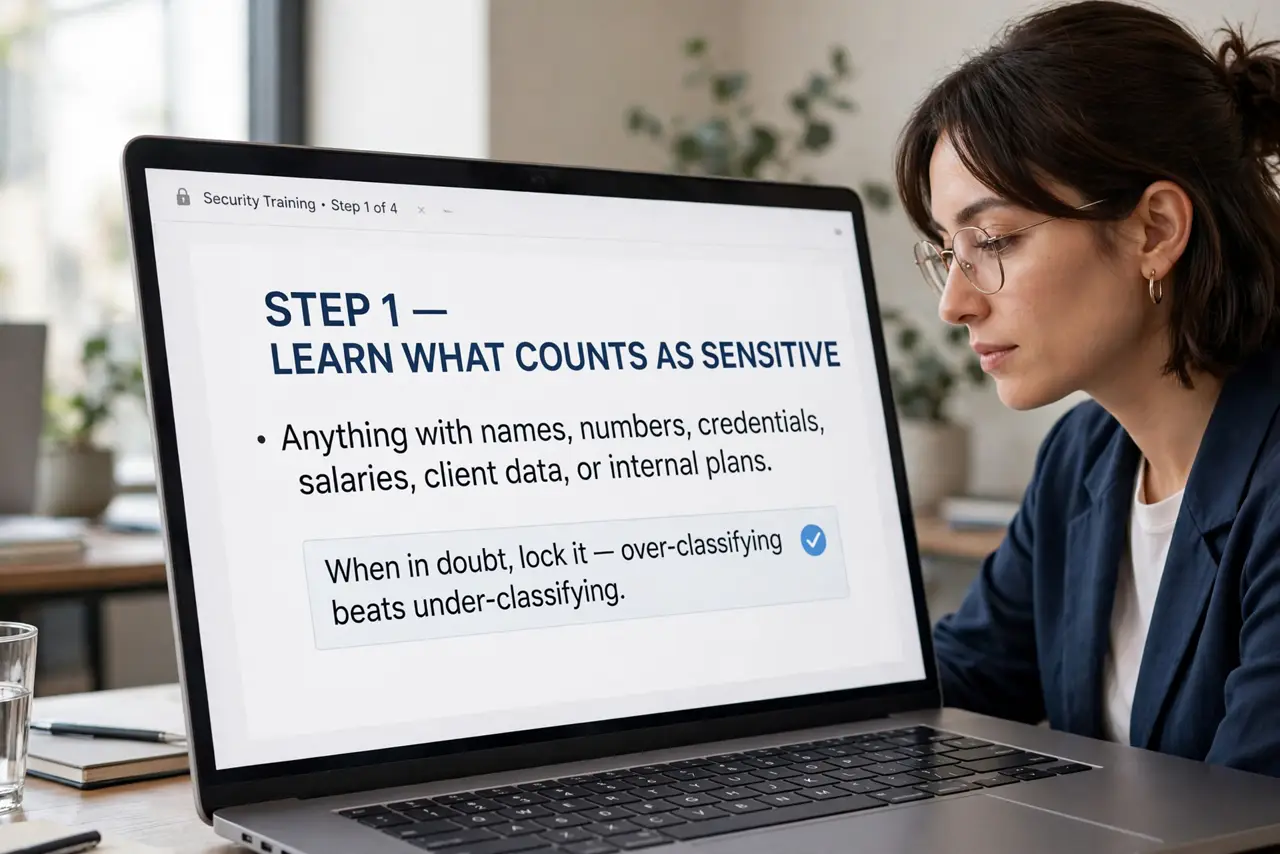
- Learn what counts as sensitive. Anything with names, numbers, credentials, salaries, client data, or internal plans. When in doubt, lock it — over-classifying beats under-classifying.
- Build the end-of-day sweep. Last five minutes: papers into folders or drawers, drawers locked, whiteboards wiped, screens locked. Make it a ritual, not a decision — rituals survive busy days.
- Kill the sticky-note passwords. Passwords on monitors are the cliché for a reason — they're everywhere and trivially stolen. A password manager replaces every sticky note; see shoulder surfing for the viewing angle too.
- Shred, don't bin. Anything sensitive you don't need to keep goes through the shredder — not the recycling. Dumpster-diving for documents is a real, documented attack.
- Secure the printer area. Printers collect forgotten sensitive pages. Collect prints immediately, and clear the tray at day's end — someone else's forgotten contract is your liability if you leave it.
- Extend it to screens. A clean desk with an unlocked screen showing email is theater. Lock the computer as part of the sweep — physical and digital go together.
What NOT to do
- Do not leave sensitive papers 'just for tonight'. Tonight is exactly when after-hours access happens — the policy works only if it's every night.
- Do not trust the recycling bin with data. Anything intact in a bin is retrievable; shredding is the only disposal that counts.
- Do not keep the 'temporary' sticky note. Temporary credentials have a way of living on monitors for years — put them in the manager today.
- Do not exempt yourself as the boss. Policies leadership ignores, everyone ignores — the sweep applies in every office including yours.
Frequently asked questions
Isn't this just about tidiness?
No — tidiness is the side effect. The goal is that nothing sensitive is visible or reachable when you're away; neatness just comes along.
What about hot-desking?
Even more important — shared desks mean strangers sit where you sat. Clear everything, every time, no exceptions.
Do digital files count?
Absolutely — unlocked screens and unencrypted USB sticks left out violate the same principle. The policy covers the whole desk, pixels included.
What to read next
- Stop Shoulder Surfing
- Phishing Red Flags