DNA Tests and Your Privacy?
A DNA test gives a company your genetic code — forever, unchangeable, and implicating relatives you never consulted. The privacy stakes are the highest of any consumer product. Before you spit in the tube, know the settings: consent, research opt-outs, law-enforcement policies, and deletion.
TL;DR / Quick Fix
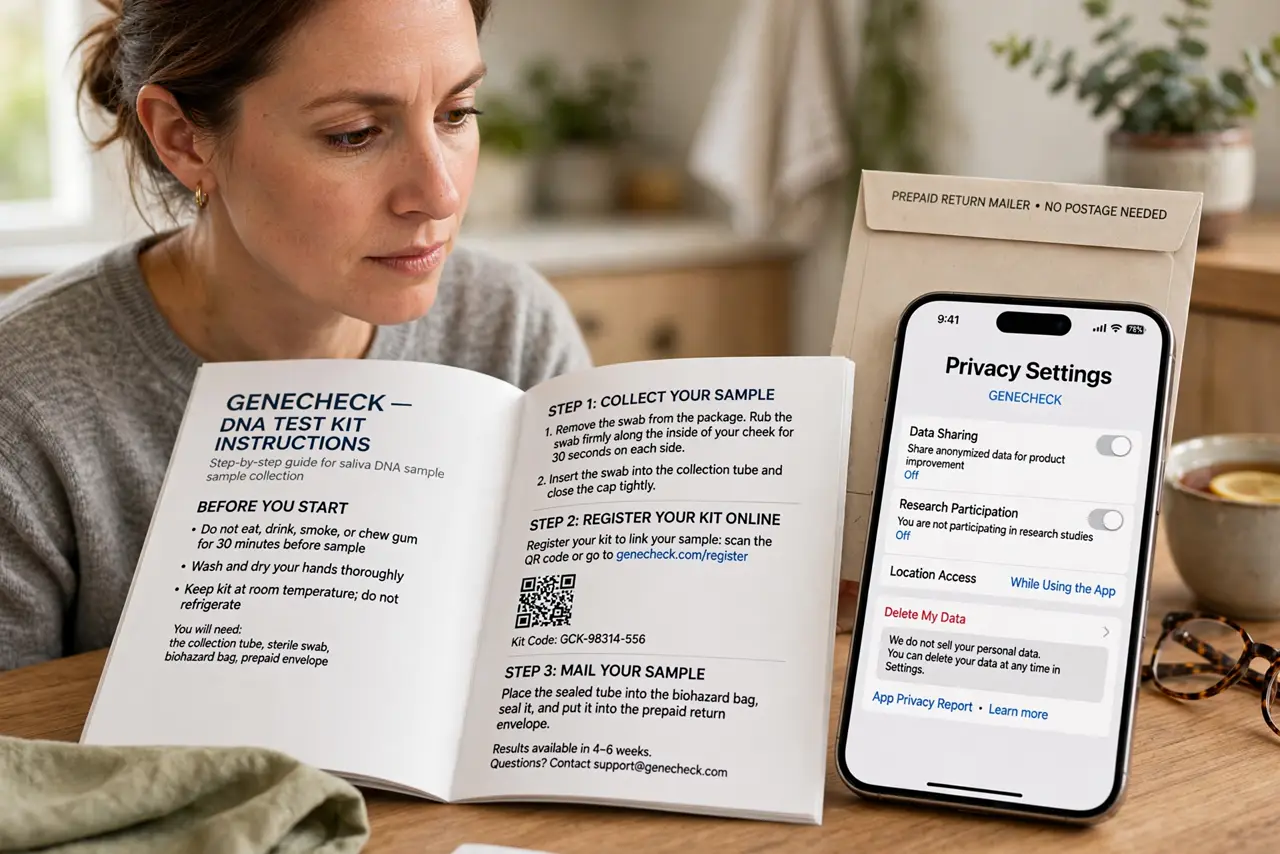
A DNA test hands a company your unchangeable genetic code — with implications for relatives too. Before testing, decline research consent, decide on relative-matching, and read the law-enforcement policy. After results, request sample destruction and full account deletion, and confirm in writing what 'delete' actually covers.
Follow these steps
- Read the privacy policy before buying. Not after the results arrive. The policy tells you about research use, sharing, and law-enforcement cooperation upfront.
- Decline research consent at signup. It is often pre-selected. Uncheck it deliberately — you can usually opt in later if you change your mind.
- Decide on DNA relative matching. Matching finds relatives, which means your test exposes family members who never consented. Decide with eyes open.
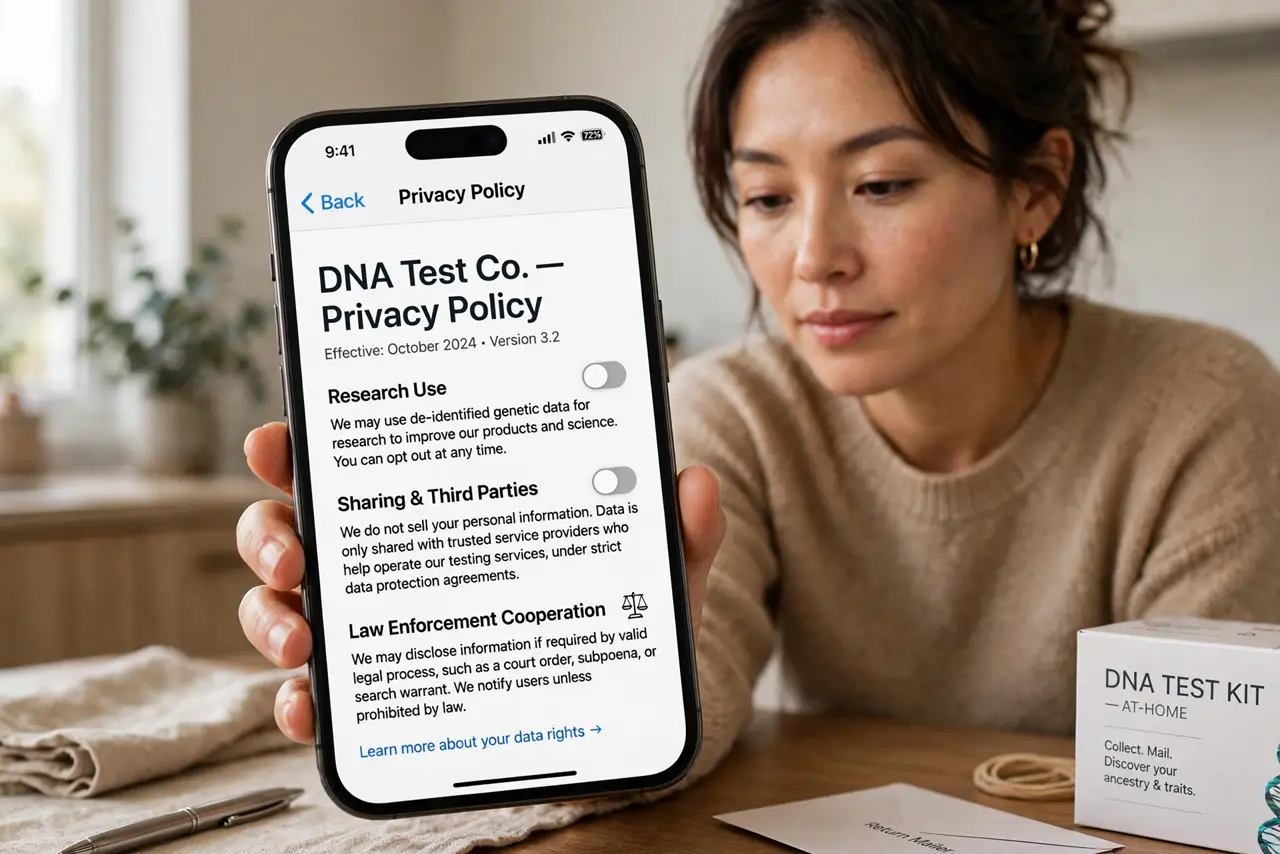
- Check the law-enforcement policy. Companies differ: some require warrants, some have cooperated voluntarily. Know your provider's stance before testing.
- Request sample destruction after results. The stored saliva tube is stored DNA. Ask for physical destruction, not just account closure.
- Know how to delete everything. Full deletion should cover the account, the data, and the sample. Get written confirmation of each.
What NOT to do
- Do not test without telling close family. Your DNA implicates parents, siblings, and children who never agreed.
- Do not assume deletion is instant or total. Confirm what 'delete' covers — data, sample, and backups.
- Do not upload raw DNA to third-party interpretation sites casually. Their privacy policies differ from the testing company's, usually for the worse.
- Do not gift a DNA kit without explaining the trade. The recipient deserves to know what they are handing over.
Frequently asked questions
Can I really delete my DNA data?
Reputable companies offer full deletion covering data and sample. Verify it in writing — policies differ on backups and already-shared research data.
Do companies sell DNA data?
Most major companies pledge not to sell it. Sharing for 'research partnerships' is the gray area to scrutinize.
Can police access my DNA?
It depends on the company: warrant requirements and past cooperation vary. Read the transparency report, not the marketing page.