Do You Need a Phono Preamp?
You connected the turntable, dropped the needle, and the music is whisper-quiet even at full volume — while everything else plays normally. Nothing is broken: a turntable cartridge produces a tiny signal that needs special boosting and equalizing before it can use a normal audio input. That job belongs to the phono preamp. The only question is whether you already own one without knowing it. This is the key detail in any starter vinyl setup.
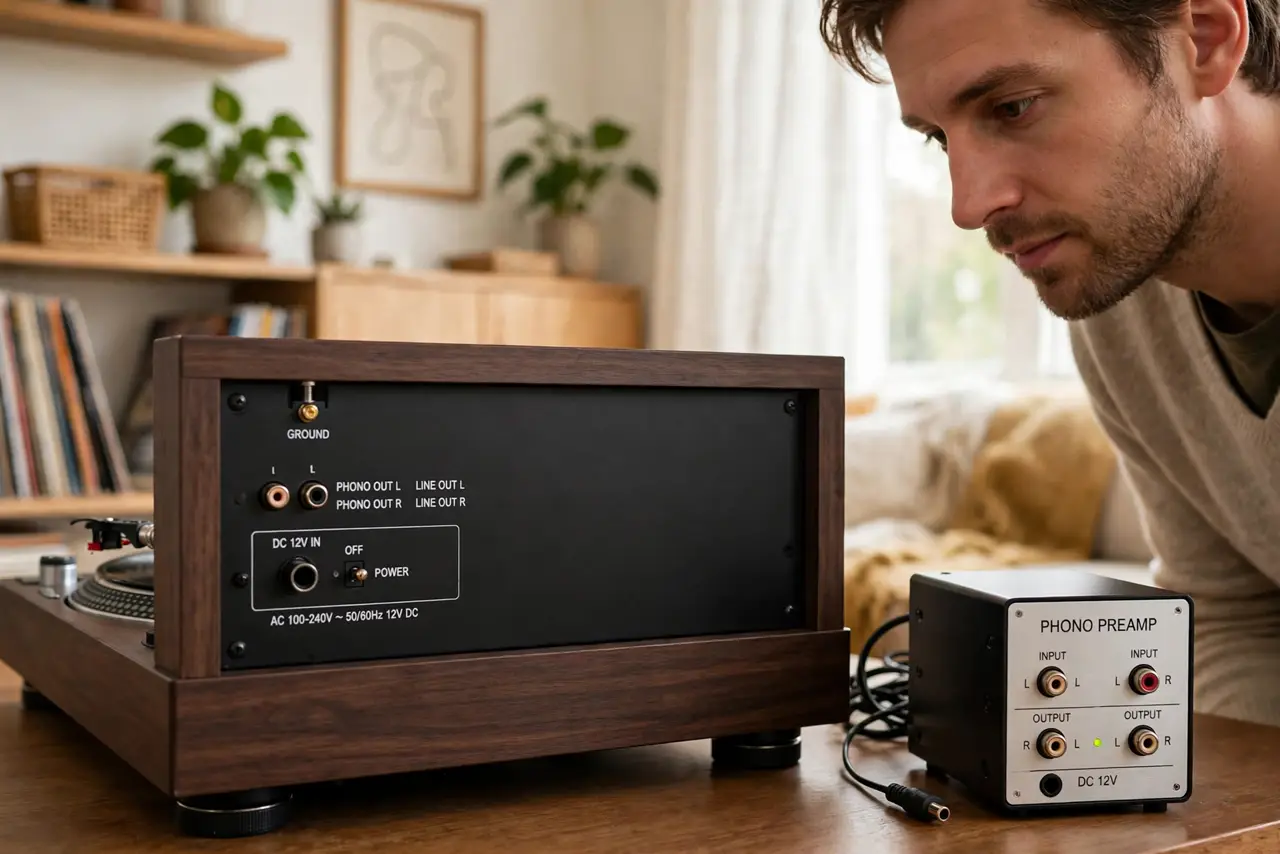
TL;DR / Quick Fix
Quick fix: a turntable sounds whisper-quiet without a phono preamp — the cartridge signal needs boosting and equalizing before any normal input. Check if your turntable or speakers already include one (many do); if both lack it, buy a small external preamp. No preamp, no proper volume.
Follow these steps
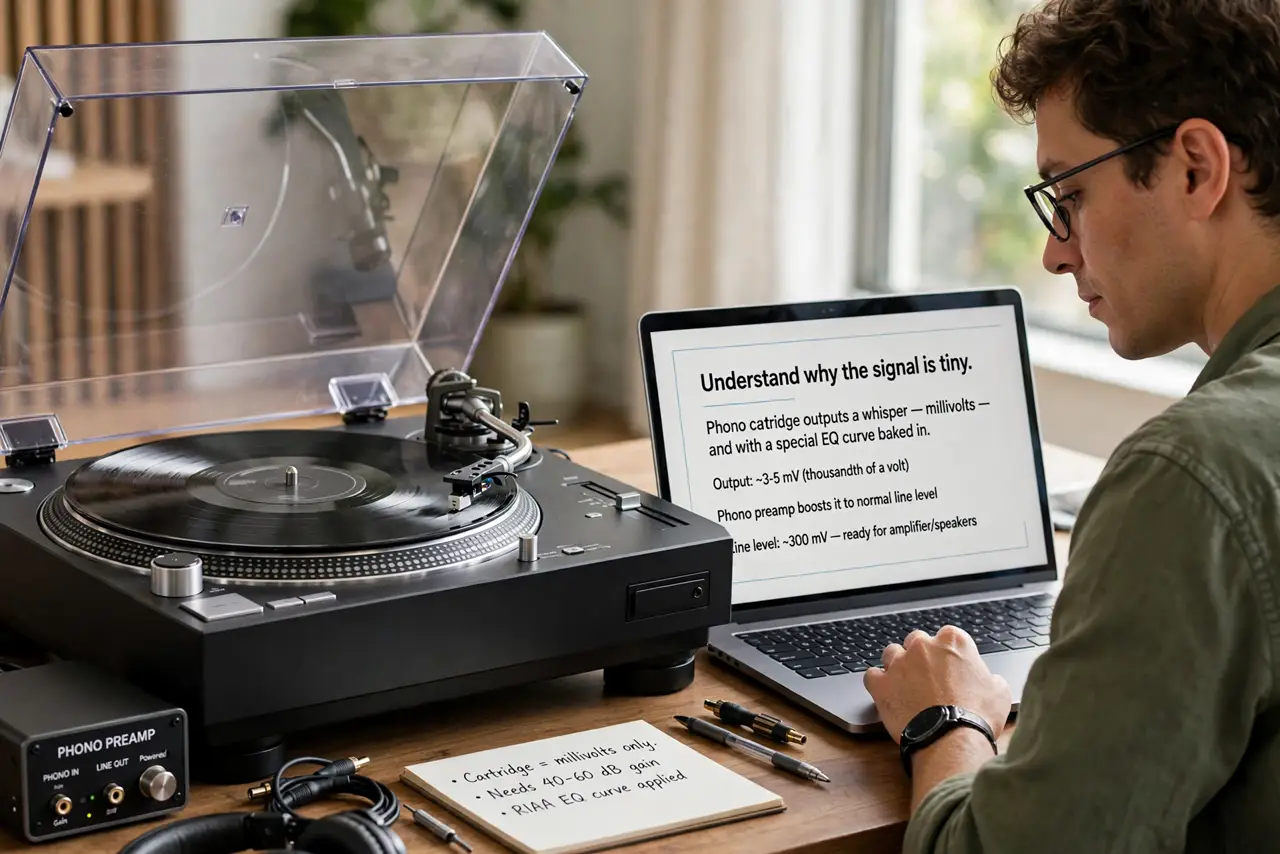
- Understand why the signal is tiny. A phono cartridge outputs a whisper — millivolts — and with a special EQ curve baked in. A phono preamp boosts it to normal line level and corrects the curve. No preamp means quiet, tinny sound: physics, not a defect.
- Check the turntable first. Many modern turntables have a built-in preamp with a PHONO/LINE switch underneath or behind. If yours is set to LINE, you already have one — plug into any normal input and you are done.
- Check the speakers or amp second. Some powered speakers and amplifiers include a PHONO input — that input has the preamp built in. If you see PHONO on the back panel, connect there and skip the external box.
- Buy external only if both lack one. No built-in anywhere? A small external phono preamp costs little and connects turntable → preamp → any line input. This is the only purchase the symptom actually requires.
- Set it up in the right order. Turntable into the preamp's input, preamp's output into a LINE/AUX input (never into another PHONO input — double preamping sounds awful).
- Test with a familiar record. Play something you know well at moderate volume. Proper preamping gives full, balanced sound — if it is still thin or distorted, recheck the switch positions before blaming the gear.
What NOT to do
- Do not plug a turntable into a LINE input with no preamp anywhere. Whisper-quiet, tinny sound is the guaranteed result — the most common vinyl beginner mistake.
- Do not double-preamp. Turntable preamp ON plus a PHONO input equals distortion — one preamp in the chain, exactly one.
- Do not buy the preamp before checking. Most beginners already own one inside the turntable or speakers — check the switches and labels first.
- Do not crank the volume to compensate. Maxing the amp on a whisper signal just amplifies noise — fix the signal chain, not the knob.
Frequently asked questions
What is the difference between a preamp and an amp?
The phono preamp boosts the tiny cartridge signal to line level; the amplifier (or powered speakers) takes line level to room volume. Two stages, two jobs — both needed, neither optional.
Do expensive preamps sound better?
Marginally, past a point. A basic external preamp solves the problem completely; pricey ones offer subtle refinements for systems revealing enough to show them.
MM vs MC — does it matter?
Moving-magnet (MM) cartridges work with any standard preamp; moving-coil (MC) needs extra gain. Beginners have MM — check the cartridge type only if you are upgrading deliberately.