DSL vs Cable Today?
You checked what internet you can get and the answer is DSL — the old phone-line technology — while cable serves the next town over. Or maybe both are offered and you are wondering if DSL is still viable in the streaming era. Here is where DSL genuinely stands today, and when it is worth living with versus fighting for an alternative.
TL;DR / Quick Fix
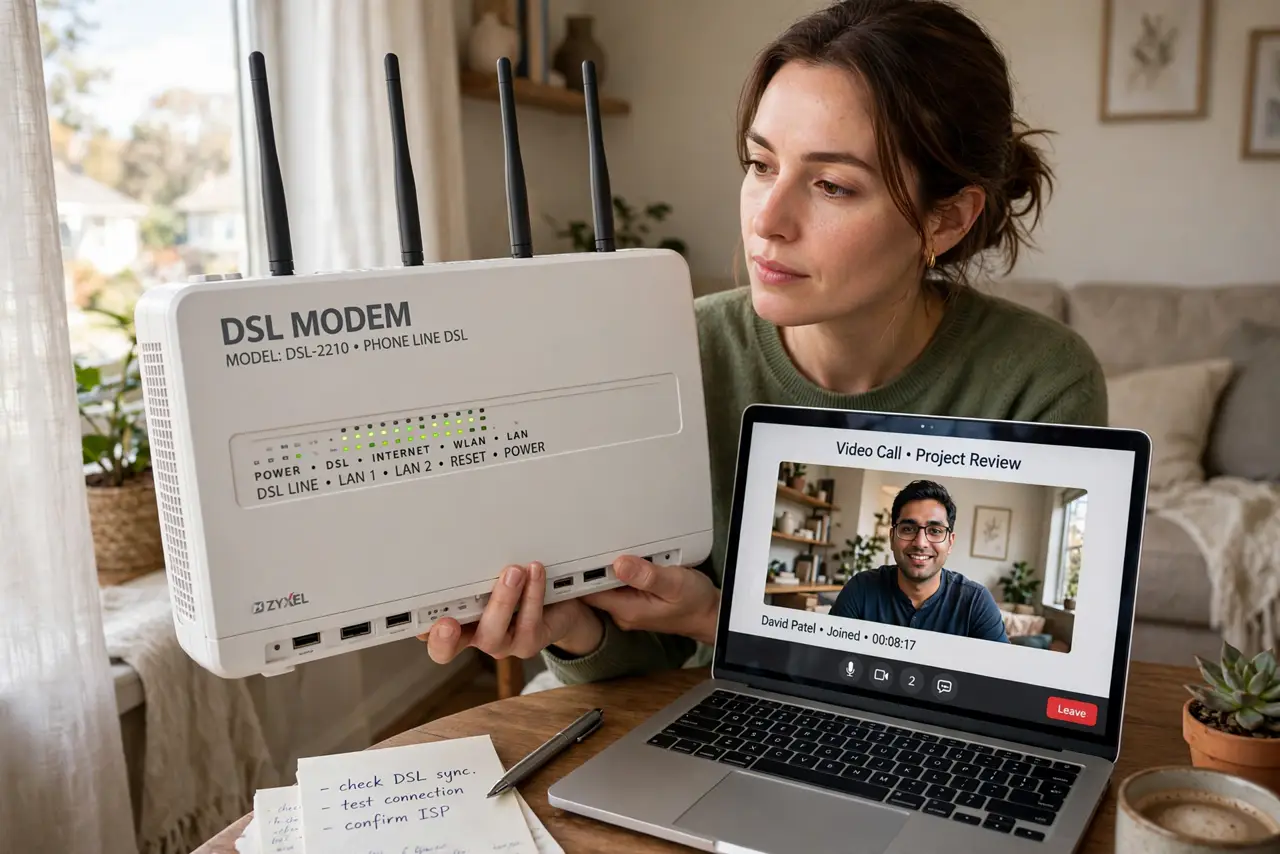
Quick fix: DSL works for browsing, HD streaming, and video calls at 25 Mbps or more — but it degrades with distance, so test your speed. Cable beats it on speed and consistency. If only DSL reaches you, take the fastest tier and ask about fiber or wireless options.
Follow these steps
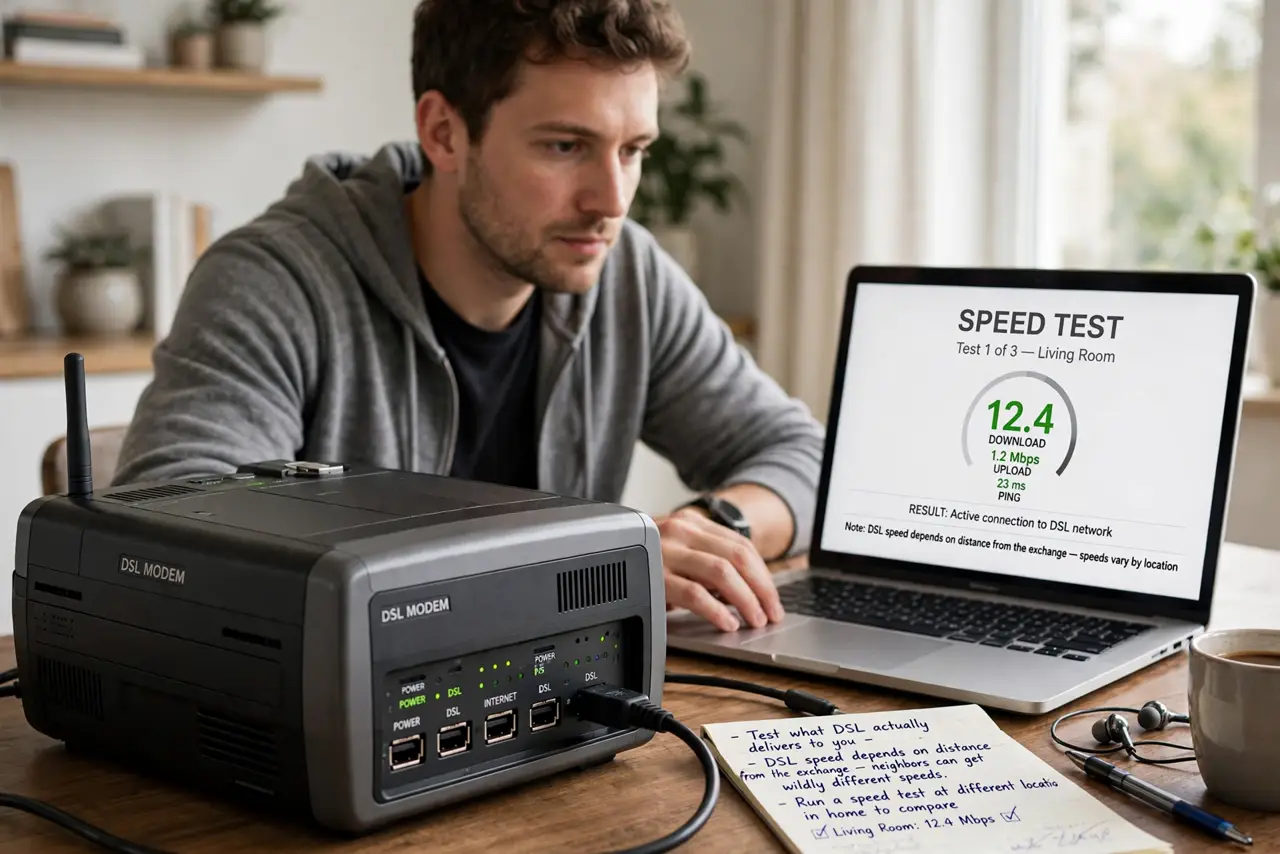
- Test what DSL actually delivers to you. DSL speed depends on your distance from the exchange — neighbors can get wildly different speeds. Run a speed test at different times of day; that number, not the advertised one, is your real service.
- Know DSL's honest limits. Most DSL tops out well below cable, and uploads are especially thin. One HD stream plus a video call is fine; a household of 4K streamers will feel the ceiling fast.
- Check the line quality. Old phone wiring and interference hurt DSL more than most issues hurt cable. Crackling on the voice line or line noise symptoms mean the line needs attention before any speed complaint.
- Compare against cable honestly. Where both exist, cable wins on speed, consistency, and usually price-per-megabit. DSL's only real advantages are price on the low tiers and availability where cable never reached.
- Ask what is coming, not just what exists. Rural broadband projects expand constantly. Ask the provider and local authorities about fiber or fixed-wireless buildouts — signing a long DSL contract right before fiber arrives is the classic regret.
- Do not pay for speed the line cannot deliver. If your line physically maxes at 15 Mbps, the 50 Mbps tier is fantasy billing. Buy the tier your line tests support, and re-test after any technician visit.
What to avoid
- Do not judge DSL by its 2005 reputation. Modern DSL tiers are far faster than the old days — test your actual line before dismissing it.
- Do not sign a long contract without checking buildout plans. A two-year DSL lock-in stings when fiber trenches your street six months later.
- Do not blame the Wi-Fi for a DSL ceiling. If the wired speed test is slow, no router upgrade will fix it — the limit is the line itself.
- Do not ignore upload speed. DSL uploads are thin, and two simultaneous video calls can saturate them — schedule around it or upgrade.
Frequently asked questions
Is DSL enough for working from home?
For one person on video calls and documents, usually yes at 25+ Mbps. For multi-person households with heavy uploads, it gets tight.
Why is my DSL slower than advertised?
Distance from the exchange and line quality dominate. The advertised number is a maximum under ideal conditions, not a promise to your specific address.
Should I switch from DSL to cable?
If cable is available at a sane price, yes for most households — the speed and consistency jump is real. Keep DSL only if the price gap is large or you barely use the internet.