End Your Workday Right
The laptop stays open, “just one email” turns into an hour, and dinner tastes like deadlines. Work bleeds into evening not because you are weak but because you never marked the ending. A five-minute shutdown ritual draws the line — and it makes tomorrow's morning dramatically calmer.
TL;DR / Quick Fix
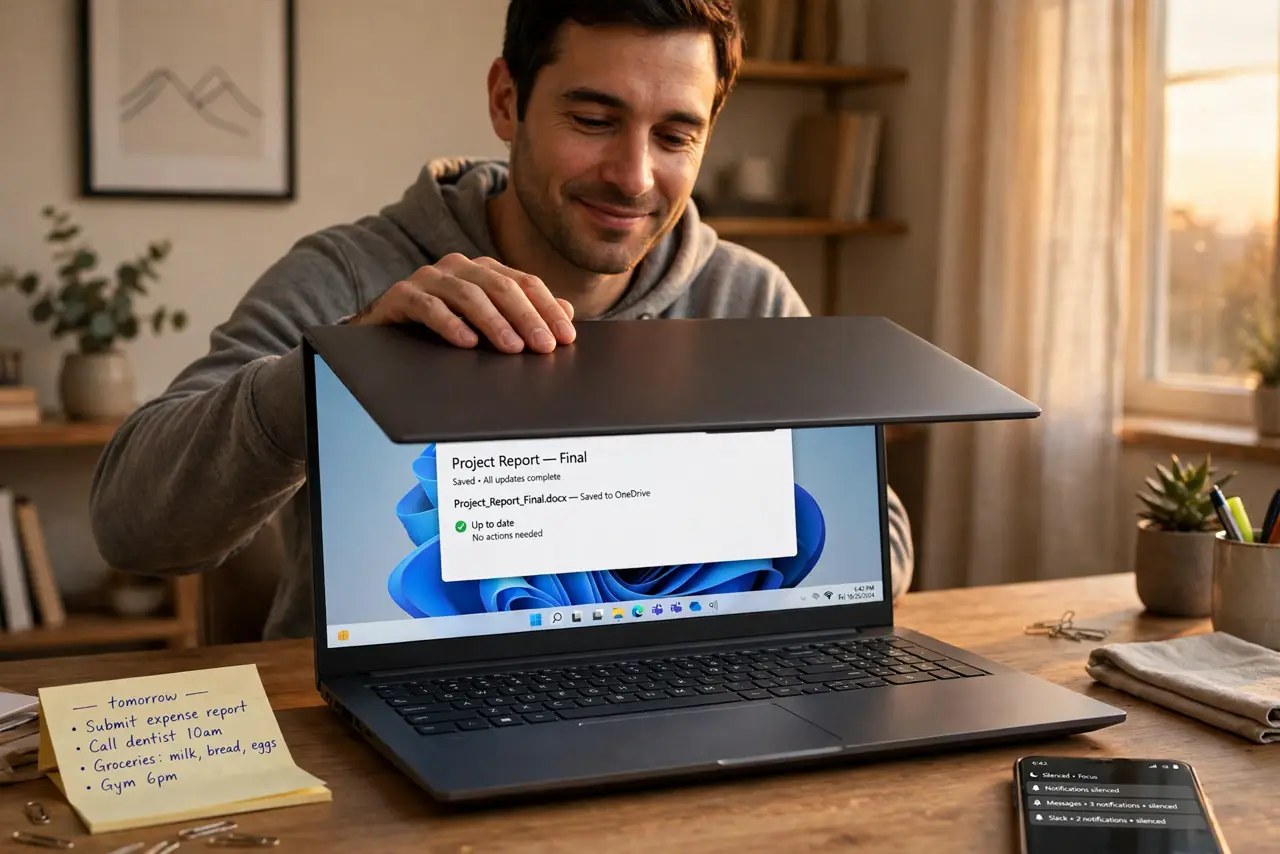
Quick fix: end each workday with a five-minute shutdown — write tomorrow's top three tasks, close your tabs, and silence work notifications. A fixed end time plus a small transition ritual tells your brain work is over. Protect the boundary daily and evenings stop bleeding into work.
Follow these steps
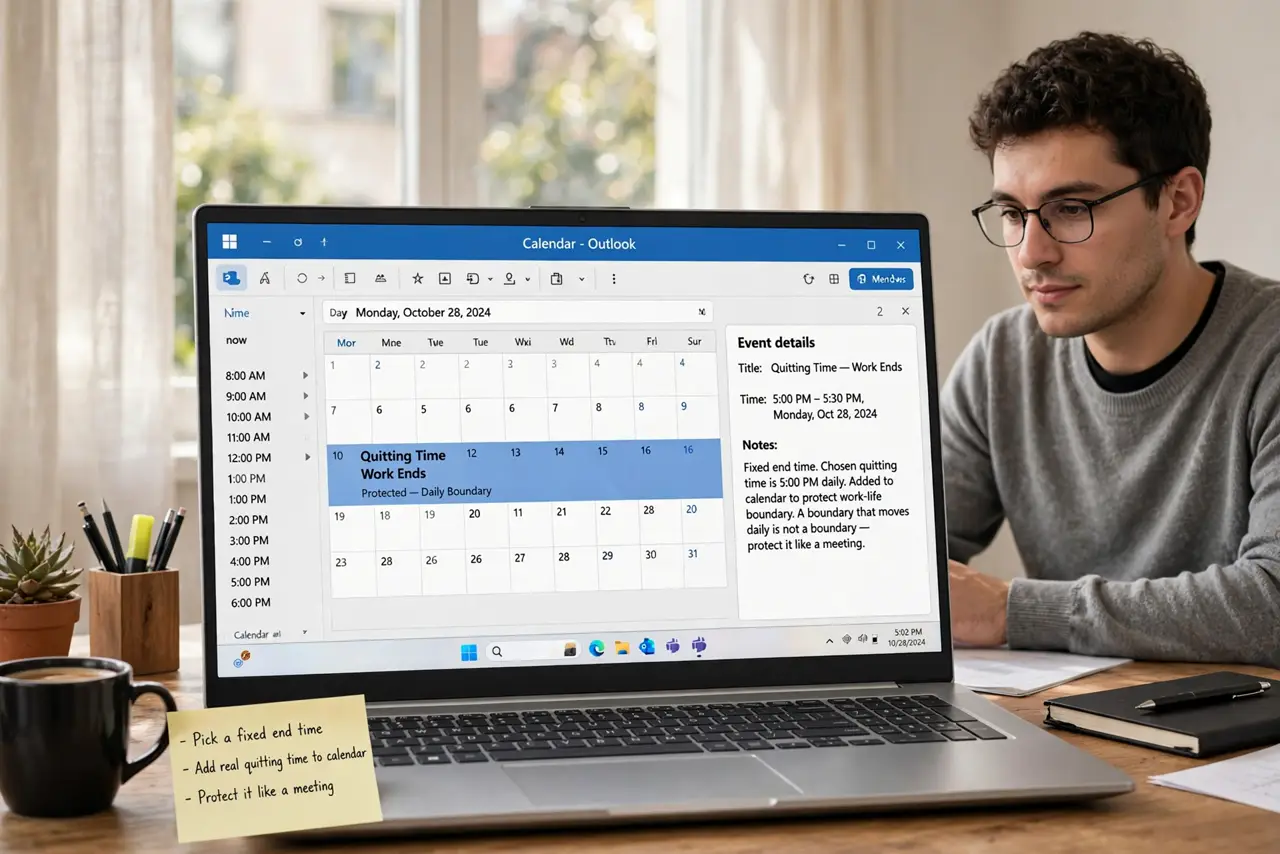
- Pick a fixed end time. Choose a real quitting time and put it on the calendar. A boundary that moves daily is not a boundary — protect it like a meeting.
- Capture tomorrow's top three. Write down the three tasks that matter most tomorrow. Open loops are what keep your brain “working” all evening — parking them on paper closes the loops.
- Close your tabs and apps. Shut the laptop or close the work browser. A glowing screen of half-finished work is an invitation you will accept at 9 p.m.
- Tidy the desk in sixty seconds. Clear the coffee cups and straighten the space. Tomorrow-you deserves to start clean, and the tidying itself signals “done.”
- Add a transition cue. Change clothes, take a walk, cook — one small ritual that says the workday is over. Commuters got this free; remote workers must build it.
- Silence work notifications. Mute work chat and email until morning. If something is truly urgent, people will call — and they almost never do.
What NOT to do
- Do not check “just one email” after hours. One email is never one email — it is the whole inbox wearing a disguise.
- Do not skip the ritual when you are busiest. The busiest days are exactly when open loops scream loudest at night.
- Do not make it a thirty-minute production. Five minutes, same steps, every day — elaborate rituals get abandoned.
- Do not end the day doomscrolling. Trade the phone for the transition cue; your nervous system will thank you.
Frequently asked questions
I work from home — does this still work?
Even more so. Without a commute, the ritual is the only boundary between work-you and home-you.
What if my boss messages late?
Decide the policy once: true emergencies get a call, everything else waits. Then enforce it kindly and consistently.
How is this different from a to-do list?
It is a shutdown, not planning — the point is psychological closure. For handling the email itself, batch shallow tasks during the day.