Spot Fake Invoices
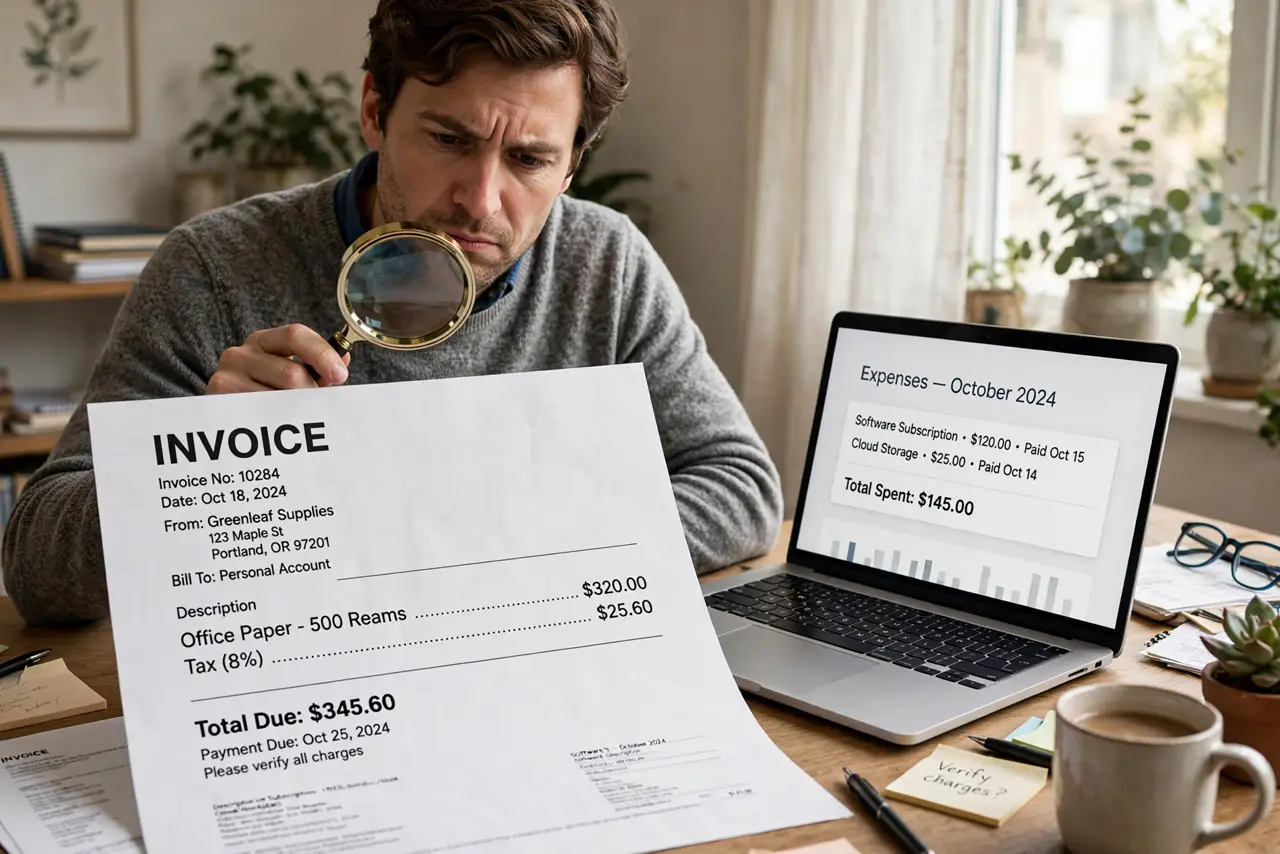
An invoice arrives that looks exactly like your accounting software's format — new bank details for a supplier you actually use, or a bill for services you never ordered. Fake invoices are the quietest business scam: no drama, just a convincing document and changed payment details. This guide shows the verification habit that stops them, whether you run a business or just pay household bills. For the text-message cousins, learn to spot package scams.
TL;DR / Quick Fix
Quick fix: never pay an invoice with changed bank details without verifying by phone — call the supplier on their known number, not the one on the invoice. Watch for slightly-off email addresses and urgent payment pressure. When in doubt, pay the old details or not at all until verified.
Follow these steps
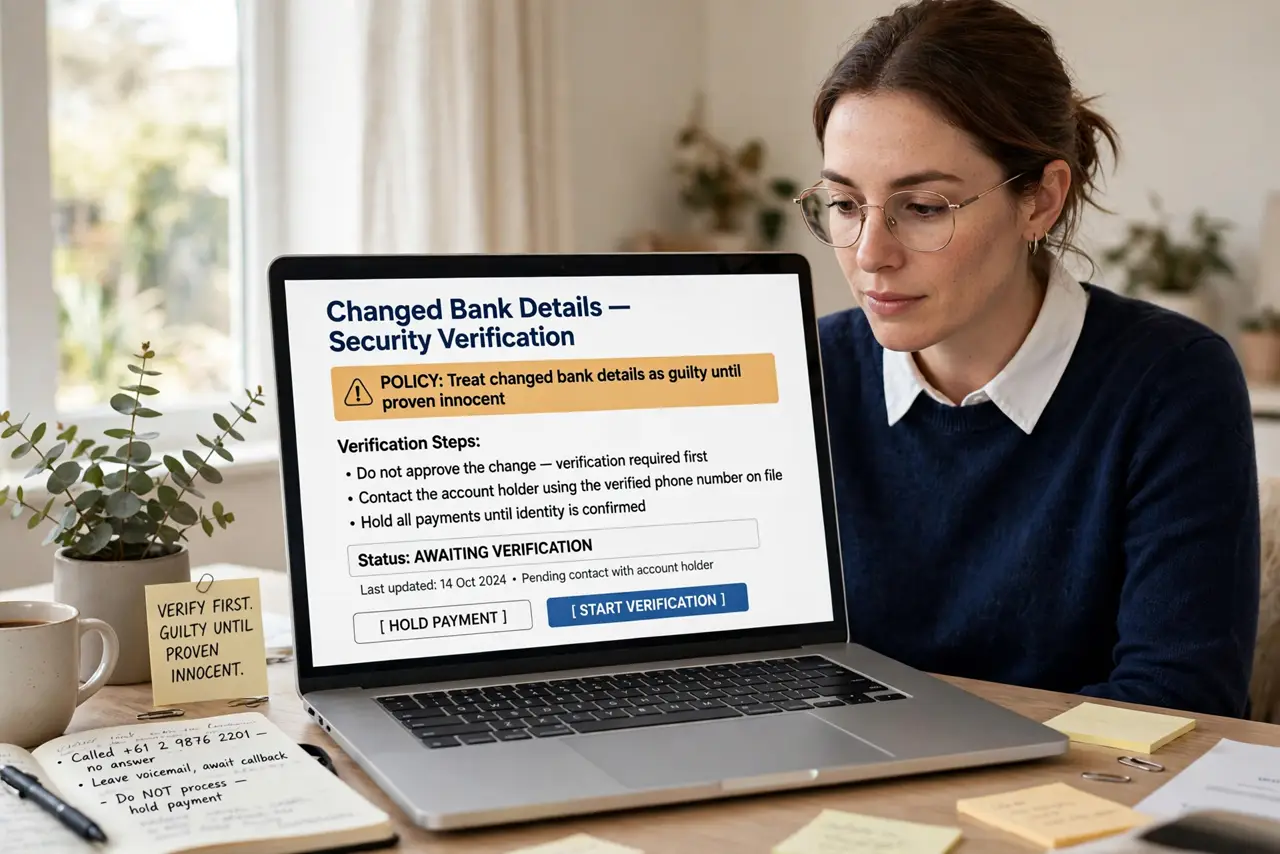
- Treat changed bank details as guilty until proven innocent. The number one invoice scam is real supplier, fake new account numbers. Any 'we changed banks' notice gets a phone verification before a single payment moves.
- Call the known number. Look up the supplier's real number — your contacts, their official site — and confirm the change verbally. The number printed on the suspicious invoice belongs to the scammers.
- Inspect the sender address. Scam invoices come from lookalike domains: one letter off, a hyphen added, a different suffix. Compare against previous real invoices, not against the invoice itself.
- Resist the urgency. 'Pay today or service stops' is pressure by design. Real suppliers send reminders; they do not hold you hostage over one email.
- Confirm unexpected invoices. A bill from a vendor you never used is either a scam or a mistake. A two-minute call resolves it — paying first and asking later does not.
- Report and document. Forward scam invoices to your email provider's phishing report and, for businesses, to the authorities. Keep the evidence; delete the temptation.
What NOT to do
- Do not pay first and verify later. Reversing a wire to a scammer's account is nearly impossible — verification comes before payment, always.
- Do not trust the phone number on the invoice. Scammers staff their own 'accounts department' to confirm their own fraud.
- Do not approve invoices by email alone in a business. A callback rule for changed details stops the most expensive version of this scam.
- Do not ignore small test invoices. Scammers sometimes send a tiny real-looking bill first; paying it marks you as an easy target.
Frequently asked questions
The invoice came from my supplier's real email — is it safe?
Not necessarily — email accounts get hacked. Changed bank details still need a phone call, even from a familiar address.
What if I already paid?
Call your bank immediately about a recall, and report to the police. Speed matters enormously; then fix the verification process so it cannot repeat.
Are PDF invoices safe to open?
Usually, but malicious PDFs exist. If you were not expecting it, verify with the sender before opening attachments.