Are Flat Ethernet Cables OK?
They are thin, they slide under rugs, they come in pretty colors — flat Ethernet cables look like the tidy solution to ugly wiring. And for short runs, they genuinely are. But the flat shape sacrifices the interference-fighting geometry of round cable, which matters more than most buyers realize. Here is when flat is fine and when it is a mistake.
TL;DR / Quick Fix
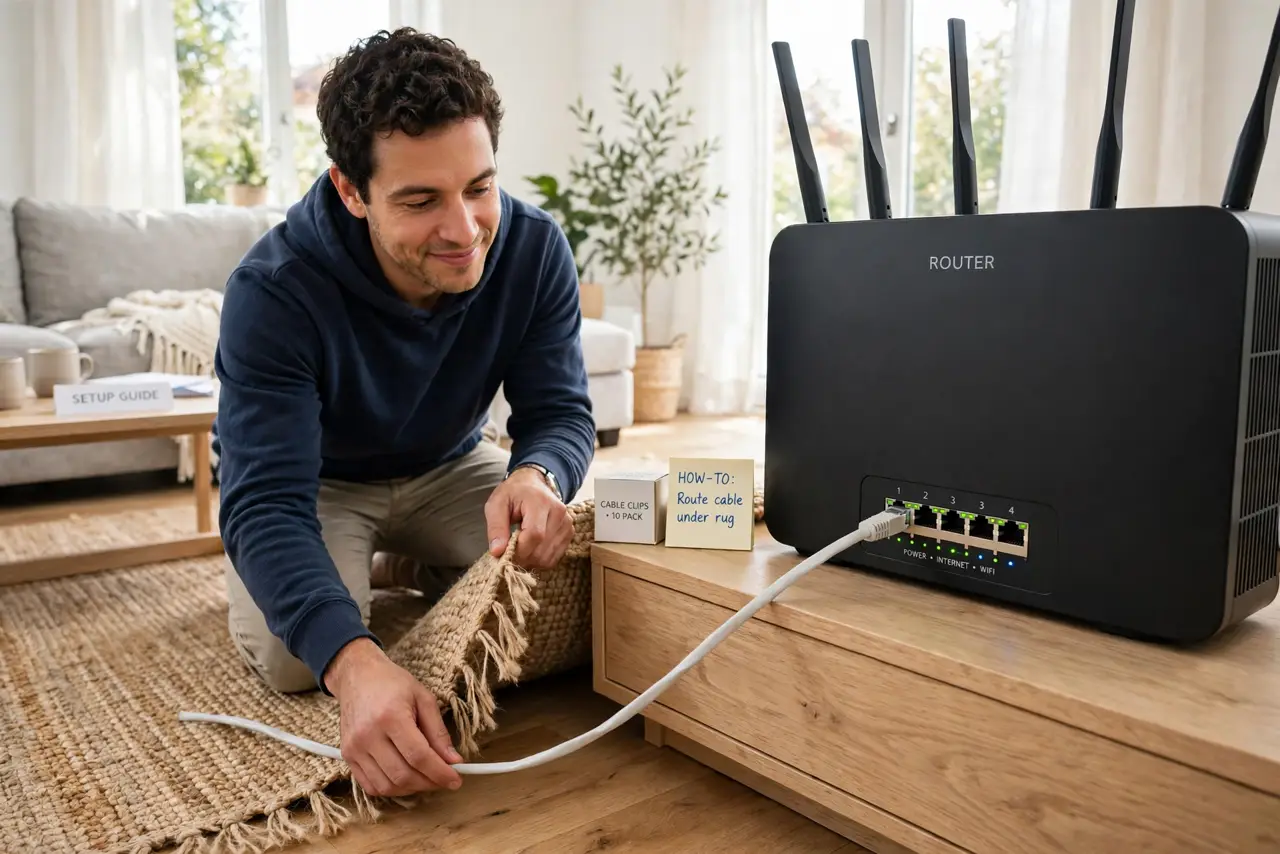
Quick fix: flat Ethernet cables are fine for short, simple runs — easy to hide under rugs and through tight gaps. But they are more fragile, worse at rejecting interference, and rarely rated above Cat6. For permanent in-wall runs or long distances, round cable wins. Match cable to the job.
Follow these steps
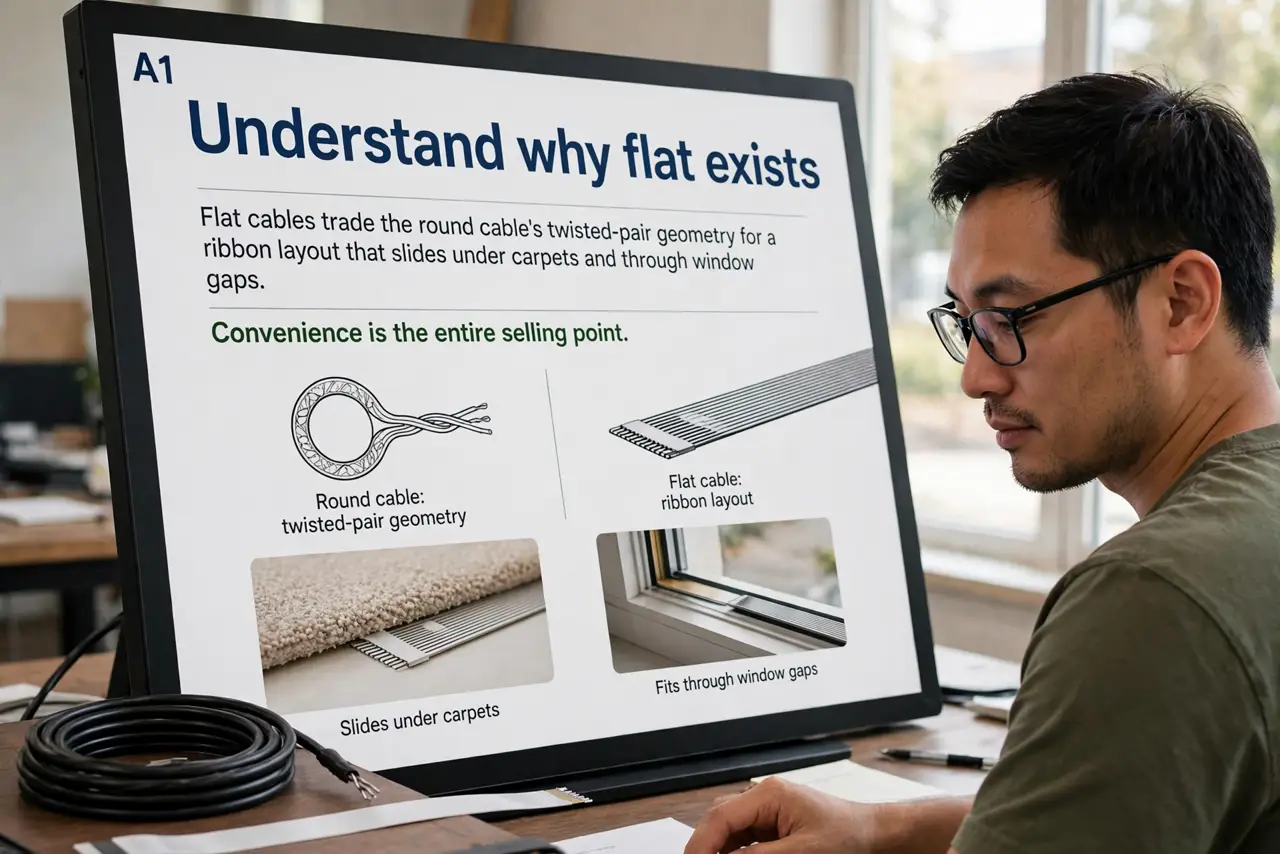
- Understand why flat exists. Flat cables trade the round cable's twisted-pair geometry for a ribbon layout that slides under carpets and through window gaps. Convenience is the entire selling point.
- Know the interference tradeoff. Round cables twist each pair precisely to cancel interference; flat cables twist less effectively. Near power cables, flat cable picks up more noise — keep runs away from mains wiring.
- Check the category rating. Most flat cables top out at Cat6 (fine for gigabit). If you are wiring for 10-gigabit future-proofing, round Cat6a is the honest choice — the cable category guide explains the ratings.
- Keep runs short. Flat cable is happiest under 15 meters. Longer runs amplify its weaknesses — for the garage or garden office, see the outdoor run guide instead of stretching a flat cable.
- Do not crush it. The flat profile invites abuse: slammed doors, heavy furniture, tight staples. A crushed flat cable fails intermittently — the most maddening kind of failure. Route it where feet and furniture will not go.
- Test after installing. Plug in and check you actually get the expected speed. A cable that works at 100 Mbps instead of 1000 is a common flat-cable disappointment — verify, do not assume.
What NOT to do
- Do not run flat cable inside walls as permanent wiring. It is not rated for it, cannot be easily replaced, and violates wiring best practice.
- Do not expect Cat6a performance from a flat cable. The physics of the flat layout caps what it can do — buy round cable for 10-gig plans.
- Do not run it alongside power cables. Flat cable's weaker interference rejection makes this worse than with round cable — cross power lines at right angles if you must.
- Do not staple it tightly. Staples crush the conductors and create intermittent faults — use adhesive clips sized for flat cable.
Frequently asked questions
Is flat Ethernet slower than round?
Not inherently at short lengths — a good flat Cat6 does gigabit fine. The gap appears in interference-heavy environments and at longer distances.
Can I run flat cable under a rug?
Yes — that is its best use case. Use a rug-rated protector if there is foot traffic, and avoid the crushed-cable failure.
Why is my flat cable only giving 100 Mbps?
Usually a damaged conductor from crushing, or a cheap cable mislabeled as Cat6. Test with a known-good round cable to isolate the culprit.