Ethernet Cat5e vs Cat6: What Actually Matters
Shopping for ethernet cable means facing Cat5e, Cat6, and bigger numbers with bigger prices. For most homes the honest answer is simple: the cable you already own is probably fine.
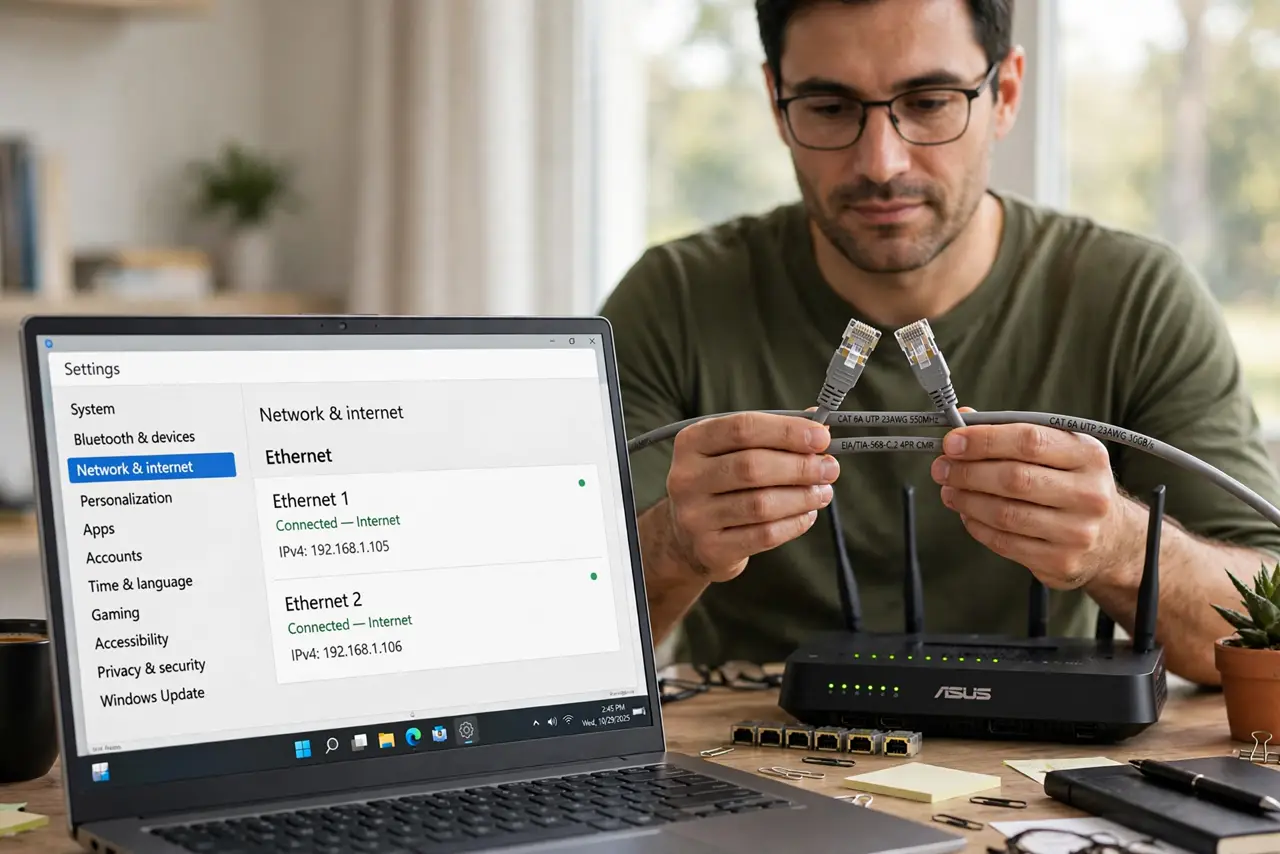
TL;DR / Quick Fix
Quick fix: read what is printed on your current cable. Cat5e handles gigabit, which covers nearly every home internet plan. Buy Cat6 only for new in-wall runs or multi-gigabit gear, and skip anything fancier unless your equipment can actually use it.
Follow these steps
- Read the jacket of the cable you own. The category is printed along the cable every foot or so. If it says Cat5e, you already own a cable good for gigabit, and replacing it buys nothing.
- Match the cable to your plan. Cat5e carries a full gigabit, which exceeds most home plans. A faster cable cannot make a 300-megabit plan any faster, so check your plan speed first.
- Buy Cat6 for new long runs. If you are pulling cable through walls, Cat6 costs little more and handles 10-gigabit over shorter distances. For a cable you will not touch for a decade, the small premium is worth it.
- Ignore Cat7 and Cat8 for homes. Those categories target data centers with special shielded connectors. In a home they add cost and stiffness with no speed your gear can use.
- Check the connectors, not just the cable. A Cat6 cable with a damaged or poorly crimped connector performs worse than a good Cat5e. Look for solid clicks and no bent pins before blaming the category.
- Test, do not guess. Plug the cable in and run a speed test. A cable that delivers your full plan speed is the right cable, whatever its label says.
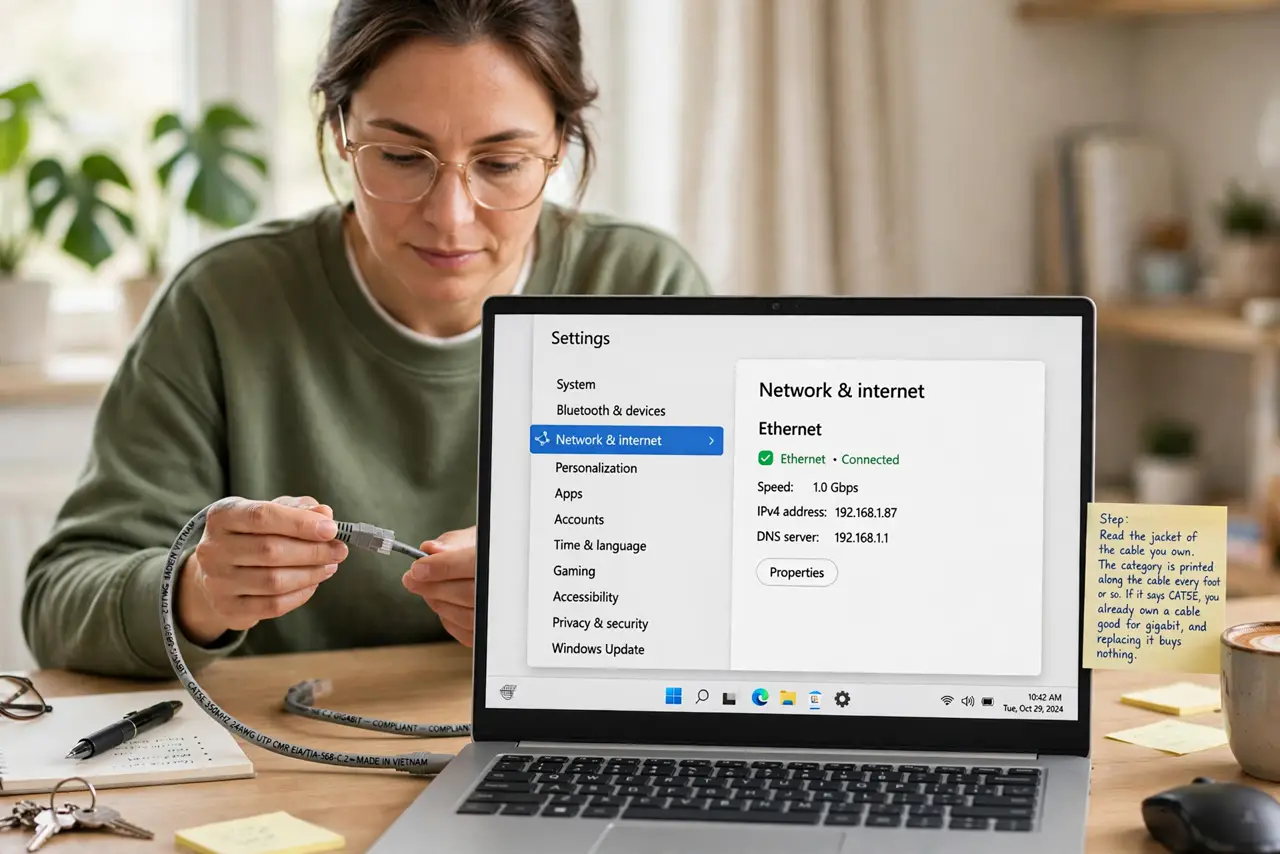
What NOT to do
- Do not rewire the house chasing a category number. If speed tests already show your full plan speed, the cable is not the bottleneck.
- Do not buy the most expensive cable assuming fastest. Past Cat6, home gear cannot use the extra headroom, so the money buys nothing but a thicker cable.
- Do not mix up cable category with Wi-Fi speed. The cable only affects wired devices, and your phone on Wi-Fi will never feel the difference.
- Do not throw away working Cat5e cables. They remain perfectly good for gigabit, and replacing them is pure waste.
Frequently asked questions
Is Cat6 faster than Cat5e in my home?
Only if your plan and gear exceed a gigabit. Otherwise both deliver exactly the same speed: your plan's full rate.
Should I replace all my Cat5e?
No. Replace a cable only when it is damaged or when you install multi-gigabit equipment that needs more.
What about flat ethernet cables?
Flat cables work for short runs but can underperform over distance. For runs over a few meters, round cable is the safer pick.