Fraud Alerts? What They Do
After a data breach or a scare, everyone says 'put a fraud alert on your credit' — but what does it actually do? A fraud alert flags your file so lenders must take extra steps to verify your identity before opening new accounts. It's free, takes minutes, and one call covers all three bureaus.
TL;DR / Quick Fix
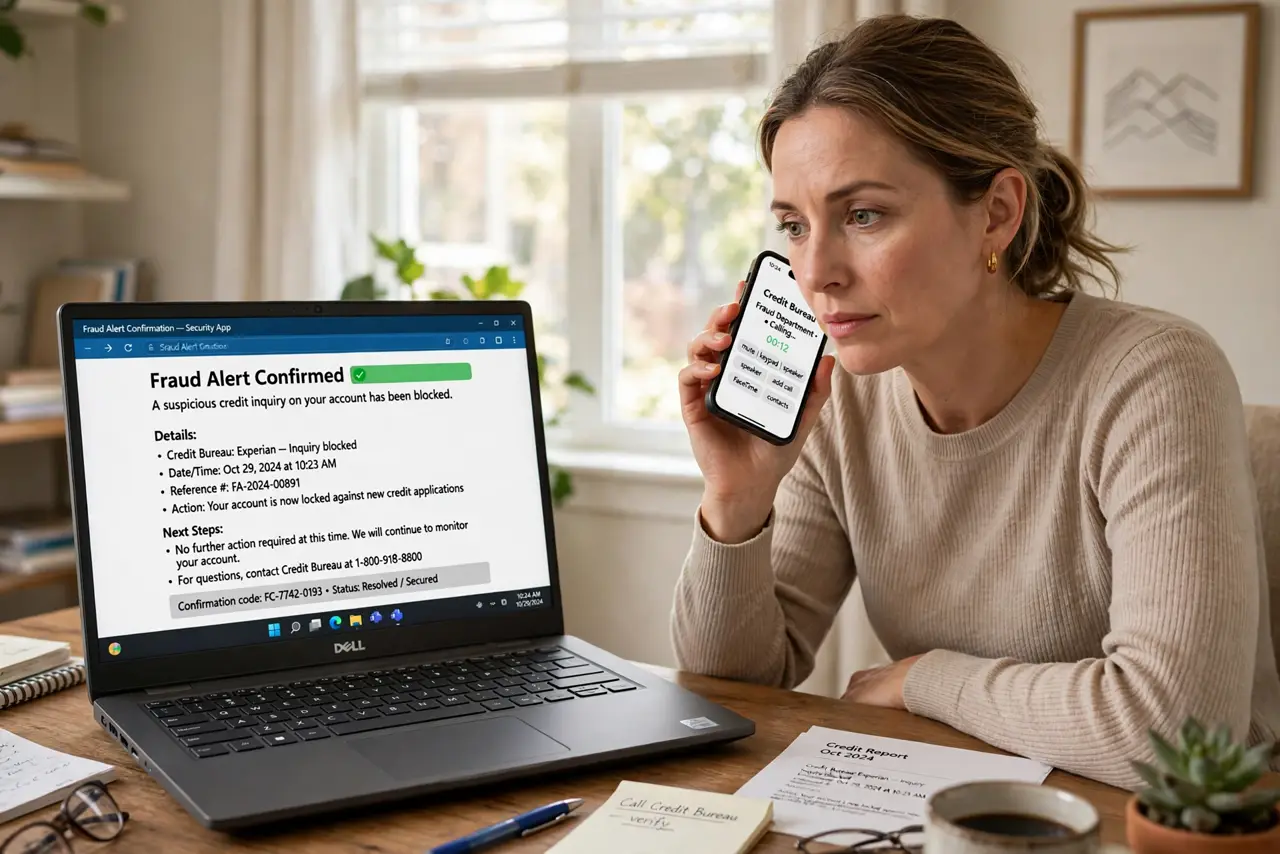
A fraud alert tells lenders to verify your identity carefully before opening accounts — place one free with any bureau and it notifies the other two. Initial alerts last one year; extended alerts last seven with a police report. A freeze blocks new accounts more completely.
Follow these steps
- Call one bureau. Contact Equifax, Experian, or TransUnion — whichever you prefer. By law, that bureau notifies the other two — see freeze vs lock for the stronger option.
- Choose initial or extended. Initial alerts last one year and need no documentation. Extended alerts last seven years but require a police report or FTC identity theft report.
- Add your contact details. The alert includes a phone number for lenders to verify you. Keep it current — an unreachable number weakens the protection.
- Confirm all three bureaus. Each bureau should confirm the alert. Don't assume the notification chain worked — verify.
- Renew initial alerts yearly. Calendar a reminder: initial alerts expire after a year. Renew until the risk passes, or upgrade to a freeze.
- Consider a freeze instead. Alerts ask lenders to verify; a freeze blocks access outright. For serious risk, do both.

What NOT to do
- Do not treat an alert as a freeze. Alerts request verification; determined fraud can still slip through — freezes actually block.
- Do not pay for a fraud alert. They're free by law — any charge is for an add-on service you don't need.
- Do not place an alert and ignore your reports. Alerts are one layer — still review your credit reports for unfamiliar accounts.
- Do not forget the alert when applying yourself. Extra verification applies to your legitimate applications too — keep your phone handy.
Frequently asked questions
Is a fraud alert or freeze better?
A freeze blocks new accounts outright; an alert asks lenders to verify first. For maximum protection after identity theft, use both.
Do fraud alerts affect my credit score?
No — alerts have zero impact on your score. They only add a verification step for new credit applications.
Can I place an alert for someone else?
For minor children or incapacitated adults, yes, with proper documentation. Adults must place their own unless they authorize you.