Freeze Your Credit
Identity theft rarely starts with a ski mask — it starts with your Social Security number opening a credit card you never applied for. The single strongest defense is a credit freeze: it locks your credit files so no new accounts can be opened in your name, period. It is free, fast, and reversible. If you do one thing from this guide, do this.
TL;DR / Quick Fix
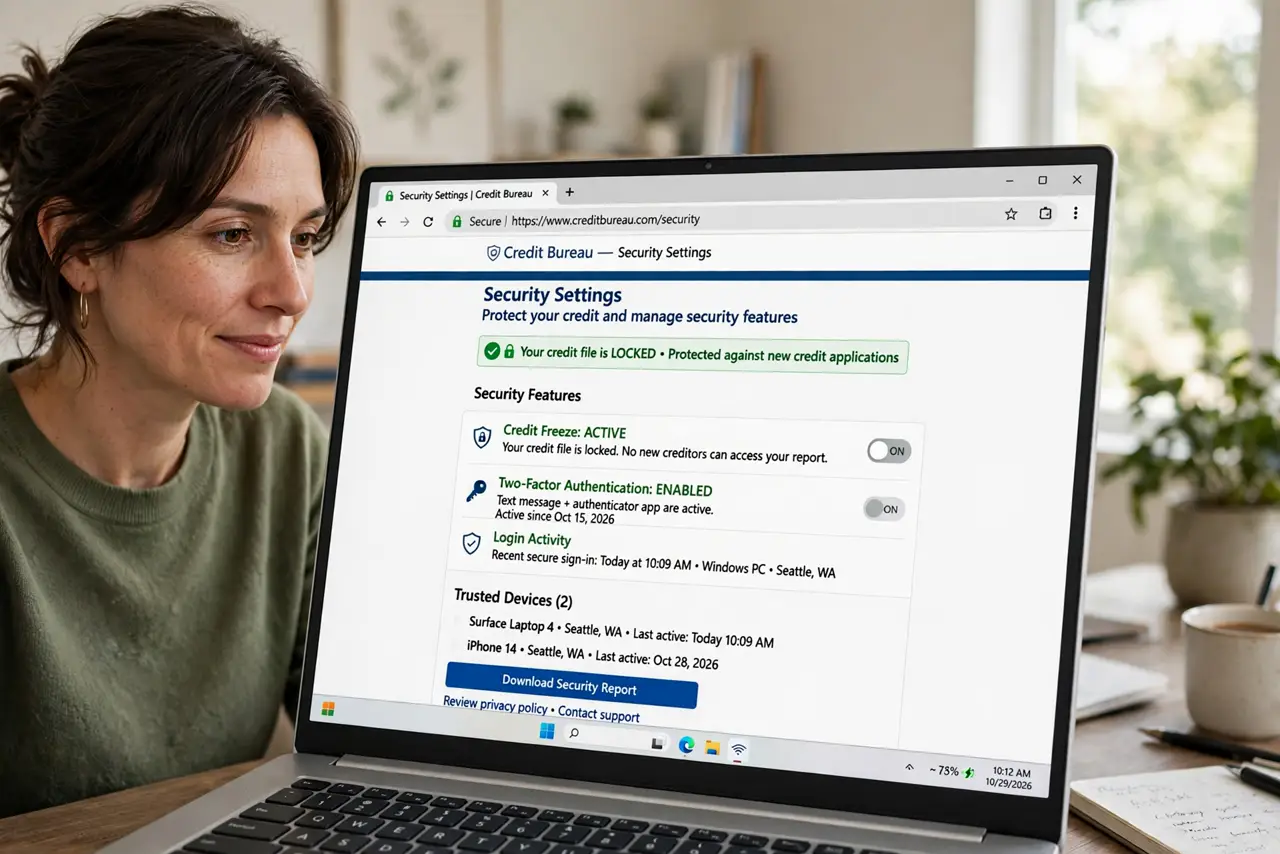
Quick fix: freezing your credit at the three major bureaus blocks anyone from opening accounts in your name — including you, until you lift it temporarily. It is free, takes minutes online per bureau, and never affects your score. It is the strongest defense against new-account identity theft.
Follow these steps
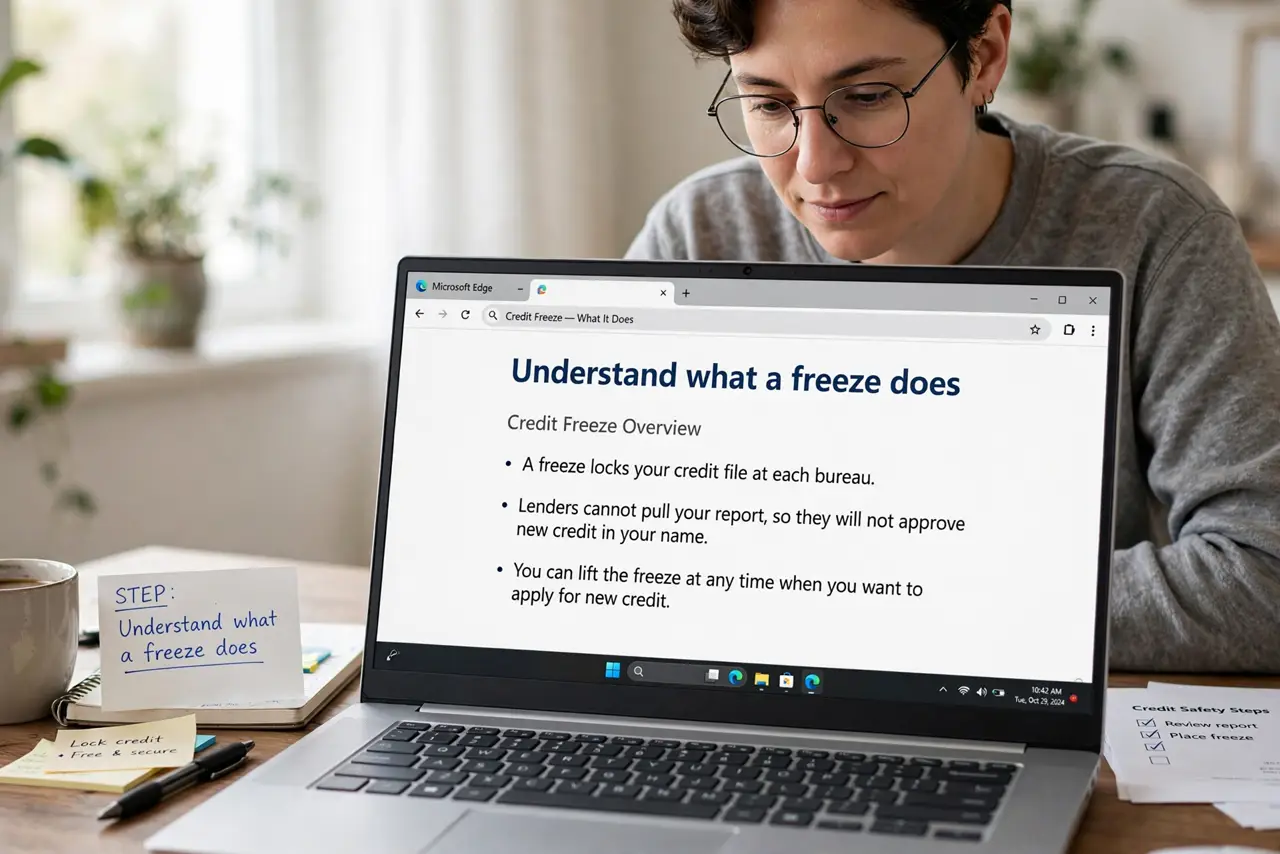
- Understand what a freeze does. A freeze locks your credit file at each bureau. Lenders cannot pull your report, so they will not approve new credit in your name — to anyone, including identity thieves. Existing accounts and your score are untouched.
- Freeze all three bureaus. In the US, that is Equifax, Experian, and TransUnion — you must freeze each one separately. A freeze at one bureau does not cover the others, and thieves try them all. Each bureau's site or phone line handles it in minutes; the step-by-step how-to walks through each.
- Save your PINs somewhere safe. Each bureau gives you a PIN or account to manage the freeze. Store these in your password manager — losing them turns a five-minute thaw into a paperwork ordeal.
- Thaw temporarily when you need credit. Applying for a loan, apartment, or new card? Lift the freeze temporarily for that bureau, usually for a set number of days. It is instant online and refreezes automatically.
- Do it for kids too. Children's clean credit files are prime targets because theft goes unnoticed for years. All three bureaus let parents freeze a minor's file — do it now, thank yourself later.
- Pair it with fraud alerts as backup. A freeze is the wall; a fraud alert is the alarm. Adding one costs nothing and tells lenders to verify identity extra carefully — belt and suspenders.
What NOT to do
- Do not freeze just one bureau. Thieves check all three — a single freeze leaves two doors wide open.
- Do not lose your thaw PINs. Without them, unfreezing takes days of verification calls instead of minutes online.
- Do not confuse a freeze with a lock. Bureaus sell 'lock' products with subscriptions; the freeze is free by federal law and does the same core job.
- Do not assume a freeze stops all identity theft. It blocks new credit accounts — not tax fraud, medical fraud, or takeover of existing accounts. Layer your defenses.
Frequently asked questions
Does freezing hurt my credit score?
No. A freeze has zero effect on your score — it only controls who can view your file for new applications.
How is a freeze different from a fraud alert?
A freeze blocks access entirely until you lift it. A fraud alert just asks lenders to verify identity more carefully. The freeze is stronger; many people use both.
I am about to apply for a mortgage. Should I wait?
No — freeze now, thaw when you apply. Lifting a freeze for a specific lender takes minutes online, so there is no reason to stay exposed meanwhile.