Ergonomic Keyboard? Worth It?
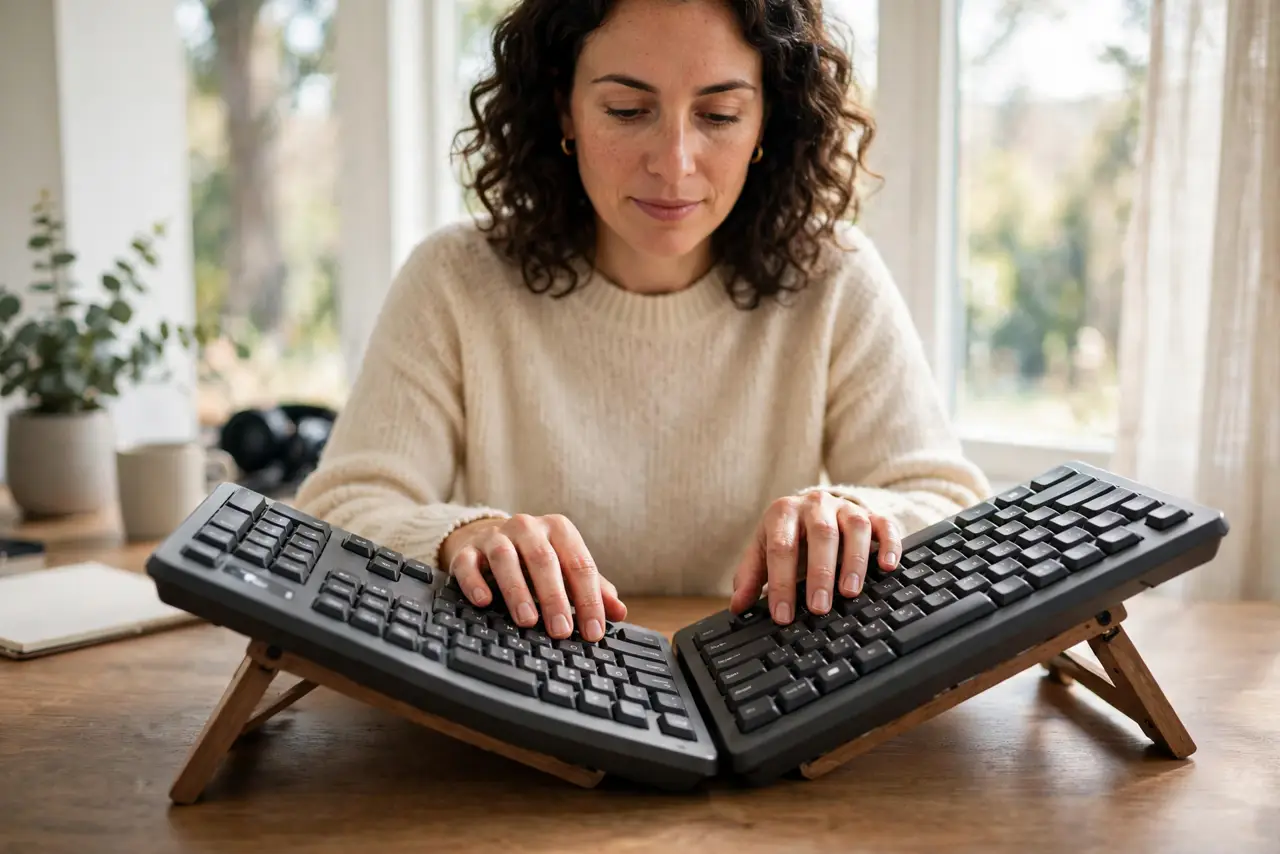
Your wrists ache after long typing days and someone suggested an ergonomic keyboard — those split, tented, oddly shaped boards that look like they belong in a sci-fi movie. They genuinely help many people, but they also demand a learning curve. Here is how to tell whether one is worth it for you.
TL;DR / Quick Fix
Quick fix: ergonomic keyboards split or angle the keys so wrists stay straight, easing strain for heavy typists. They take one to two weeks to learn. Start with a cheap tented board before a pricey split. If pain persists, see a professional — a keyboard is not medical treatment.
Follow these steps
- Understand what changes. Split boards separate the halves so shoulders relax; tenting raises the middle so wrists stay neutral. Both fight the flat-board twist that strains wrists.
- Try cheap before expensive. A sub-$50 tented board tells you whether the concept helps. If it does, then invest in the fancy split.
- Budget two weeks of clumsiness. Your typing speed will crater at first. That is normal — muscle memory rewires in one to two weeks of daily use.
- Pair it with a comfortable mouse. A great keyboard plus a painful mouse is half a fix — see the vertical mouse if wrist angle bothers you there too.
- Fix posture first, gear second. Chair height, desk height, and monitor position matter as much as the keyboard. An ergo board on a bad setup disappoints.
- Know when to stop DIYing. Persistent pain, numbness, or tingling deserves a medical professional, not a new peripheral.

What NOT to do
- Do not expect overnight miracles. The first week feels worse — quitting on day three proves nothing.
- Do not buy the most extreme split as your first. Start mild; you can go weirder later if you love it.
- Do not ignore the mouse. Wrists do not care which device hurts them.
- Do not treat a keyboard as medical advice. It is comfort gear, not a diagnosis.
Frequently asked questions
Do ergonomic keyboards really work?
For many heavy typists, yes — straighter wrists mean less strain. But posture, breaks, and individual anatomy matter as much as the hardware.
Will I type slower forever?
No — most people return to full speed within two to three weeks, and some type faster once the strain is gone.
Are they all split in two?
No. 'Ergonomic' covers gentle waves, tented one-piece boards, and full splits. Start with the mildest shape that addresses your discomfort.