E-Waste? Basics
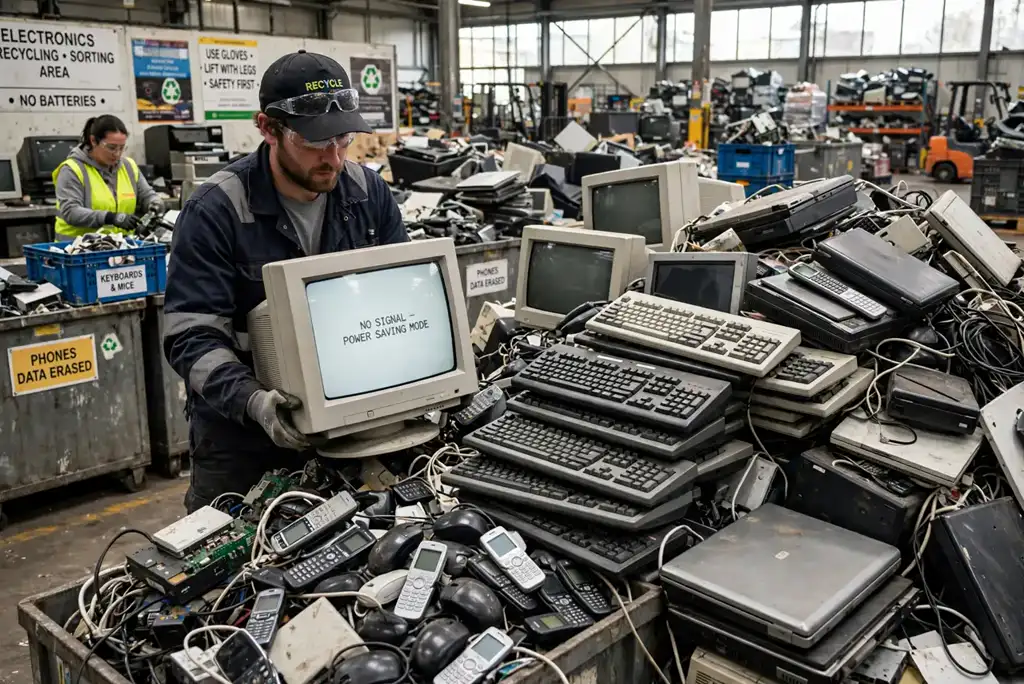
E-waste is the fastest-growing waste stream on the planet — dead phones, old TVs, and obsolete gadgets piling up by the millions of tons. Each one holds valuable metals and toxic chemicals at the same time, which is why how you dispose of them matters more than with almost any other trash. This guide explains the problem and your part in it.
TL;DR / Quick Fix
Quick fix: never put electronics in regular trash — use a certified e-waste recycler or retailer take-back program. Wipe personal data before handing devices over. Separate batteries for battery-specific drop-off. Donate working gear instead of scrapping it; repair beats recycling when the device still has life.
Follow these steps
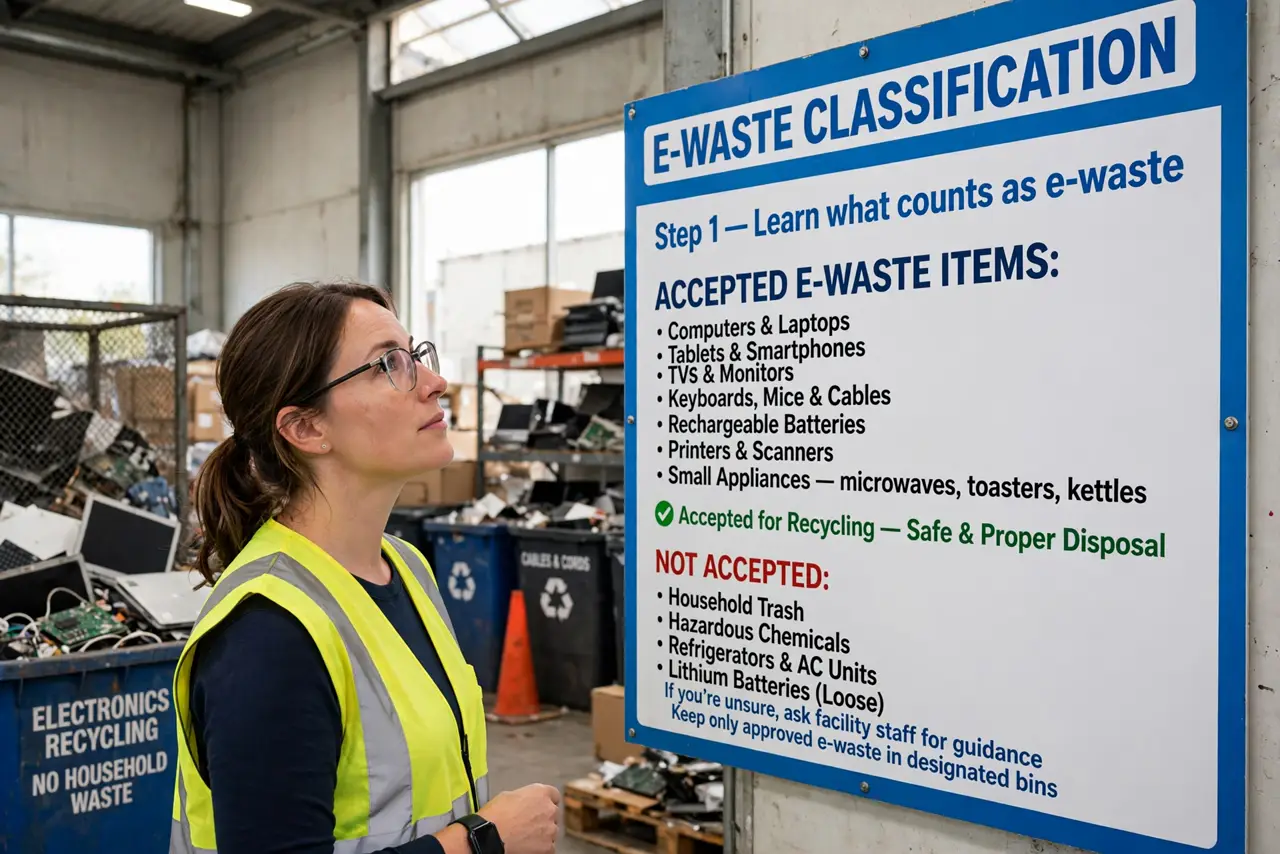
- Learn what counts as e-waste. Anything with a circuit board or battery: phones, laptops, TVs, chargers, even electric toothbrushes. If it plugs in or takes batteries, it is e-waste — not regular trash.
- Understand why it matters. Electronics contain lead, mercury, and cadmium alongside gold, copper, and rare earths. Landfilled, they poison; recycled, they become tomorrow's devices.
- Wipe before you drop off. Recycling streams are not data-secure by default. Factory reset everything and pull drives — your old laptop's hard drive is the part that matters most.
- Handle batteries separately. Swollen or old lithium batteries are a fire risk in collection bins. Tape the contacts and use battery drop-off points — never the regular trash.
- Extend life before recycling. Repair, donate, or repurpose first. The greenest device is the one already made — recycling is the last resort, not the first.
- Buy with the end in mind. Devices with replaceable batteries and available parts stay out of the waste stream years longer. Repairability is an environmental feature.
What NOT to do
- Do not put e-waste in the regular bin. Toxins leach from landfills and the valuable materials are lost forever.
- Do not stockpile dead devices indefinitely. 'Might need it' drawers just delay recycling while batteries degrade and leak.
- Do not break open batteries or CRTs. Punctured lithium cells ignite; old tube screens contain lead — leave both to professionals.
- Do not assume 'recycled' means responsible. Uncertified haulers sometimes dump abroad — use certified recyclers.
Frequently asked questions
How big is the e-waste problem?
Tens of millions of tons yearly and growing — the fastest-growing waste stream, with only a fraction properly recycled.
Can e-waste really be recycled profitably?
Yes — phones contain precious metals worth recovering, which is why certified recyclers will often take them free.
What is the single best thing I can do?
Keep devices longer. Every extra year of use beats any recycling program — then recycle properly at the true end of life.