IPS vs VA vs OLED? Basics
Every monitor and TV listing throws around IPS, VA, and OLED like you already know the difference. These are the three main screen technologies, and each trades off color, contrast, and price differently. Picking blind is why a 'great deal' can look washed out from the couch or smear in fast games. Here is the plain-English breakdown — no engineering degree needed.

TL;DR / Quick Fix
Quick fix: IPS panels have the best colors and viewing angles — the safe pick for most people. VA panels give deeper blacks and better contrast, great for movies. OLED has perfect blacks and response but costs more. For mixed everyday use, choose IPS; for dark-room movies, VA or OLED.
Follow these steps
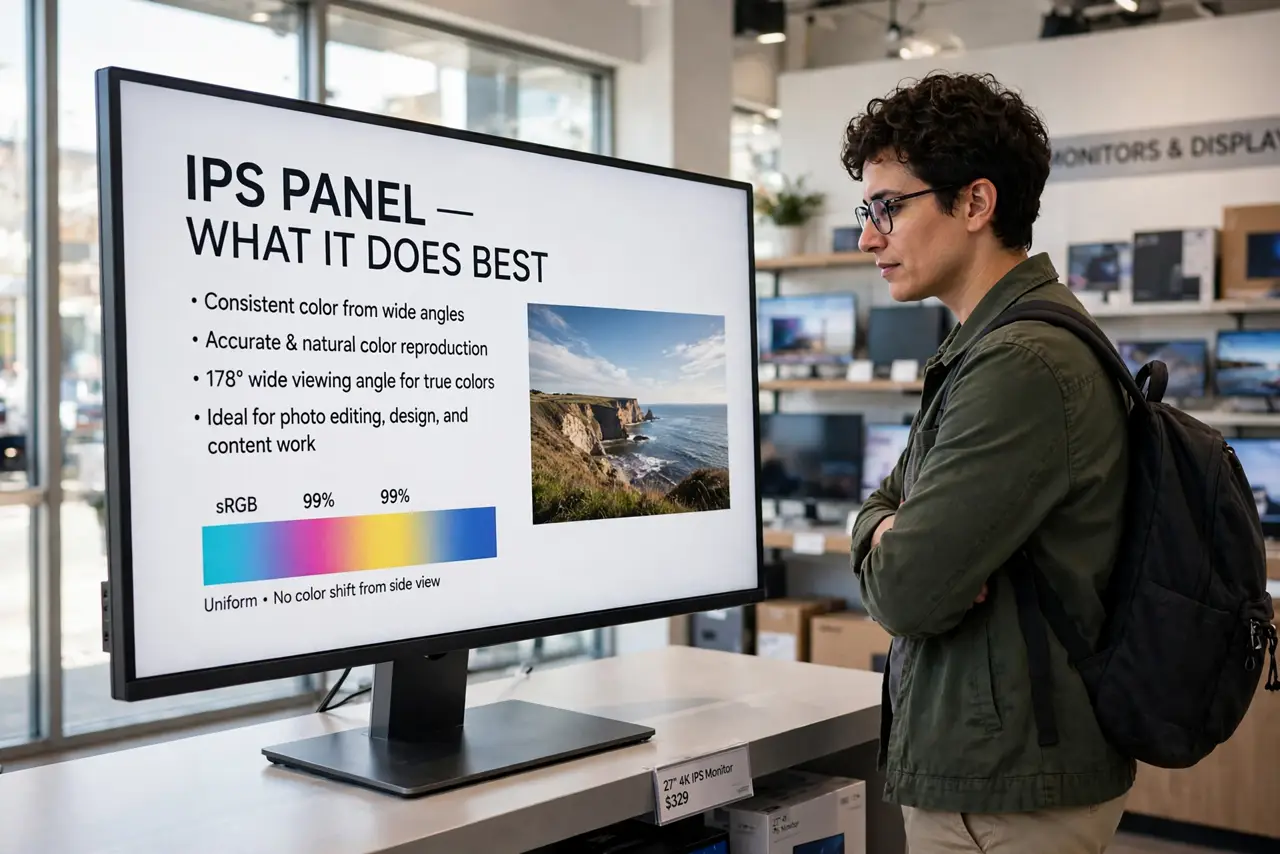
- Learn what IPS does best. IPS keeps colors accurate even viewed from the side, with wide viewing angles and solid response times. It is the default recommendation for office work, design, and general use. If you share the screen or sit off-center, IPS is the forgiving choice.
- Learn what VA does best. VA panels produce much deeper blacks and higher contrast than IPS — dark movie scenes look dramatically better. The tradeoff: slower response times and color shift at angles. For a bedroom TV or movie-first monitor, VA wins on picture.
- Learn what OLED does best. OLED pixels make their own light, so blacks are truly black and response is instant. Contrast and motion clarity beat both LCD types. The costs: higher price and some care needed with static images during marathon sessions.
- Match the panel to your main use. Mixed everyday use and creative work: IPS. Movies in a dark room: VA for value, OLED for the best picture. Competitive gaming pairs well with fast IPS or OLED — check refresh rate too, since panel and hertz are separate choices.
- Don't judge by showroom demos alone. Stores run vivid torch modes that flatter every panel. Ask to see the standard or movie preset, which is closer to home viewing. What looks punchy under spotlights may look garish in your living room.
- Remember panel quality varies within a type. A good VA beats a cheap IPS; implementation matters as much as the technology. Read reviews for your specific model — the acronym is a starting point, not a verdict.
What NOT to do
- Do not buy VA for fast competitive gaming without checking reviews. Some VA panels smear dark motion visibly.
- Do not assume IPS means perfect blacks. IPS glow in dark rooms is real — VA or OLED wins for movie nights.
- Do not buy OLED for a static news-ticker display. Hundreds of hours of the same static image is the one use case that still worries OLED.
- Do not pick by acronym alone. Backlight quality, coating, and calibration change the picture as much as the panel type.
Frequently asked questions
Which panel is best for photo editing?
IPS, for color accuracy and wide viewing angles. Pair it with a wide color gamut and a basic calibration for serious work.
Is OLED worth the premium?
For dark-room movie watching and premium gaming, yes — the contrast is a visible leap. For bright offices and mixed desk work, a good IPS delivers most of the experience for far less.
Do OLED TVs have burn-in?
Modern OLEDs have strong built-in defenses, and varied content poses little risk. Only marathon static content — one channel all day, every day — remains a real concern.