Hide Your Phone to Focus
Your phone sits face-up beside you, silent, doing nothing — and yet part of your brain is monitoring it. Research keeps finding the same thing: the mere presence of the phone drains attention, even untouched. You cannot out-willpower a device engineered by thousands of people to capture you. But you can out-distance it. This is the physical companion to single-tasking — remove the object, and the urge fades on its own.
TL;DR / Quick Fix
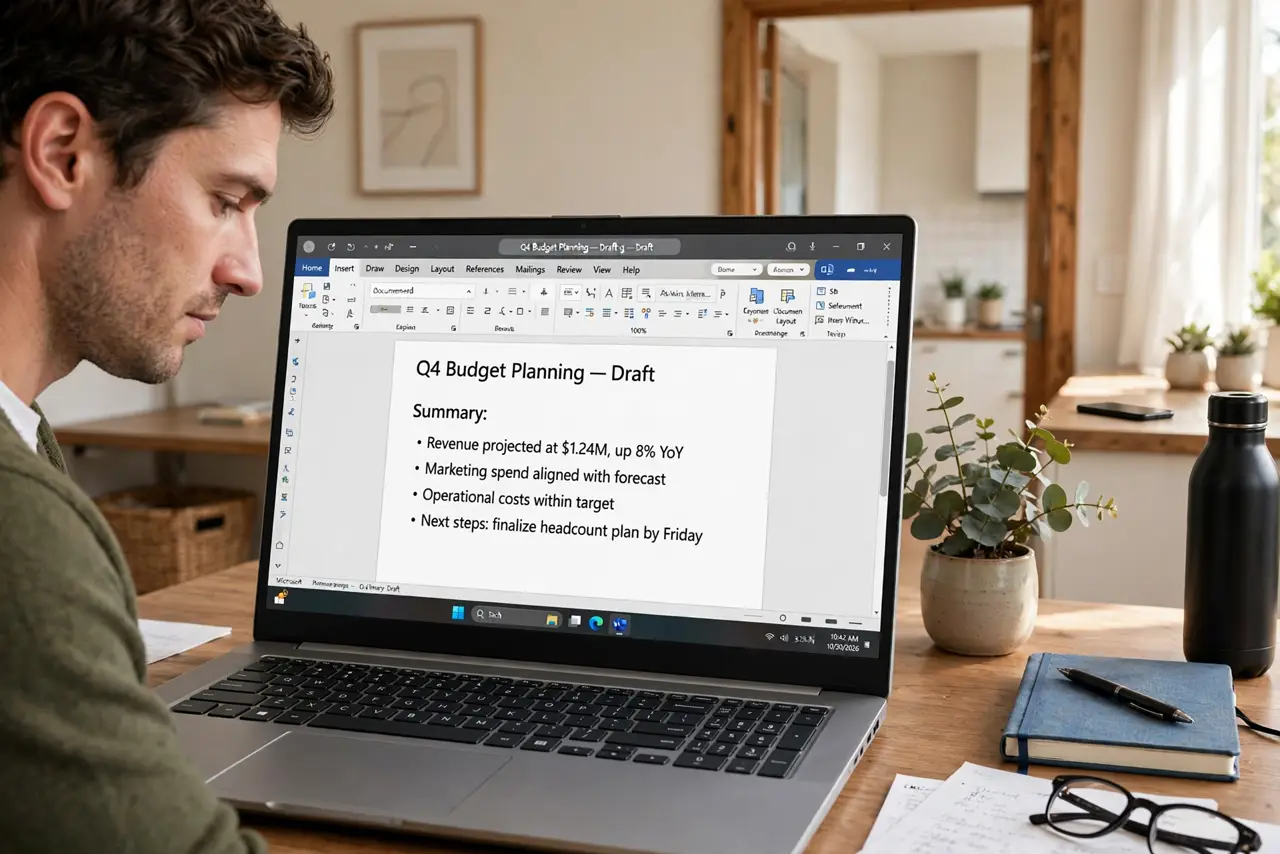
Quick fix: put your phone in another room, face-down, while you work — out of sight weakens its pull. If you need it nearby, enable Do Not Disturb and flip it face-down. The best focus tool is physical distance; willpower alone loses to a buzzing phone.
Follow these steps
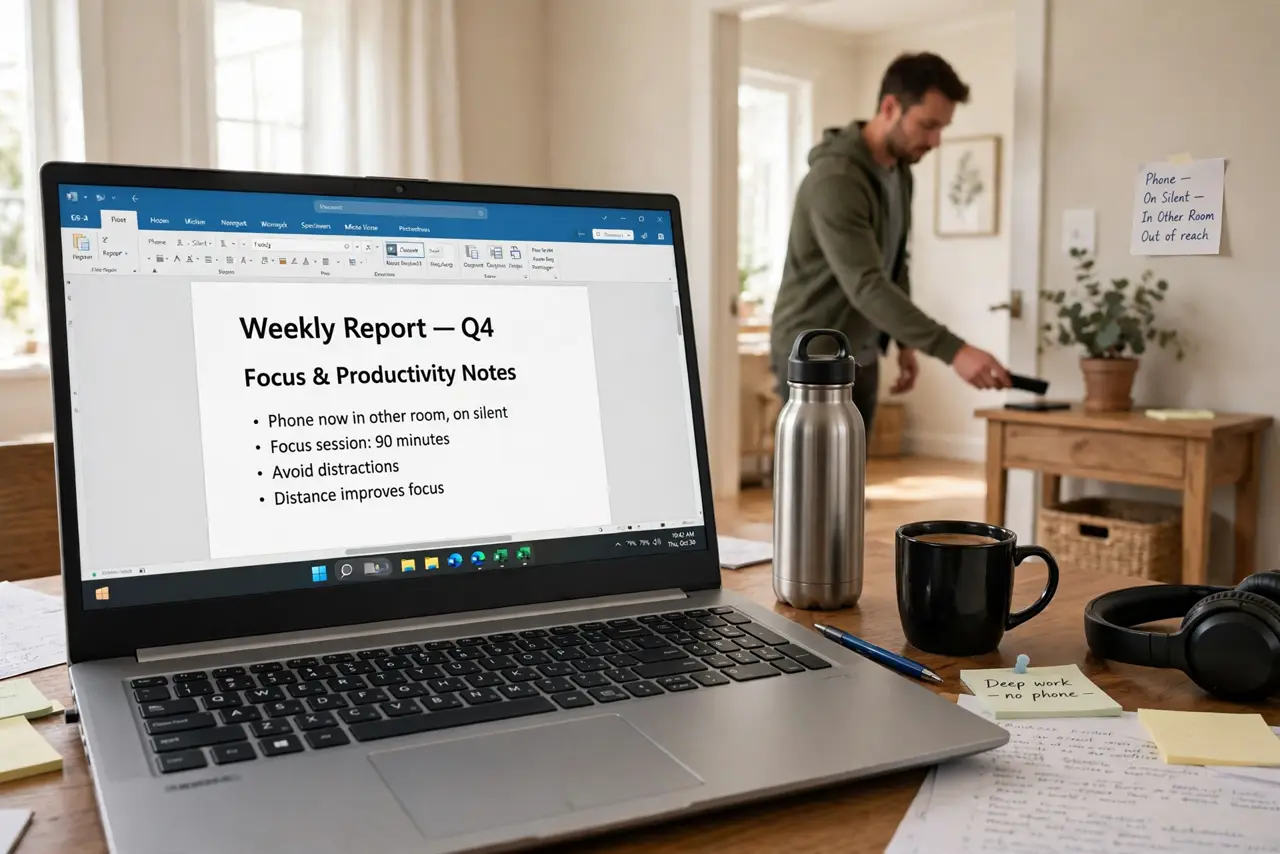
- Put it in another room. The gold standard: phone in a different room, on silent. Studies show even a face-down silent phone on the desk costs attention — distance is the only complete cure.
- Face-down and silent if it must stay. If the phone has to be near (on-call, kids), flip it face-down and enable Do Not Disturb with only true emergencies allowed through. No screen glow, no buzzes — just a dark slab.
- Tell people your focus hours. The anxiety is usually 'what if someone needs me.' Tell key people when you are unreachable and when you will check messages — the social contract removes the guilt that pulls you back.
- Park the phone before the work starts. Make it the first action of a focus block, not a mid-block decision. Ritual beats willpower: phone away, timer on, work begins.
- Use the phone's own focus tools. Scheduled Do Not Disturb, app limits, grayscale mode — the phone can hobble itself on a timer. Set them once and let automation do the resisting for you.
- Notice the phantom urges. The first days bring phantom reaches — your hand moves before your brain decides. Notice them without judgment; each unanswered urge weakens the habit.
What NOT to do
- Do not rely on willpower alone. Willpower is a depleting resource; distance is a one-time decision — choose the decision.
- Do not keep it face-up 'just for the time.' The clock excuse keeps the brightest distraction in your visual field — buy a ten-dollar desk clock instead.
- Do not check it 'during the break' and expect to return. One check becomes a scroll; the break ends and the focus does not resume.
- Do not announce a digital detox instead of acting. Grand declarations fade; quietly putting the phone in the kitchen drawer works today.
Frequently asked questions
What if I am waiting for an important call?
Allow calls from specific contacts through Do Not Disturb, and keep the phone face-down nearby. You will hear the ring that matters and nothing else.
Does this really matter if the phone is silent?
Yes — the research finding is specifically about silent, face-down phones still costing attention. Presence alone is the drain; silence is not enough.
What about smartwatches?
Same rule, smaller screen. Put the watch on Do Not Disturb or take it off during focus blocks — wrist buzzes are phone buzzes.