Someone Filed Taxes as You?
Your e-filed return gets rejected: 'a return was already filed with this Social Security number.' Someone beat you to it — filing a fake return in your name to steal the refund. It's jarring, but there's a defined recovery path: the IRS fraud affidavit, an Identity Protection PIN, and prompt responses to every notice.

TL;DR / Quick Fix
If the IRS rejects your e-file saying a return was already filed with your Social Security number, someone filed as you. File IRS Form 14039, request an Identity Protection PIN, and check your credit reports. Respond to every IRS notice promptly and keep copies of everything.
Follow these steps
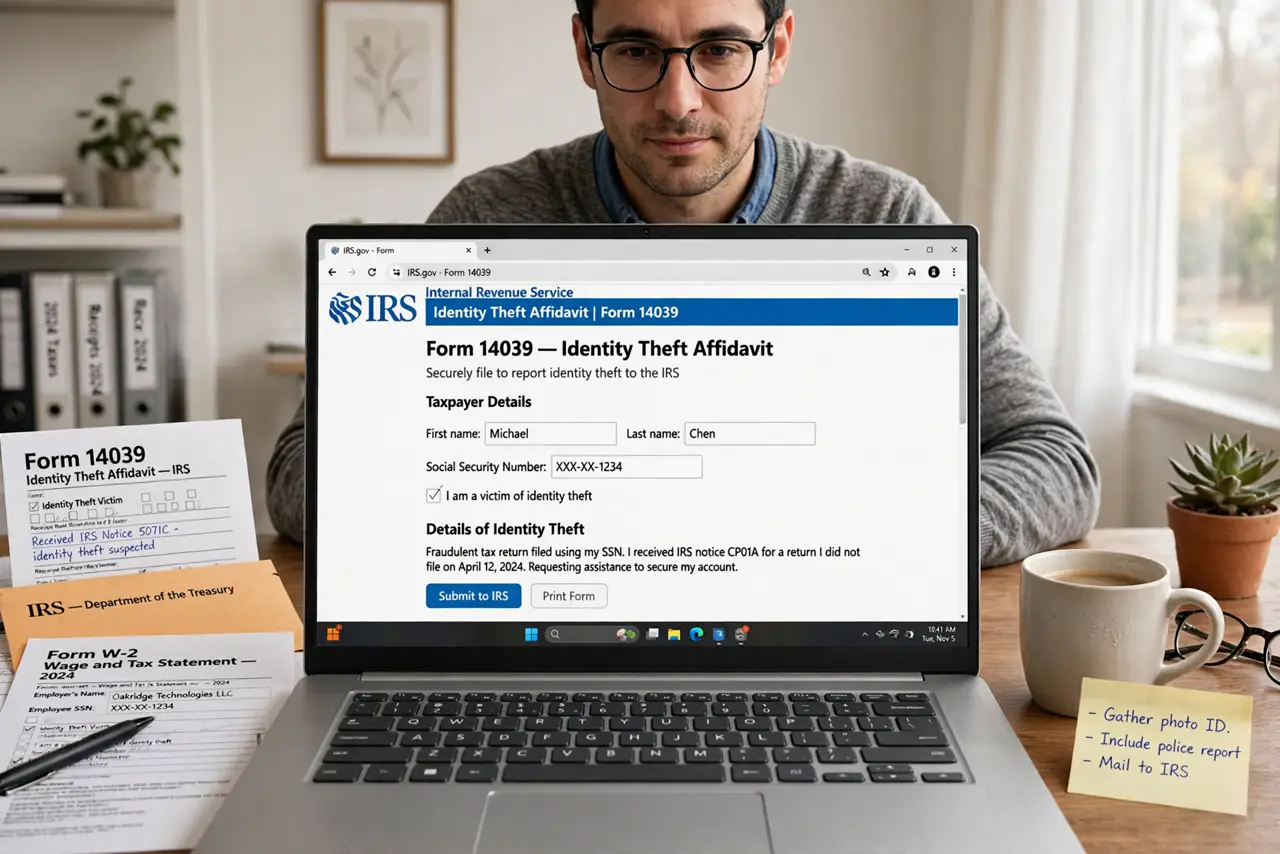
- File IRS Form 14039. The Identity Theft Affidavit starts the official case. File it as soon as the duplicate-filing rejection confirms the theft.
- Get an Identity Protection PIN. The IP PIN is a six-digit number required on future returns — thieves can't file without it. Enroll through the IRS online account.
- File your real return by mail. With the fraudulent e-file blocking you, paper-file your legitimate return. Attach Form 14039 and expect processing to take longer.
- Check your credit reports. Tax identity theft often rides with broader identity theft — pull all three reports and dispute anything unfamiliar, then consider a credit freeze.
- Respond to every IRS notice. The IRS will send letters as the case progresses. Answer promptly and keep copies of everything you send — see the shady preparer link if a preparer was involved.
- Place a fraud alert. A free fraud alert with one bureau notifies the other two and adds verification steps to new accounts — see fraud alerts.
What NOT to do
- Do not refile electronically repeatedly. The rejection will persist until the fraud case resolves — paper file once, correctly.
- Do not ignore IRS letters about the case. Silence reads as disinterest; the case can stall or resolve against you.
- Do not pay anyone to 'fix' it quickly. Recovery follows the IRS process — nobody can expedite it for a fee.
- Do not skip the IP PIN in later years. Without it, the thief can try again every filing season.
Frequently asked questions
How long does resolution take?
Often several months — the IRS must verify your identity and unwind the fraudulent return. The IP PIN protects you during the wait.
Will I still get my refund?
Yes — once your legitimate return is verified, your real refund issues. The thief's fraudulent refund is a separate matter.
How did they file as me?
Usually with a stolen SSN from a breach, sometimes via a shady preparer. The IP PIN blocks repeats regardless of source.