'IRS' Threatening Calls? Fake
'This is the IRS — you owe back taxes, pay now or face arrest.' The caller's badge number sounds real, the threat sounds immediate, but the IRS doesn't work this way: first contact is always by mail, and payment never involves gift cards, wires, or crypto. Every threatening IRS call is a scam.
TL;DR / Quick Fix
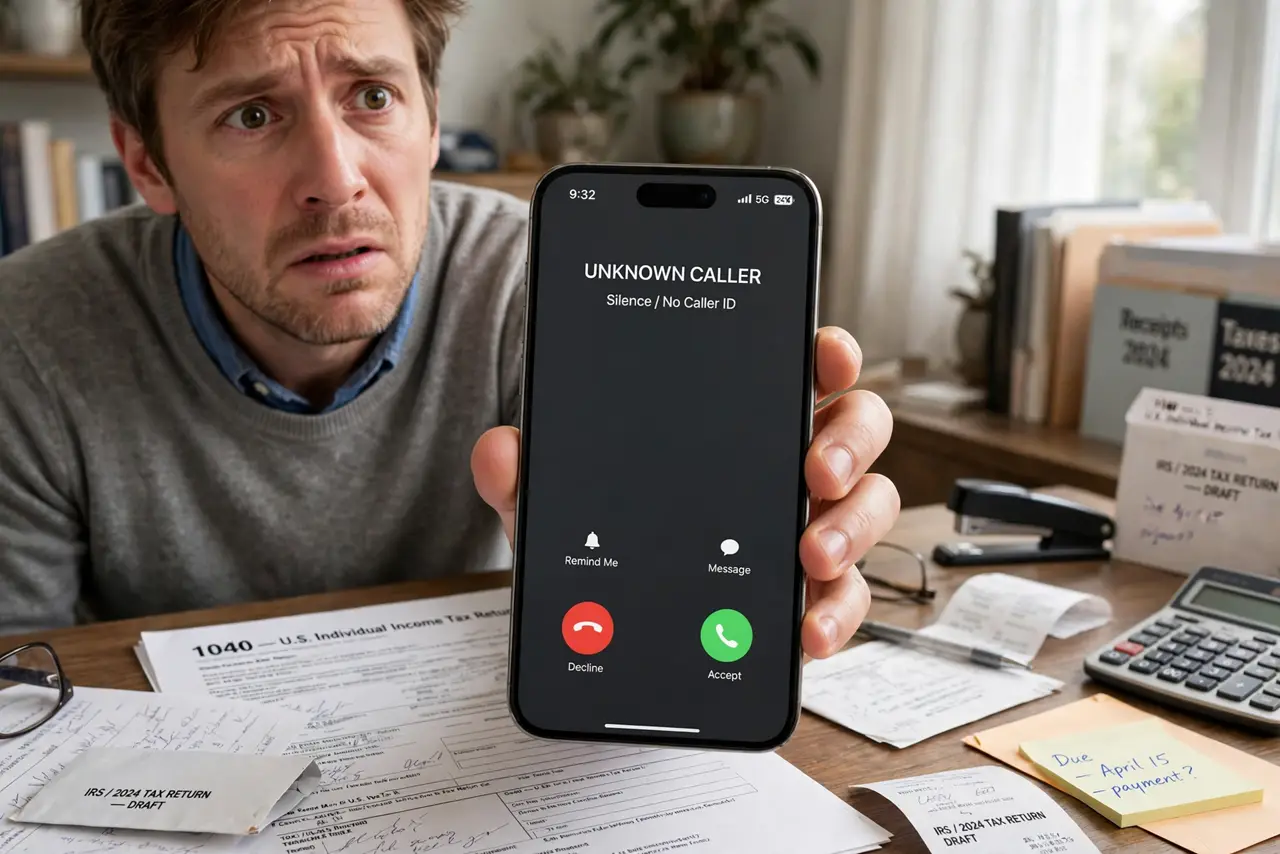
The IRS never calls demanding immediate payment or threatening arrest — any such call is a scam. The IRS contacts you by mail first, and never demands gift cards, wire transfers, or crypto. Hang up and report the call to the Treasury Inspector General.
Follow these steps
- Hang up on IRS threats. The arrest threat, the badge number, the callback deadline — all scripted. The IRS doesn't threaten by phone, ever — see the SSA version.
- Know real IRS contact. First contact is by mail. The IRS never demands immediate payment by phone, never takes gift cards or crypto — see the gift card rule.
- Don't engage or call back. Callbacks reach the scam operation. If you're genuinely worried about taxes owed, call the IRS number from irs.gov yourself.
- Report the call. Report to the Treasury Inspector General for Tax Administration and the FTC. IRS-impersonation reports drive enforcement actions.
- Check your real tax status independently. Log into your IRS online account or call the official number. Real balances show there — not in a threatening call.
- Warn older relatives. Seniors are prime targets — the authority of 'the IRS' plus arrest threats is engineered for compliance. Share the rule.
What NOT to do
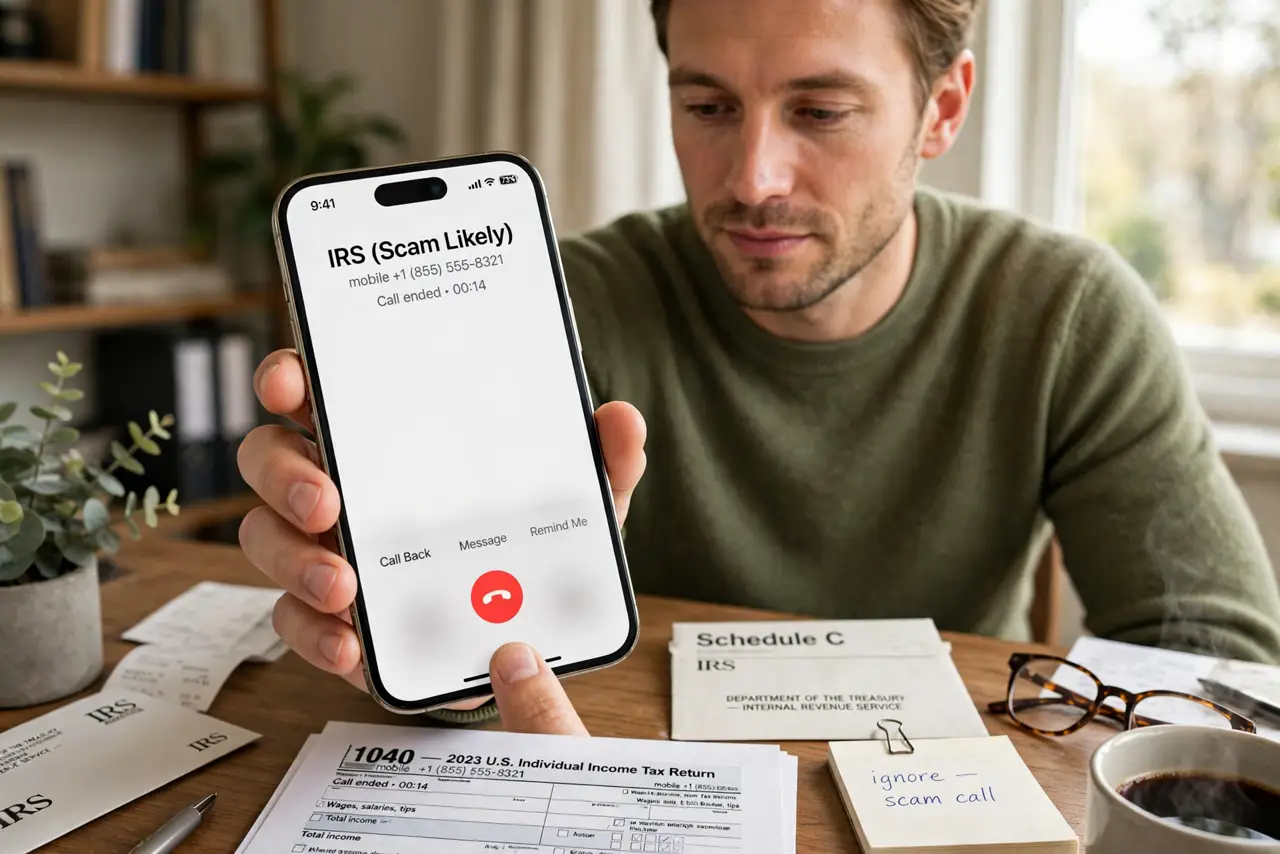
- Do not pay 'back taxes' by gift card, wire, or crypto. The IRS accepts standard payments through official channels — nothing else.
- Do not give the caller your SSN 'to verify.' They want the number, not verification — the IRS already has it.
- Do not trust caller ID showing IRS. Spoofing the agency's numbers is routine; the display is theater.
- Do not ignore real IRS mail because of the scams. The calls are fake; mailed notices are real — open and read your actual mail.
Frequently asked questions
Will the IRS ever call me?
Only after mail contact, and only in specific situations — never with threats or immediate payment demands. When in doubt, hang up and call back officially.
What if I actually owe taxes?
Then handle it through irs.gov or the official phone number, with payment plans available. Owing taxes doesn't make the scam call real.
They knew my name and address — how?
Public records and breaches. Personal details are cheap; they prove research, not IRS employment.