A Meeting Agenda Template People Read
Agendas arrive as long documents nobody opens, so meetings start cold and wander. An agenda people actually read is short, has a clear goal, and tells each person exactly what is expected of them before they walk in.
TL;DR / Quick Fix
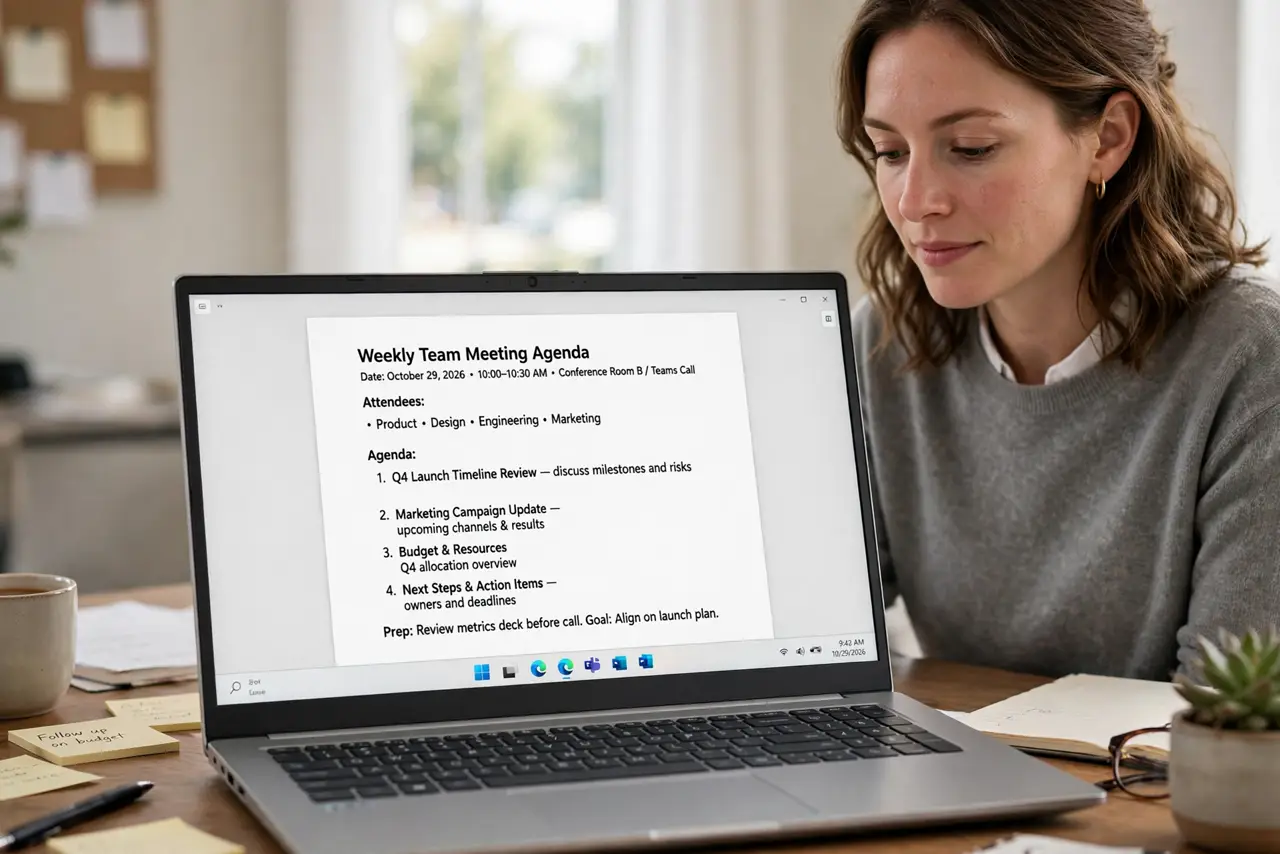
Quick fix: keep the agenda to one page with a goal line at the top, three to five timed items, an owner for each, and pre-read links. Send it the day before so people arrive ready, and start the meeting from the agenda, not from scratch.
Follow these steps
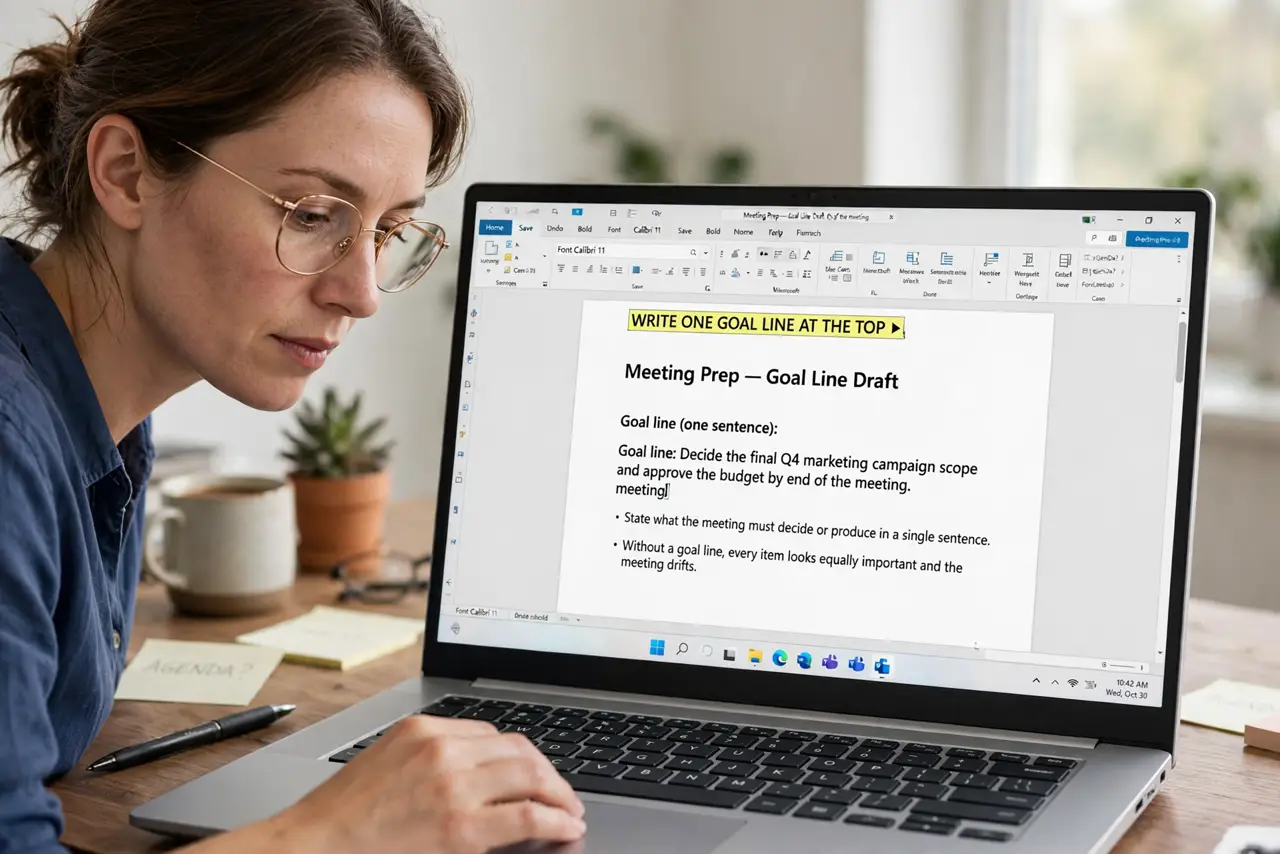
- Write one goal line at the top. State what the meeting must decide or produce in a single sentence. Without a goal line, every item looks equally important and the meeting drifts.
- Limit the agenda to five timed items. List three to five topics, each with a timebox like 10 minutes. A timed agenda forces choices about what truly needs the group's time.
- Name an owner for each item. Put one name beside each topic: the person who introduces it and answers questions. Ownerless items get skipped or rambled through.
- Attach pre-reads, not surprises. Link the background material with the agenda. People cannot discuss a document they first see on the shared screen.
- Send it the day before. Share the agenda at least a day ahead. Same-day agendas arrive too late to read, and the meeting pays the price in confused silence.
- Open the meeting from the agenda. Start by reading the goal line aloud and working down the items. An agenda that guides the first five minutes guides the whole hour, and the notes stay organized too.
What NOT to do
- Do not write a two-page agenda. Long agendas signal that the meeting is unfocused, and nobody reads past the first half page.
- Do not send the agenda minutes before the meeting. A last-minute agenda is decoration, not preparation, and the meeting starts cold anyway.
- Do not list topics without owners. An item with no owner gets a vague discussion and no decision, which wastes the slot.
- Do not skip the goal line to save space. One sentence of purpose does more work than five extra bullet points.
Frequently asked questions
How long should an agenda be?
One page at most. If it needs more, the meeting is trying to do too much and should be split.
When should I send the agenda?
The day before, at the latest. People need an evening or a morning to read it properly.
What if nobody reads it anyway?
Shrink it further and start the meeting from it out loud. A short agenda that you actually follow trains people to read the next one.