Write Follow-Up Emails
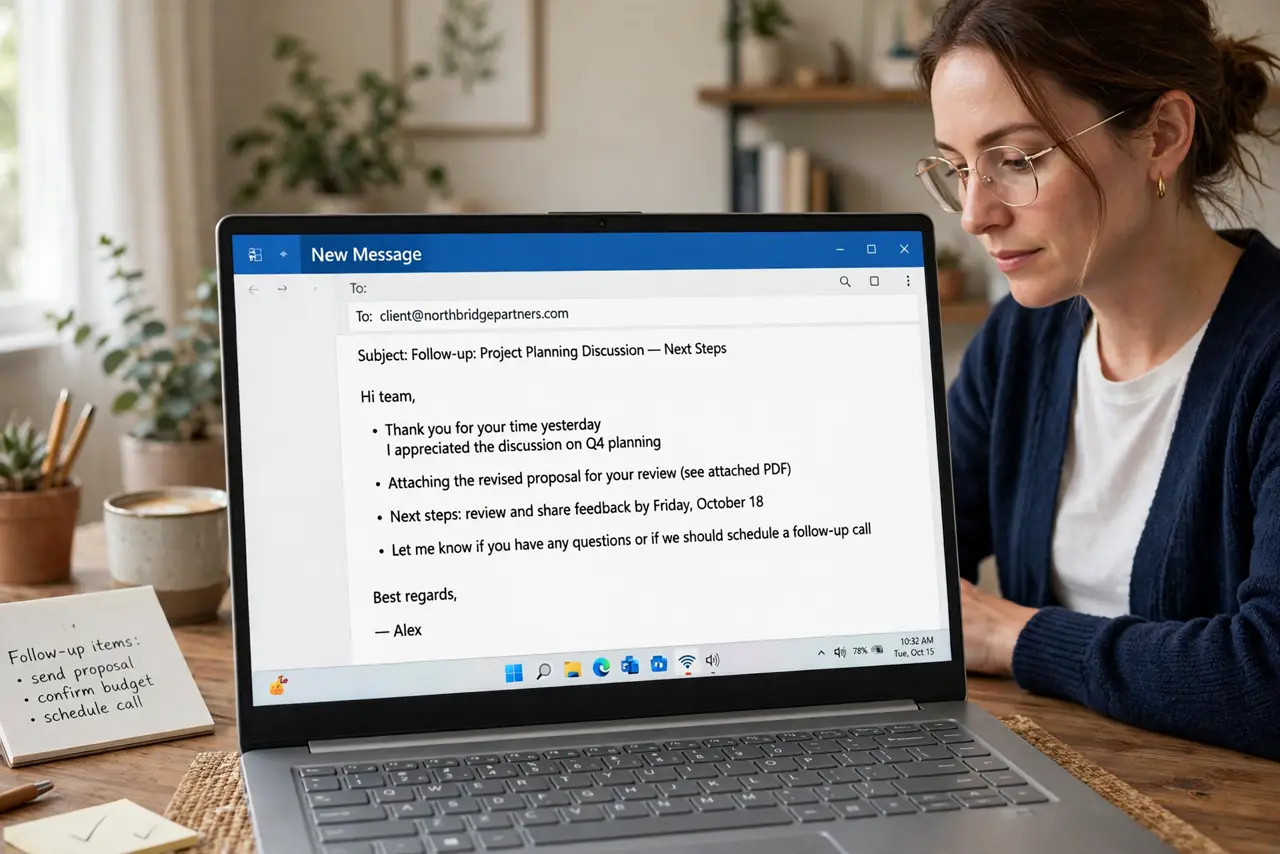
The meeting felt productive, everyone left smiling, and by Friday nobody did anything. The follow-up email is where meetings become action: a short message capturing decisions, owners, and next steps, sent while memories are fresh. Skip it and the meeting might as well not have happened. Write it from your live notes in five minutes flat.
TL;DR / Quick Fix
Quick fix: send follow-up emails within 24 hours with three parts — what was decided, who owns what by when, and the next step. Short, specific, and sent fast beats long, vague, and late. The email is where meetings turn into action.
Follow these steps
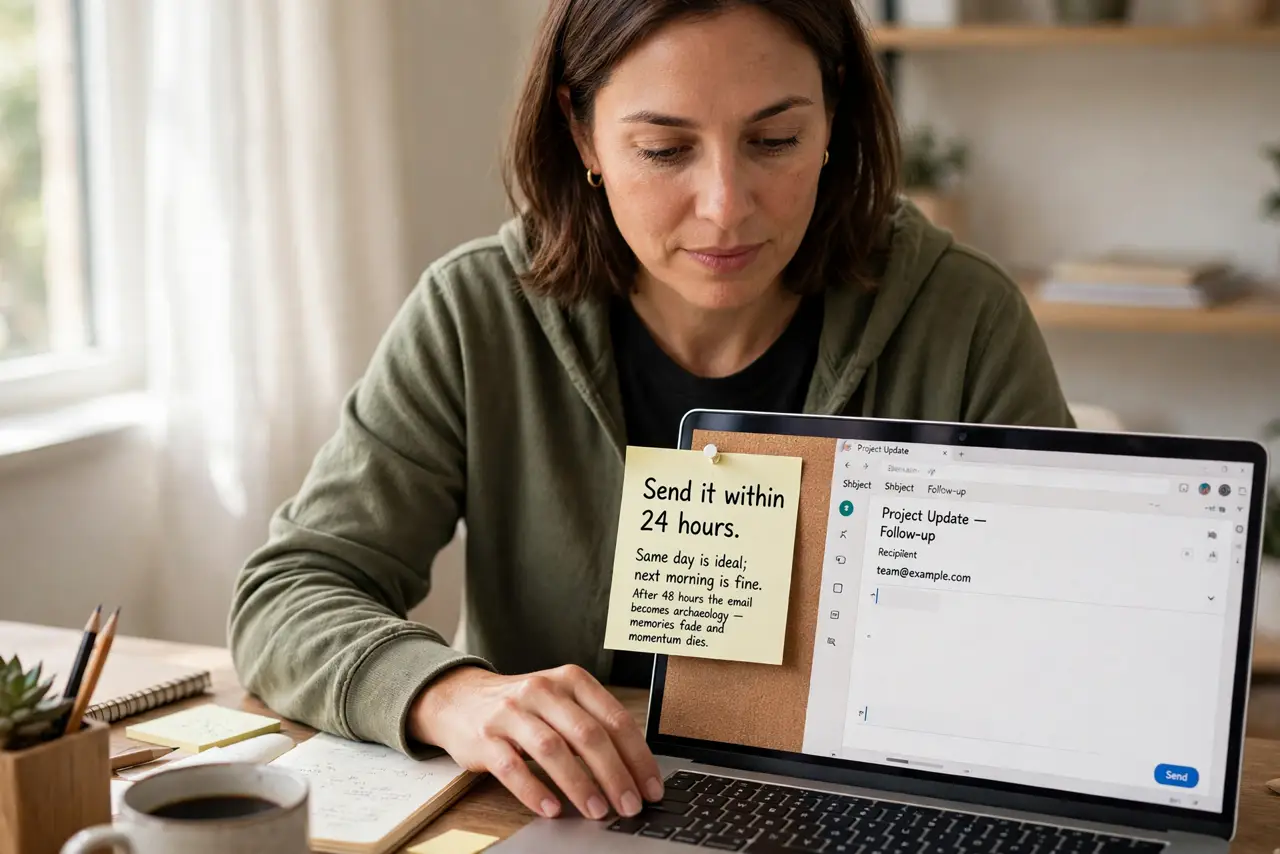
- Send it within 24 hours. Same day is ideal; next morning is fine. After 48 hours the email becomes archaeology — memories fade and momentum dies.
- Lead with decisions. What was decided, in plain bullets. People skim — put the conclusions first so even skimmers absorb them.
- List owners and deadlines. Each action item gets a name and a date. This is the accountability core of the email — the action items guide in written form.
- State the next step. Next meeting date, expected deliverable, or decision point. An email that ends with 'next' keeps the work moving.
- Keep it short. One screen, maximum. If the follow-up needs pages, the meeting needed restructuring — link the full notes instead of pasting them.
- Send to attendees plus stakeholders. Include decision-makers who were absent. The email is also the record for everyone who could not attend.
What NOT to do
- Do not wait a week. Late follow-ups read as afterthoughts and the action window has closed.
- Do not paste the full transcript. Nobody reads it — decisions and owners are the email; details live in the notes.
- Do not use vague language. 'We should look into' assigns nothing; 'Ana sends the draft Friday' assigns everything.
- Do not forget the absent stakeholders. They need the decisions as much as attendees — surprise decisions breed resentment.
Frequently asked questions
Who should send the follow-up?
The organizer, by default. If none was named, the person who took the notes should send it.
What if nothing was decided?
Say so honestly: 'No decisions; next step is X by Friday.' An honest no-decision email beats silence.
Email or shared doc for follow-ups?
Email for the summary and accountability; shared doc for the living details. They complement each other.