Mesh vs Extender: The Real Difference
Mesh and extenders both promise to kill dead zones, but they work nothing alike — one is a coordinated team, the other a lone megaphone. Picking wrong means money spent and dead zones kept. Here is the real difference in plain terms, and which suits your home.

TL;DR / Quick Fix
Quick fix: extenders repeat one router's signal and often halve speed; mesh nodes form one coordinated network with smarter handoffs and usually dedicated backhaul. Choose a good extender for one dead zone on a budget; choose mesh for whole-home coverage across several rooms. Both need halfway placement to work well.
Follow these steps
- Picture an extender as a megaphone. It hears the router and shouts it onward. Simple, cheap — and it shouts over the same channel, which is why speed halves on single-band models.
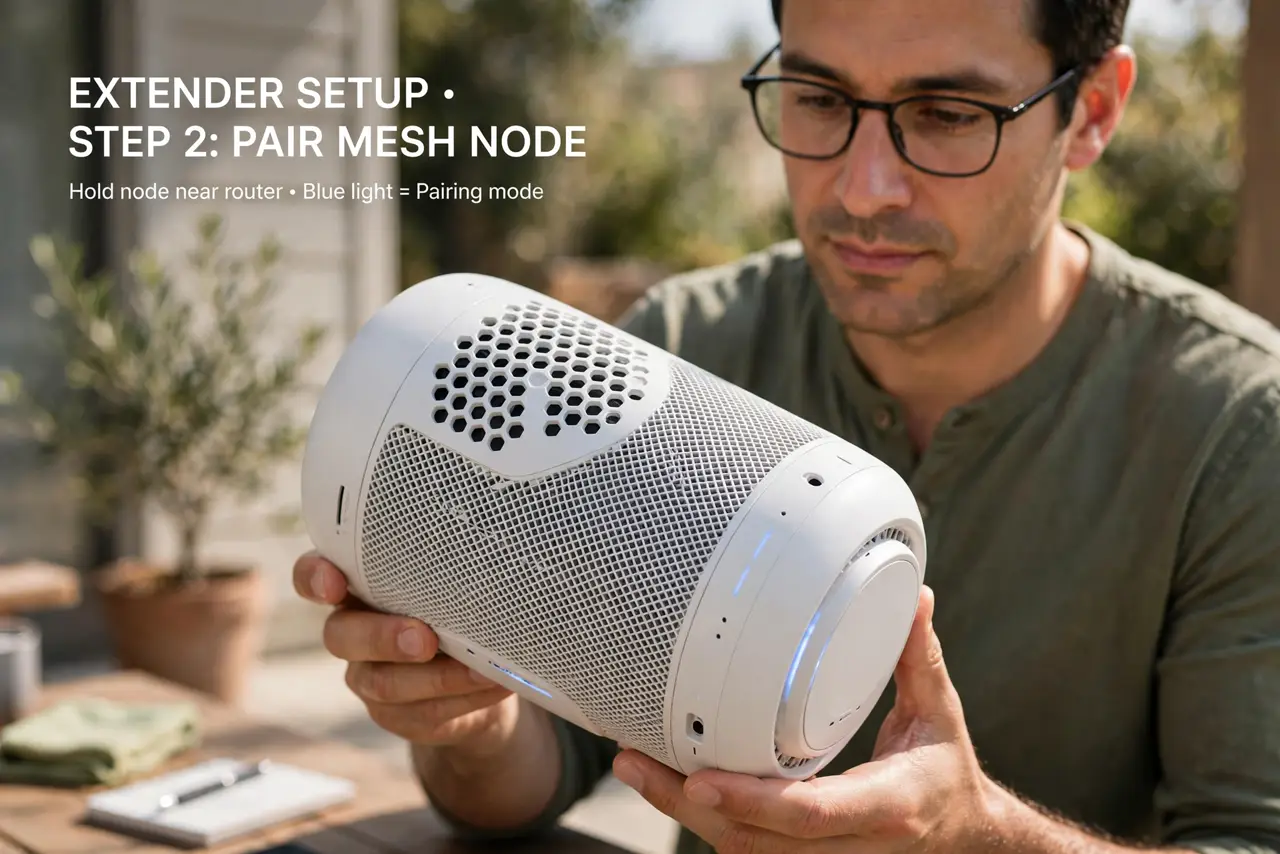
- Picture mesh as a team with radios. Nodes talk to each other constantly, steer your device to the best node, and usually reserve a band for node-to-node traffic.
- Compare handoffs. Walk with an extender and your phone clings to the dying signal; walk with mesh and the handoff is smooth. This is the difference you feel daily.
- Compare setup effort. Extenders need manual placement and sometimes a second network name; mesh apps walk you through placement with one network name.
- Match to your home size. One dead zone in a small flat: extender. Several weak rooms or multiple floors: mesh wins and costs less than three extenders.
- Avoid mixing both. An extender bolted onto a mesh system confuses the steering. Pick one approach per home.
What NOT to do
- Do not buy mesh for a studio flat. One good router covers it — mesh nodes too close together just add interference.
- Do not daisy-chain extenders across a big house. Each hop halves again; mesh's dedicated backhaul exists for exactly this.
- Do not hide nodes in cabinets. Mesh or extender, radios need open air — the hallway mistake ruins both.
- Do not expect either to fix slow internet. They extend your Wi-Fi's reach, not your provider's speed.
Frequently asked questions
Is mesh always better than an extender?
Not always — for a single dead zone, a well-placed extender is cheaper and fine. Mesh wins for whole-home coverage and smooth roaming.
Can I mix mesh brands?
No. Mesh systems are proprietary per brand — nodes from different makers will not team up.
Do mesh nodes halve speed like extenders?
Much less. Most use a dedicated backhaul band, so the speed your device sees stays close to the router's.