Run Ethernet Outdoors
The garden office is built, but the Wi-Fi barely reaches it — video calls freeze and files crawl. Running an Ethernet cable outdoors gives the outbuilding a proper wired connection, but outdoor cable is a different beast: sun, water, lightning, and distance limits all matter. Here is how to do it right, and when a wireless bridge is the smarter move.
TL;DR / Quick Fix
Quick fix: for a backyard office, run outdoor-rated (UV-resistant, waterproof) Ethernet — buried in conduit or strung overhead with proper support. Keep runs under 100 meters and use shielded cable near power lines. For most homes, a point-to-point wireless bridge is simpler than trenching. Plan the path before buying anything.
Follow these steps
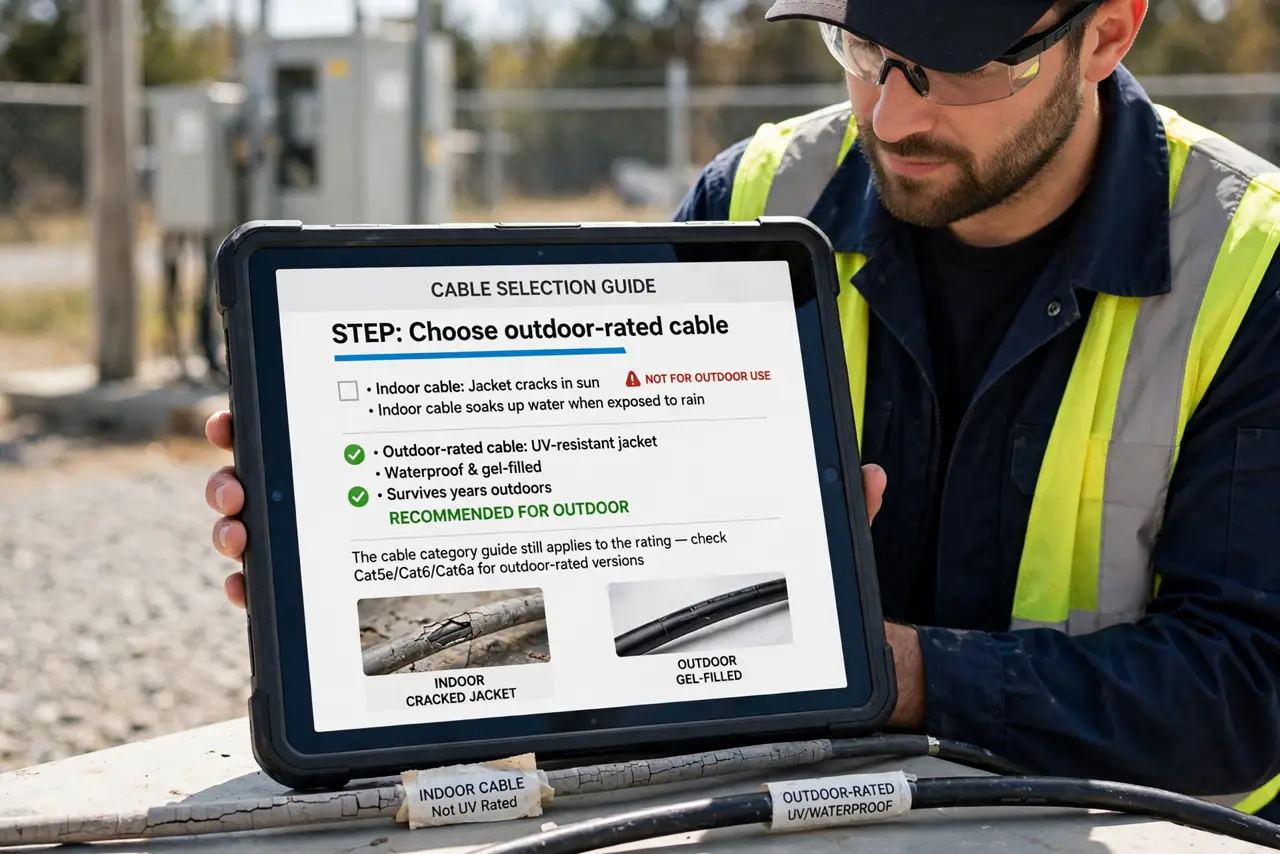
- Choose outdoor-rated cable. Indoor cable's jacket cracks in sun and soaks up water. Outdoor-rated (UV-resistant, waterproof, often gel-filled) survives years outside — the cable category guide still applies to the rating.
- Decide: bury or hang. Buried in conduit is the clean, permanent option — 30–45 cm deep keeps it safe from shovels. Overhead on a messenger wire is faster but needs proper supports and drip loops.
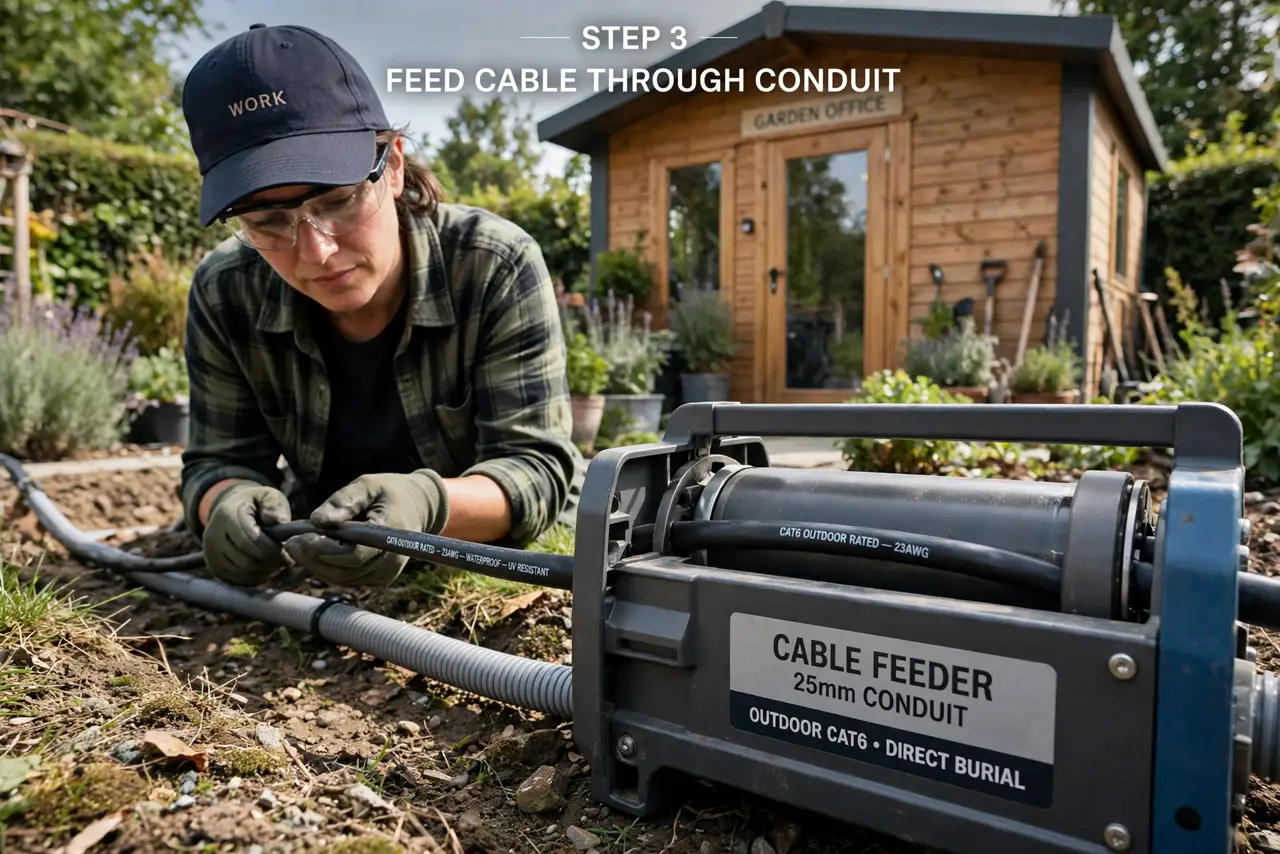
- Use conduit for buried runs. Even outdoor-rated cable lasts longer in conduit, and you can pull a replacement later without re-trenching. Leave a pull string in the conduit for future-you.
- Respect the 100-meter limit. Ethernet's max run is 100 meters including patch cables. Measure the actual path (not as the crow flies) — long gardens can surprise you. The length limit guide explains the math.
- Keep away from power lines. Run data conduit separated from electrical, and use shielded cable where they must cross. Induced interference from mains is the classic works but slow outdoor fault.
- Consider a wireless bridge instead. For many homes, two directional wireless units beat trenching entirely — no digging, no cable, gigabit-ish speeds. If the outbuilding has clear line of sight, price both options.
What NOT to do
- Do not bury indoor-rated cable. It will fail within a year or two — UV cracks the jacket, water wicks inside, and you are re-trenching.
- Do not exceed 100 meters total. The limit includes every patch cable on both ends — measure the full path, not just the trench.
- Do not skip the drip loop on overhead runs. Water follows cable into the building without one — a simple U-bend before entry saves the wall.
- Do not run cable without checking local rules. Some areas require permits or specific burial depths for low-voltage wiring — a quick check beats a fine.
Frequently asked questions
Can I just run the cable across the lawn?
Temporarily, yes — but mowers, feet, and sun will kill it within months. It is a test, not an installation.
Is fiber better for long outdoor runs?
For runs approaching 100m or in lightning-prone areas, pre-terminated outdoor fiber beats copper — no length anxiety, no electrical surge path. It costs more but it is the pro choice.
Do I need lightning protection?
For overhead runs between buildings, yes — a surge protector at each building entry is cheap insurance. Buried conduit runs are far less exposed.