Overpayment by Check? Classic Scam
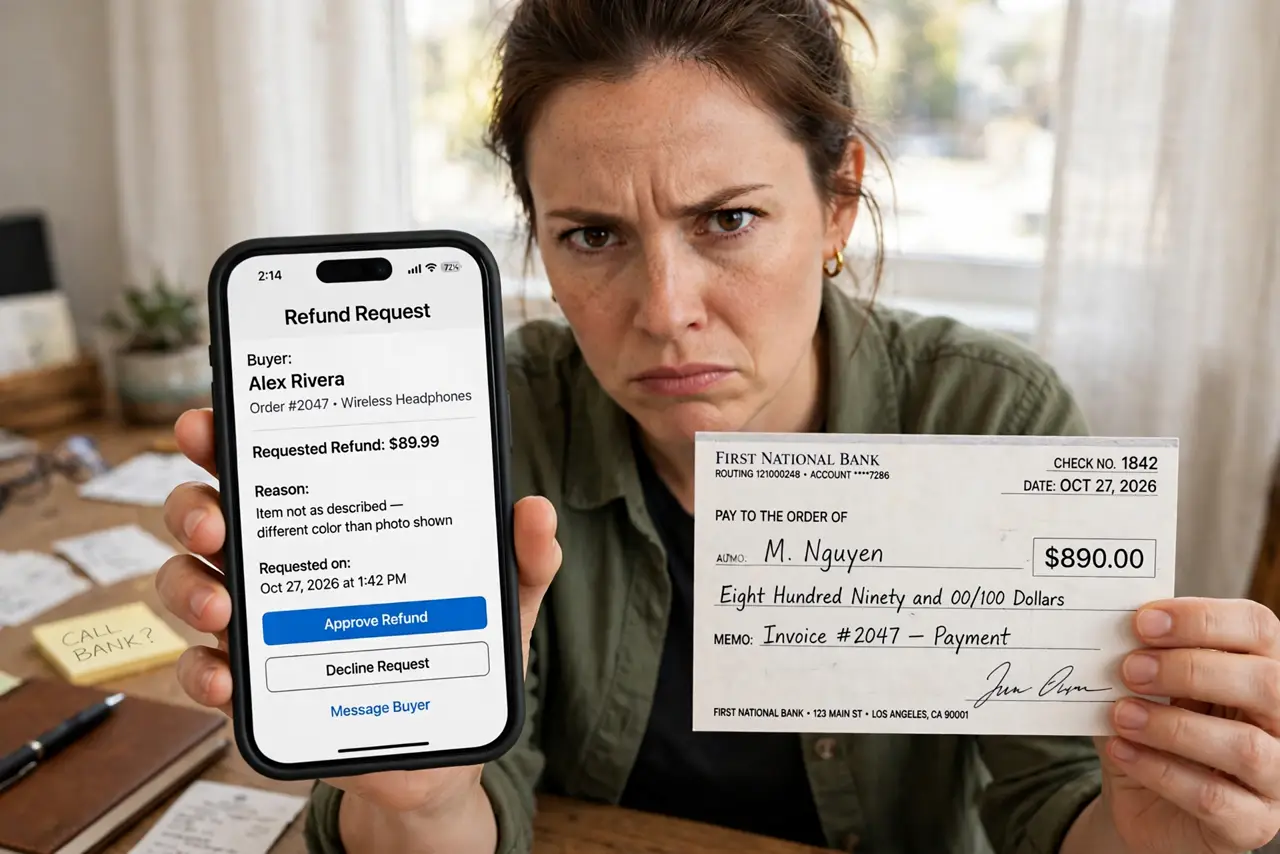
A buyer 'accidentally' sends a check for too much and politely asks you to refund the difference — keep a little extra for your trouble. The check is fake and will bounce; the refund you wired is real and gone. This scam is decades old because it still works on marketplaces, freelancers, and fake employers alike.
TL;DR / Quick Fix
A buyer 'accidentally' overpays with a check and asks you to refund the difference — the check later bounces and you lose the refunded cash. Never refund an overpayment; wait for the check to fully clear or cancel the deal. Real buyers pay the exact amount.
Follow these steps
- Recognize the script. Overpayment 'by mistake,' urgent refund request, keep a bonus for yourself. The politeness and the bonus are engineered to make you act fast and feel good.
- Never refund the difference. No legitimate transaction needs you to forward excess funds. The moment a stranger's check requires you to send money back, walk away.
- Wait for full clearance — weeks, not days. Banks release funds quickly by law, but fake checks bounce weeks later. 'Available' does not mean 'cleared' — ask the bank specifically.
- Cancel the deal instead. Tell the buyer to reissue for the correct amount. Real buyers do; scammers vanish — which tells you everything.
- Watch the marketplace and job variants. Fake buyers, fake clients overpaying freelancers, fake employers — see fake job interviews. Same script, different costume.
- Report the check. Report to your bank, the platform, and the FTC. The check itself is evidence — keep it and hand it over.
What NOT to do
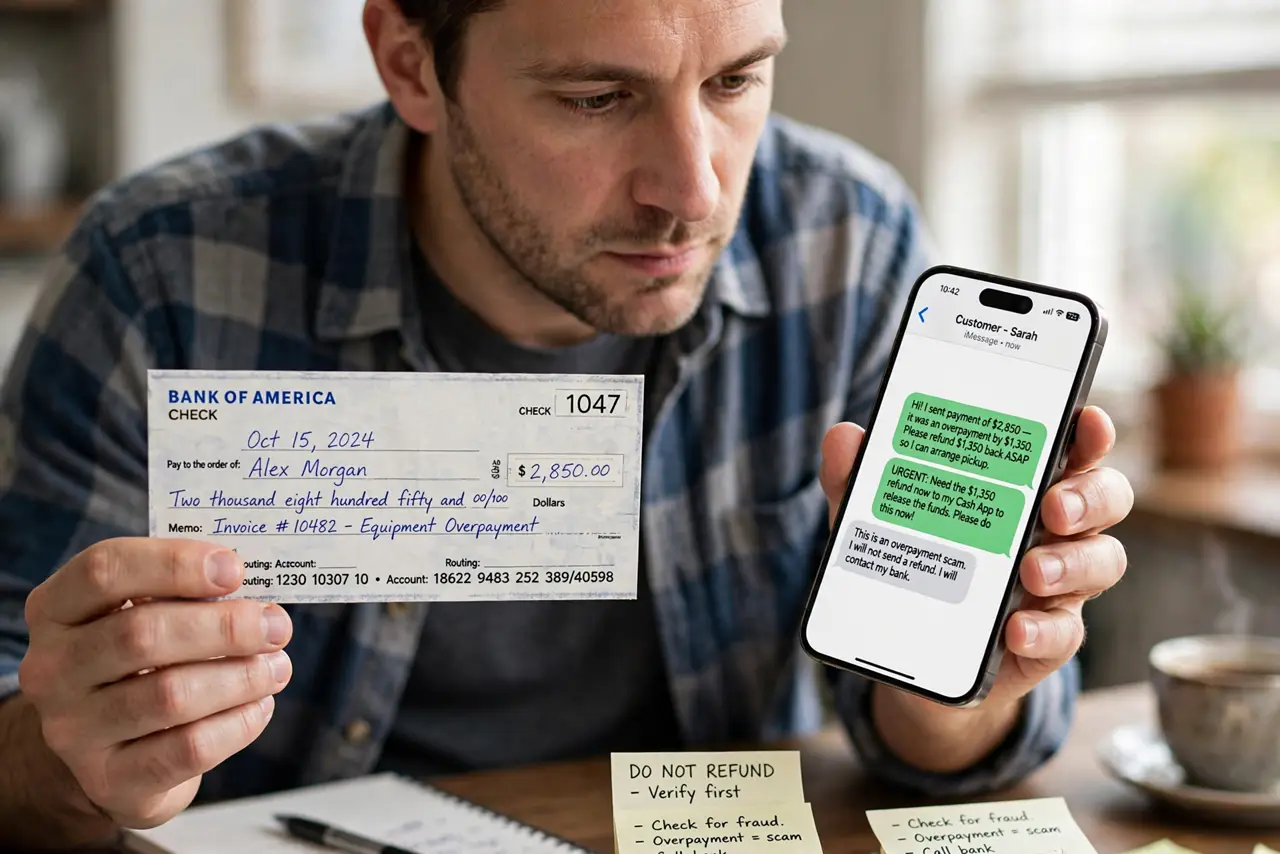
- Do not wire the refund because the funds 'show available.' Availability is a legal timing rule, not proof the check is good — the reversal comes later.
- Do not cash the check 'just to see.' Depositing a known-fake check can flag your own account; report it instead of testing it.
- Do not feel rude refusing. The scammer's politeness is tactical — a real buyer reissues a correct check without drama.
- Do not accept overpayment plus secrecy. 'Don't tell the bank/employer' means the check can't survive scrutiny — which is the whole point.
Frequently asked questions
How long until a fake check bounces?
Often one to three weeks. The delay is the trap — it outlasts the victim's patience and the bank's provisional credit.
What about cashier's checks — those are safe, right?
Counterfeit cashier's checks are the scammer's favorite prop precisely because people trust them. Verify with the issuing bank directly.
I already sent the refund — can I get it back?
Wire transfers and gift cards are nearly impossible to reverse. Report to your bank and law enforcement immediately; speed is your only chance.