Share Passwords Safely
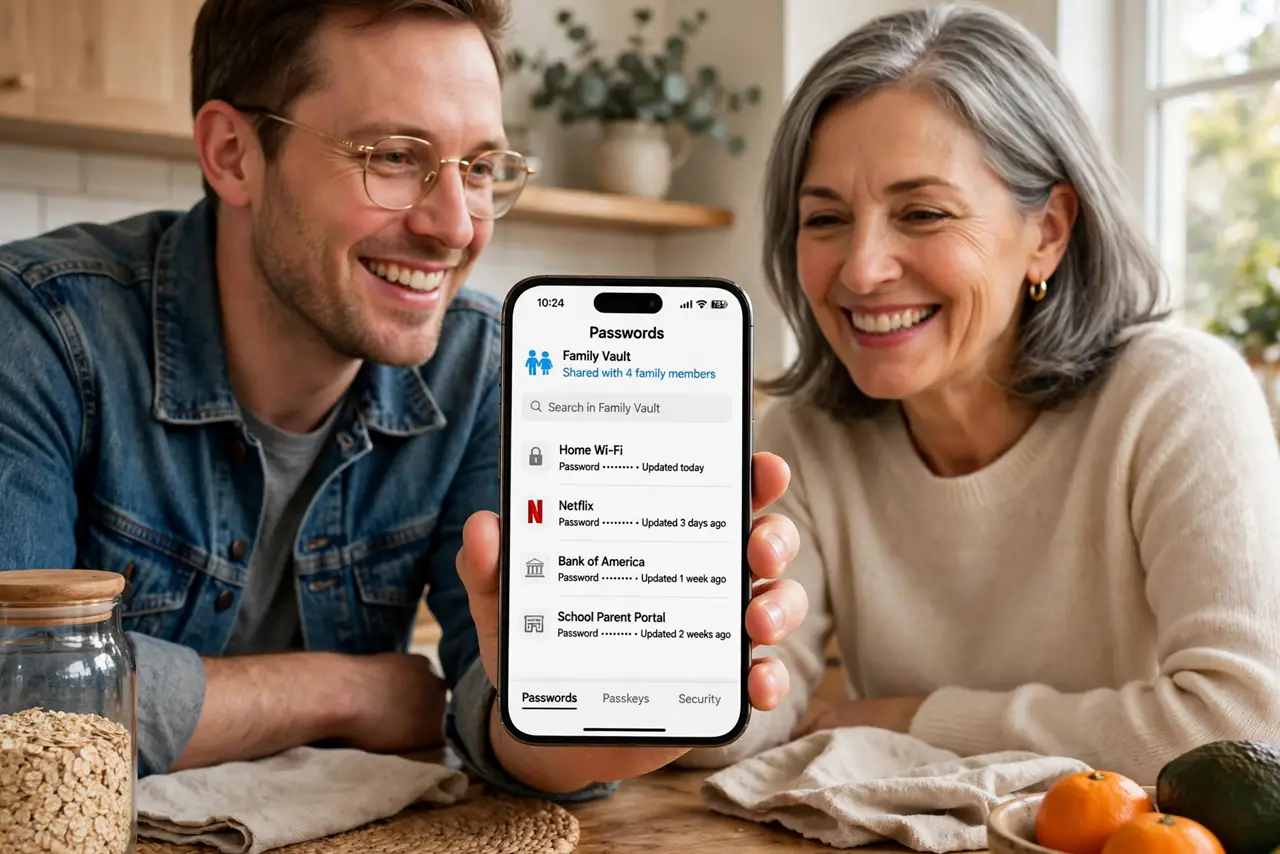
The Wi-Fi password lives on a sticky note, the streaming login gets texted around, and the kids' school portal password is... somewhere. Family password sharing usually means insecure sharing — credentials scattered across texts, notes, and memories. A password manager's family plan fixes this properly: shared vaults, individual logins, and no more sticky notes. The emergency access guide covers the what-if planning that goes with it.
TL;DR / Quick Fix
Quick fix: share passwords through your password manager's family sharing — never by text or sticky note. Each person gets their own vault plus shared folders, so one compromised account does not expose everyone. Set it up once and the sticky notes can retire.
Follow these steps
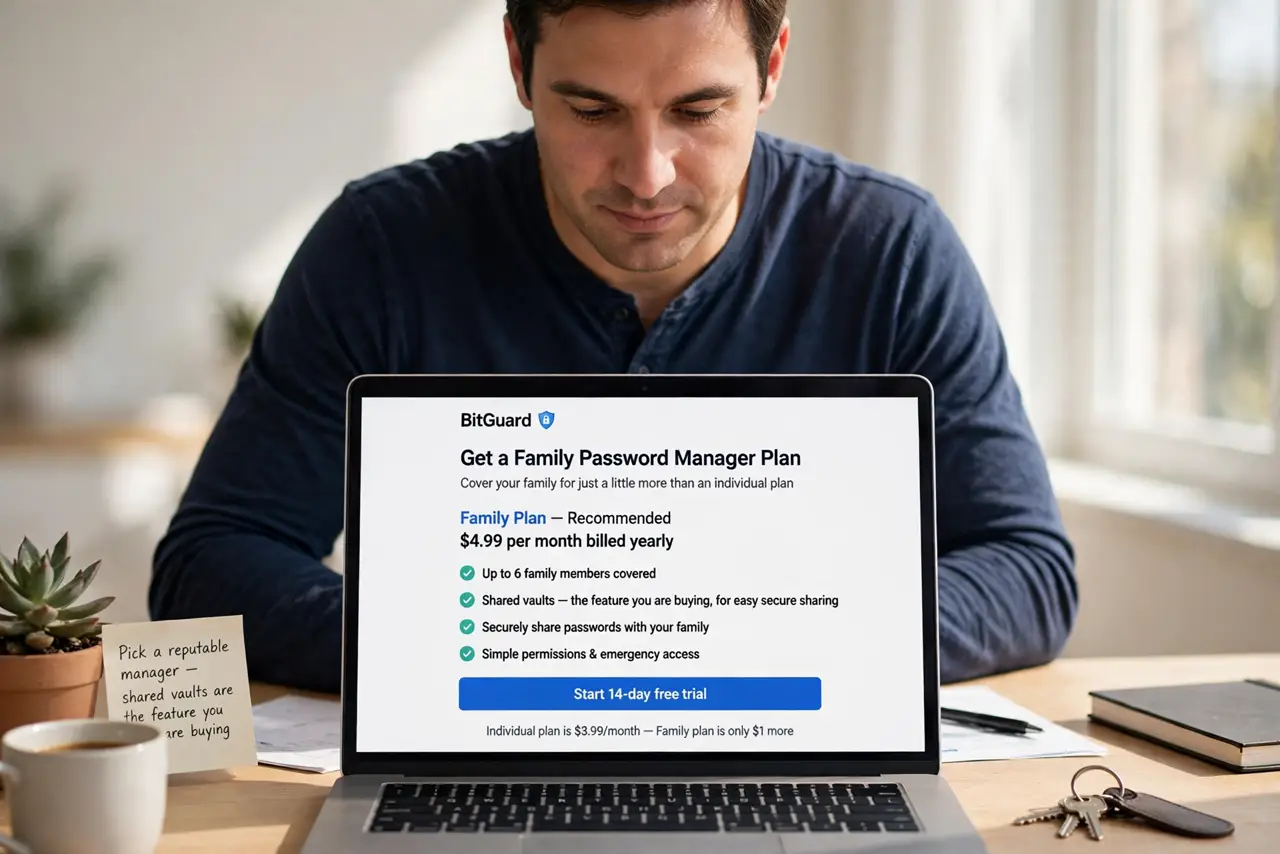
- Get a family password manager plan. Family plans cover several people for little more than an individual one. Pick a reputable manager — the shared vaults are the feature you are buying.
- Give everyone their own vault. Each family member gets a private vault for personal logins plus access to shared ones. Individual vaults mean personal accounts stay personal.
- Create shared vaults by purpose. One for streaming services, one for household bills, one for the kids' school logins. Organized sharing beats one giant pile everyone digs through.
- Move the sticky-note passwords in. Gather every password from notes, texts, and memories into the right vault, then destroy the notes. The migration weekend is the painful part — after that it is easy.
- Teach the two habits. Habit one: save every new login in the manager. Habit two: never text a password — share it through the manager's sharing feature instead.
- Review sharing yearly. Kids grow, situations change. Once a year, check who can see what and remove access that no longer makes sense — the switching guide helps if you outgrow your current manager.
What NOT to do
- Do not text passwords to family members. Texts live forever on phones, backups, and who knows where else.
- Do not share one master password for the whole family. Individual accounts with shared vaults are the secure pattern.
- Do not keep the sticky notes 'as backup.' They are the vulnerability you just paid to eliminate — shred them.
- Do not share the vault with people outside the household casually. Every added person is added risk; share specific logins, not vaults.
Frequently asked questions
What if a family member forgets their master password?
Most managers offer account recovery through the family organizer. Set this up in advance — recovery after the fact is much harder.
Is family sharing safe if one person is careless?
Safer than the alternative. Their private vault is theirs, and you can limit shared vaults to low-risk logins while they learn.
Can I share with people outside my family plan?
Most managers allow limited guest sharing of individual logins. Full vault sharing is for plan members.