Start a Podcast
Podcasting has a reputation for needing a treated studio and a four-figure microphone. The truth is simpler: listeners forgive average audio, but they never forgive boring. A clear concept, a decent mic in a quiet room, and a consistent schedule will carry you past 90% of podcasts that quit by episode seven.
TL;DR / Quick Fix
Quick fix: define your show in one sentence — who it is for and what each episode delivers. Record with a USB mic in a quiet room, edit out the dead air, and publish on a schedule you can sustain. Consistency is what builds an audience.
Follow these steps
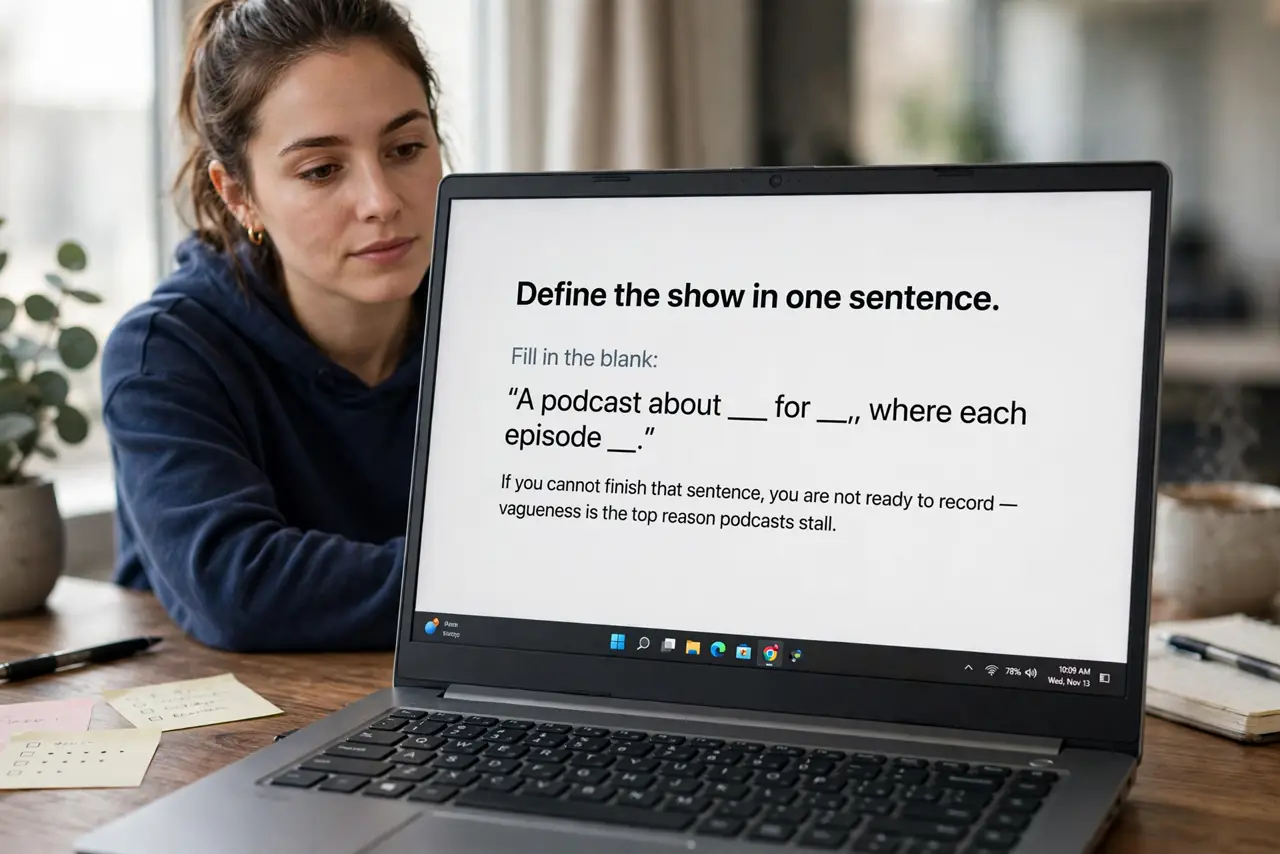
- Define the show in one sentence. Fill in the blank: ‘A podcast about ___ for ___, where each episode ___.’ If you cannot finish that sentence, you are not ready to record — vagueness is the top reason podcasts stall.
- Get a USB mic and a quiet room. A basic USB microphone in a closet full of clothes beats an expensive mic in an echoey kitchen. Soft furnishings kill echo for free — record a test clap and listen for the room before buying acoustic panels.
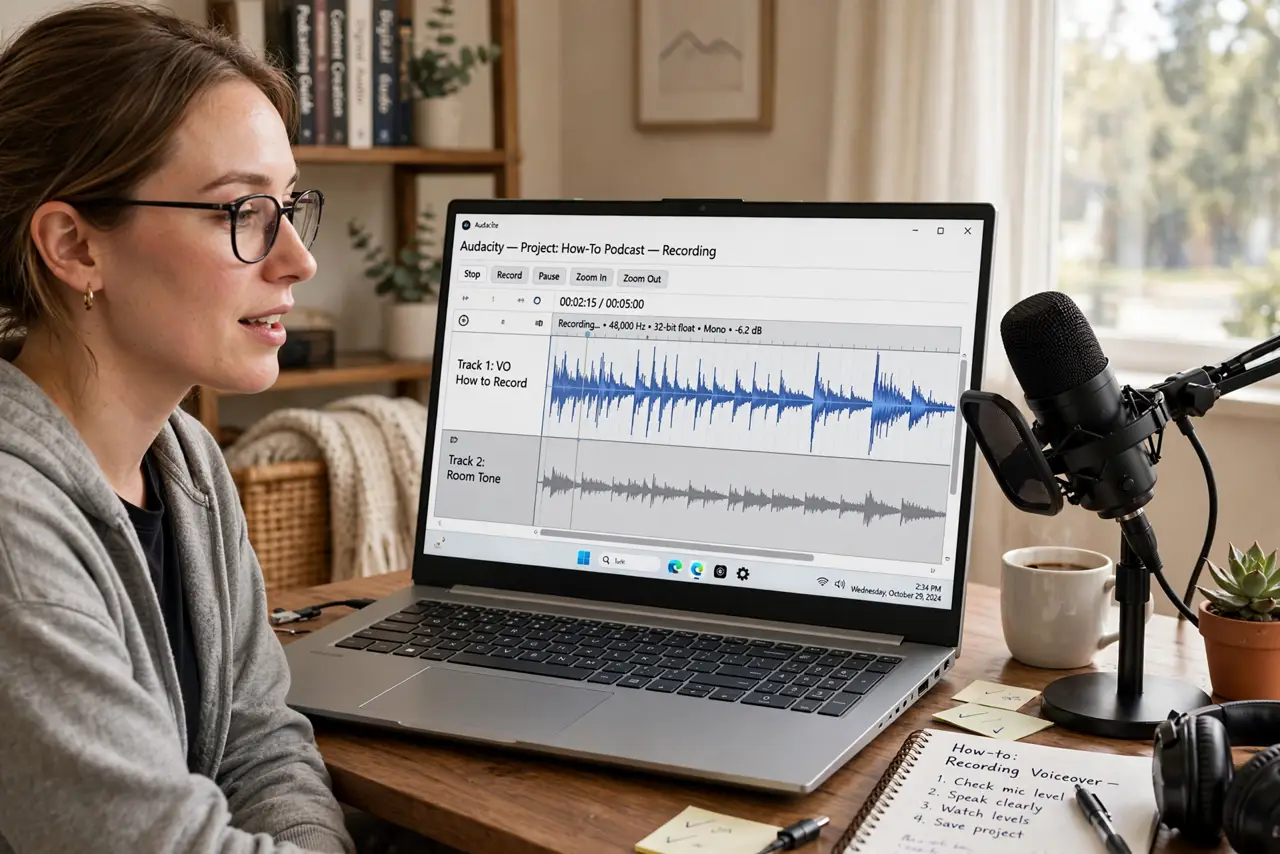
- Record with simple software. Free tools record and edit perfectly well for beginners — learn one well instead of sampling five. Record each voice on its own track if you have guests; it makes editing ten times easier.
- Edit ruthlessly, not endlessly. Cut long pauses, false starts, and tangents — then stop. Over-editing kills the conversational feel that makes podcasts work. Aim for ‘tight conversation,’ not ‘audiobook.’
- Publish through a podcast host. Upload to a podcast hosting service, which generates your RSS feed and distributes to Apple, Spotify, and the rest automatically. You do not upload to each app individually — the host handles distribution.
- Commit to a survivable schedule. Biweekly for a year beats weekly for two months. Tell listeners the schedule and keep it — reliability is a growth strategy in a medium where most shows simply vanish.
What NOT to do
- Do not buy a studio before episode one. A USB mic and a quiet room outperform expensive gear in a bad room every time.
- Do not launch with one episode and no backlog. Record three to five before publishing so a bad week does not break your schedule.
- Do not read a script word for word. Bullet points keep you natural; full scripts sound like a lecture unless you are a trained voice actor.
- Do not obsess over download numbers early. Ten loyal listeners who share beat a hundred accidental clicks.
Frequently asked questions
How long should episodes be?
As long as the content earns — 20-40 minutes suits most formats. Consistency of length matters more than the number; listeners plan around it.
Do I need video too?
Not to start. Audio-only is simpler and cheaper; add video later if your format benefits — many successful shows never do.
How do podcasts make money?
Sponsorships, listener support, and selling your own products or services. All of them need an audience first — build the show, then the revenue.