Do You Need a Pop Filter?
Your recordings pop — every p and b explodes like a tiny thunderclap. A pop filter is the cheap mesh screen that fixes it: it tames those plosive blasts before they hit the microphone. Ten dollars of mesh saves hours of editing. Position matters as much as owning one — see the positioning guide and the USB versus XLR choice.
TL;DR / Quick Fix
Quick fix: you need a pop filter if your recordings have popping p and b sounds — it is a cheap mesh screen that tames plosives before they hit the mic. Position it a few inches from the microphone, not touching it. Ten dollars of mesh saves hours of editing.
Follow these steps
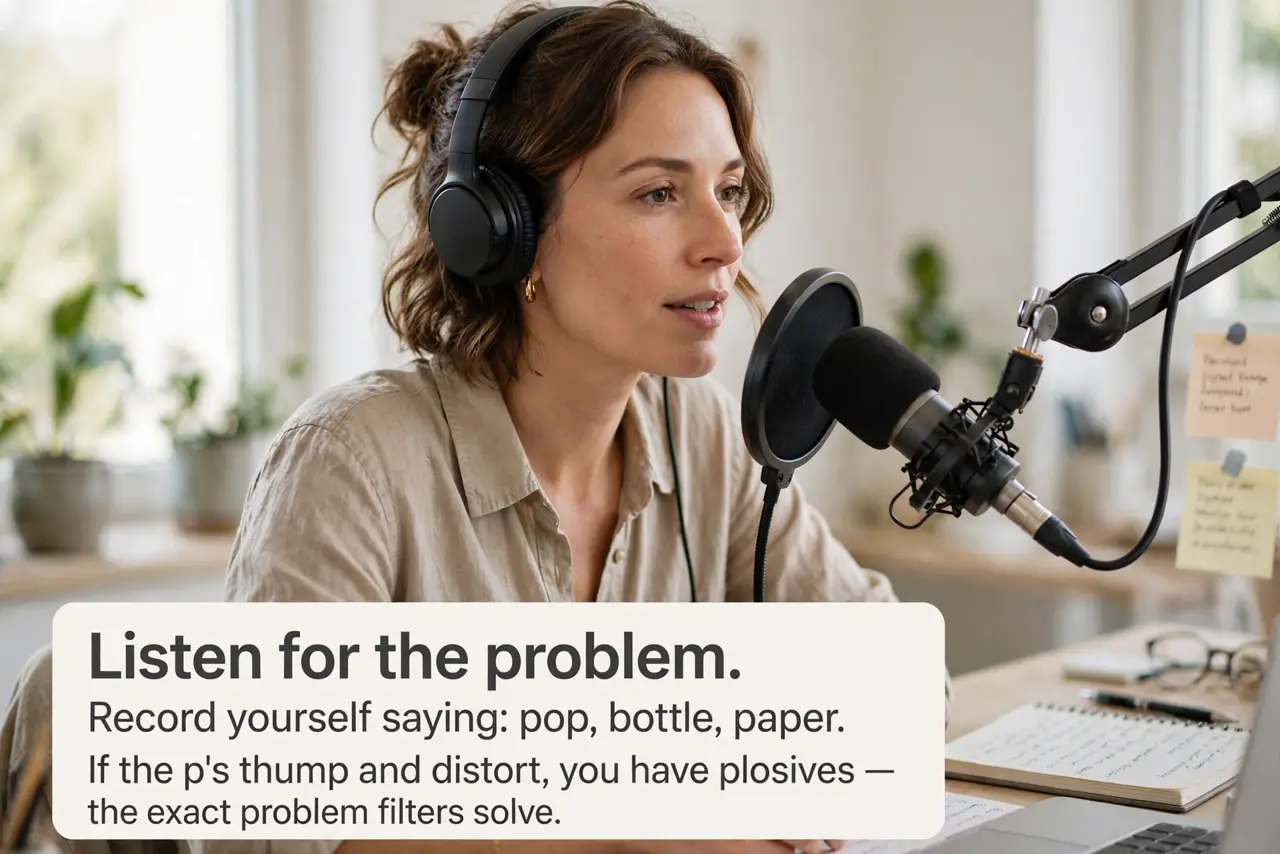
- Listen for the problem. Record yourself saying pop, bottle, paper. If the p's thump and distort, you have plosives — the exact problem filters solve.
- Get a basic filter. A simple nylon mesh filter on a gooseneck costs very little. Metal mesh versions last longer; either works.
- Position it right. Place the filter a few inches from the mic, then speak a few inches from the filter. See the positioning details — distance is the technique.
- Angle slightly. A slight tilt avoids reflections and keeps the filter out of your sightline on video. Small angle, big comfort.
- Test the difference. Record with and without it. The before-and-after is the most convincing demo in home audio.
- Maintain it lightly. Nylon filters collect dust and spit — rinse or replace occasionally. A gross filter is worse than none.
What NOT to do
- Do not touch the mic with the filter. Contact transfers vibrations — keep the few inches of air between them.
- Do not expect it to fix everything. Pop filters tame plosives, not room echo or background noise.
- Do not buy the most expensive one. Basic mesh performs the core job; premium buys durability, not magic.
- Do not skip it for video calls. Even casual calls sound better without the popping — listeners notice.
Frequently asked questions
Can I make one myself?
Yes — pantyhose over a wire hoop is the classic DIY. It works surprisingly well in a pinch.
Do dynamic mics need one?
Less than condensers, but plosives still happen up close. If you hear popping, filter regardless of mic type.
Foam windscreen or pop filter?
Foam helps wind and light pops; a real filter handles serious plosives better. Use both for outdoor recording.