Modular vs Non-Modular PSU?
A nest of unused cables strangling your case airflow, or a clean build with only the cables you need — that is the modular vs non-modular PSU choice. Modular costs more for the same watts, but the building experience and airflow differ night and day. Here is how to choose.
TL;DR / Quick Fix
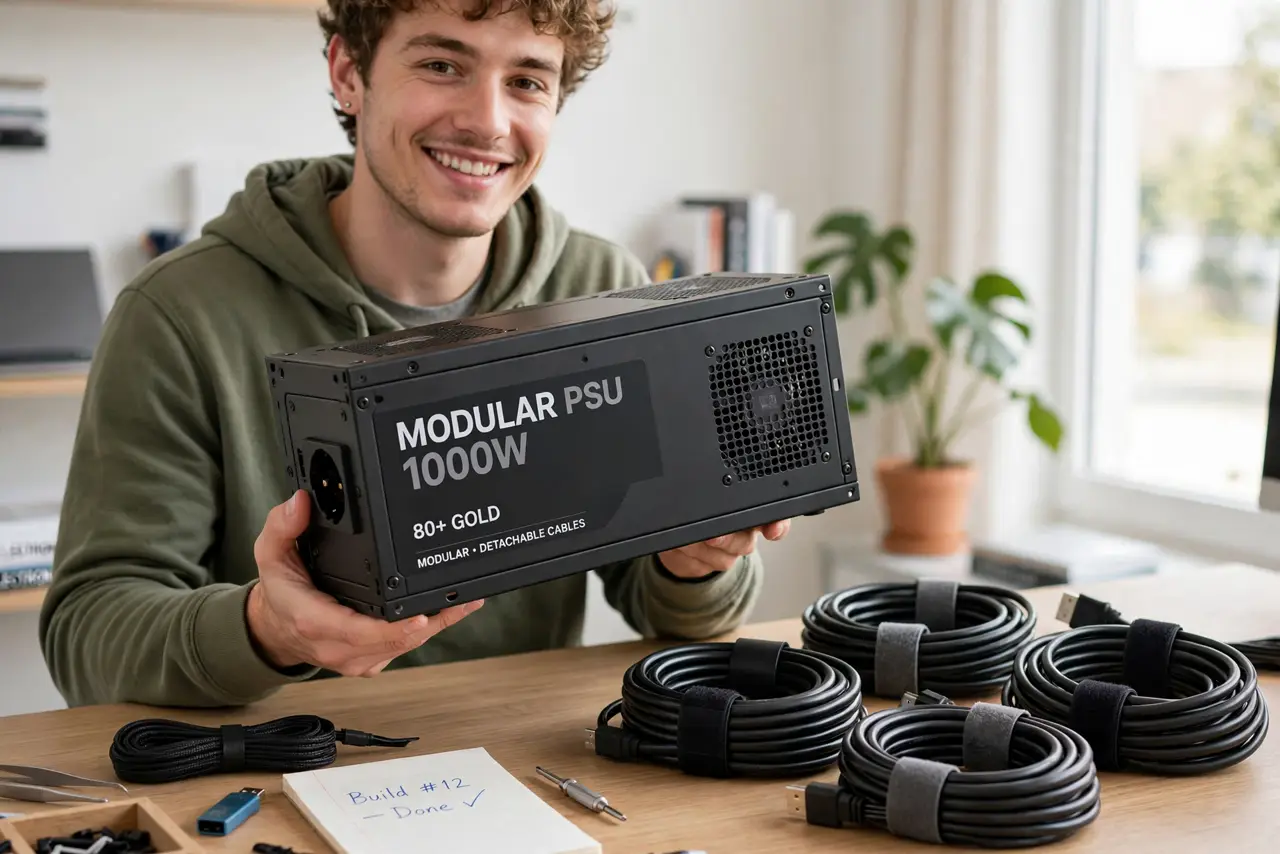
Quick fix: modular PSUs let you attach only the cables you need — cleaner builds, better airflow, easier cable management. Non-modular is cheaper for the same quality and fine in big cases with room to hide cables. Semi-modular splits the difference and suits most builders.
Follow these steps
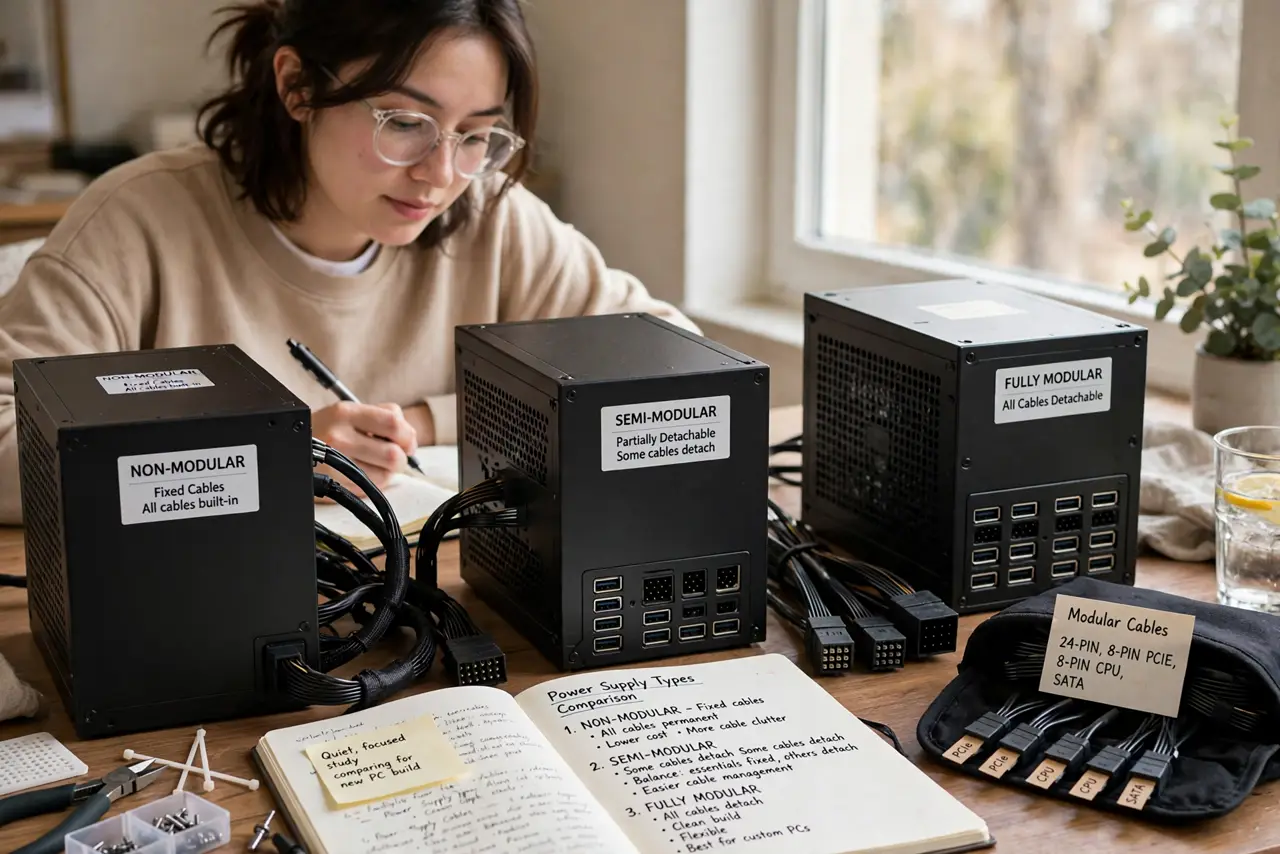
- Learn the three types. Non-modular: all cables fixed. Semi-modular: essential cables fixed, extras plug in. Fully modular: every cable detaches, including the motherboard power.
- Know what you are paying for. Modularity adds cost, not quality — a 70-dollar non-modular often beats a 70-dollar modular on internals. Pay for modularity only after securing quality.
- Choose modular for small cases. In compact builds every unused cable is an airflow crime. Modular is nearly mandatory where space is tight.
- Accept non-modular in big cases. A roomy case with a PSU shroud swallows spare cables invisibly. Save the money for a better efficiency rating instead.
- Consider semi-modular as the default. Fixed motherboard cables you will always use, plus plug-in extras. The sensible middle most builders should default to.
- Never mix modular cables between brands. Modular cable pinouts are NOT standardized — a cable from another PSU can fry components. Use only the cables your unit shipped with.
What NOT to do
- Do not reuse old modular cables with a new PSU. Same brand, different model can differ — mismatched pinouts kill drives and boards.
- Do not buy modularity over quality. A modular fire hazard is worse than a non-modular workhorse.
- Do not leave unused modular cables half-plugged. Fully seat every attached cable — loose modular plugs arc and melt.
- Do not assume semi-modular is a compromise. For most builds it is the optimal choice, not a consolation.
Frequently asked questions
Are modular PSUs more reliable?
No — modularity affects convenience, not reliability. Quality of internals decides lifespan.
Can I buy extra cables later?
Only the exact cables for your exact PSU model from the maker. Generic 'compatible' cables are a gamble with your hardware.
Do modular cables affect performance?
No. A properly seated cable performs identically whether fixed or detachable.