Remember with Spaced Repetition
You study hard, feel confident, and forget everything two weeks later. Cramming builds short-term memory; spaced repetition builds long-term memory by reviewing material at increasing intervals — right before you would forget it. Here is the simple version that actually works.
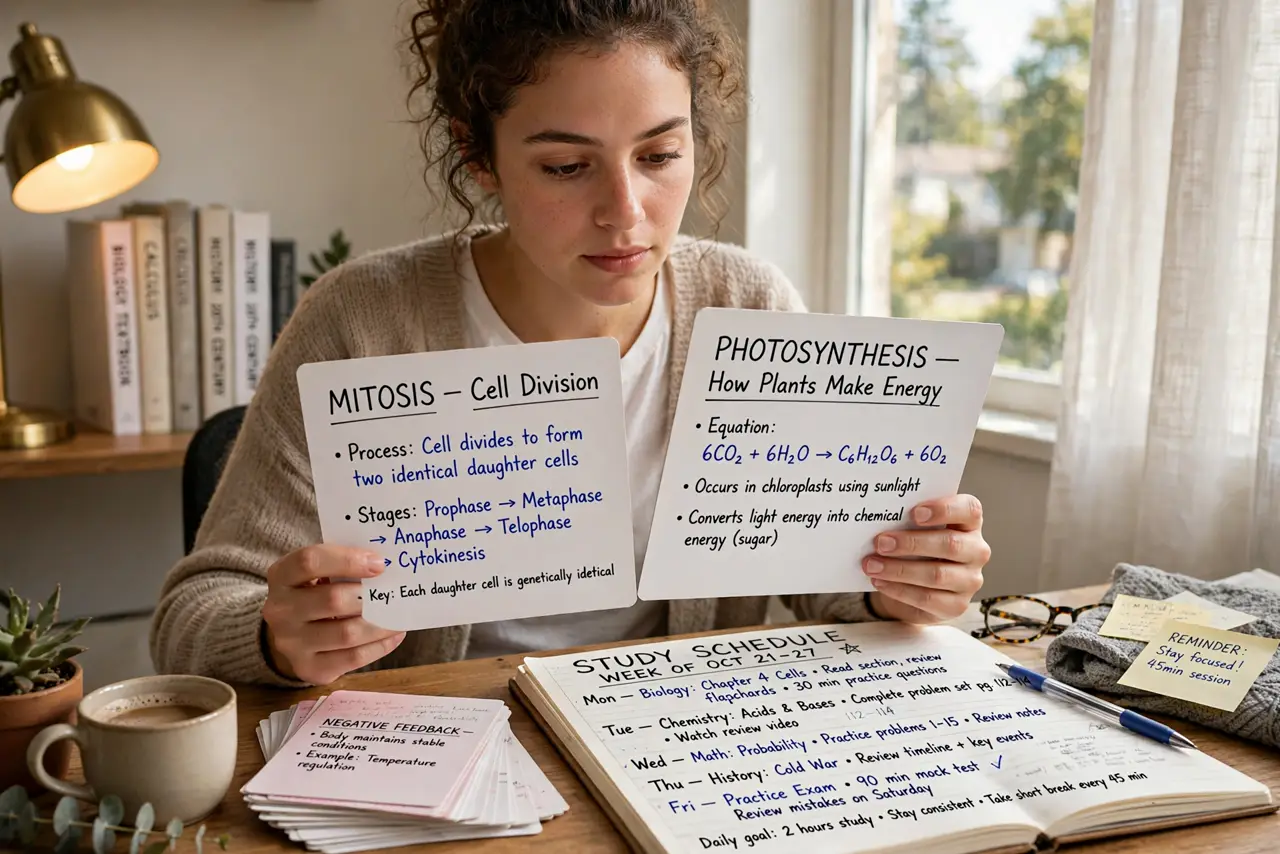
TL;DR / Quick Fix
Quick fix: review new material after one day, then three days, then a week, then two weeks — testing yourself each time instead of rereading. This spacing beats cramming for long-term memory. Ten minutes of daily review beats a five-hour weekend session.
Follow these steps
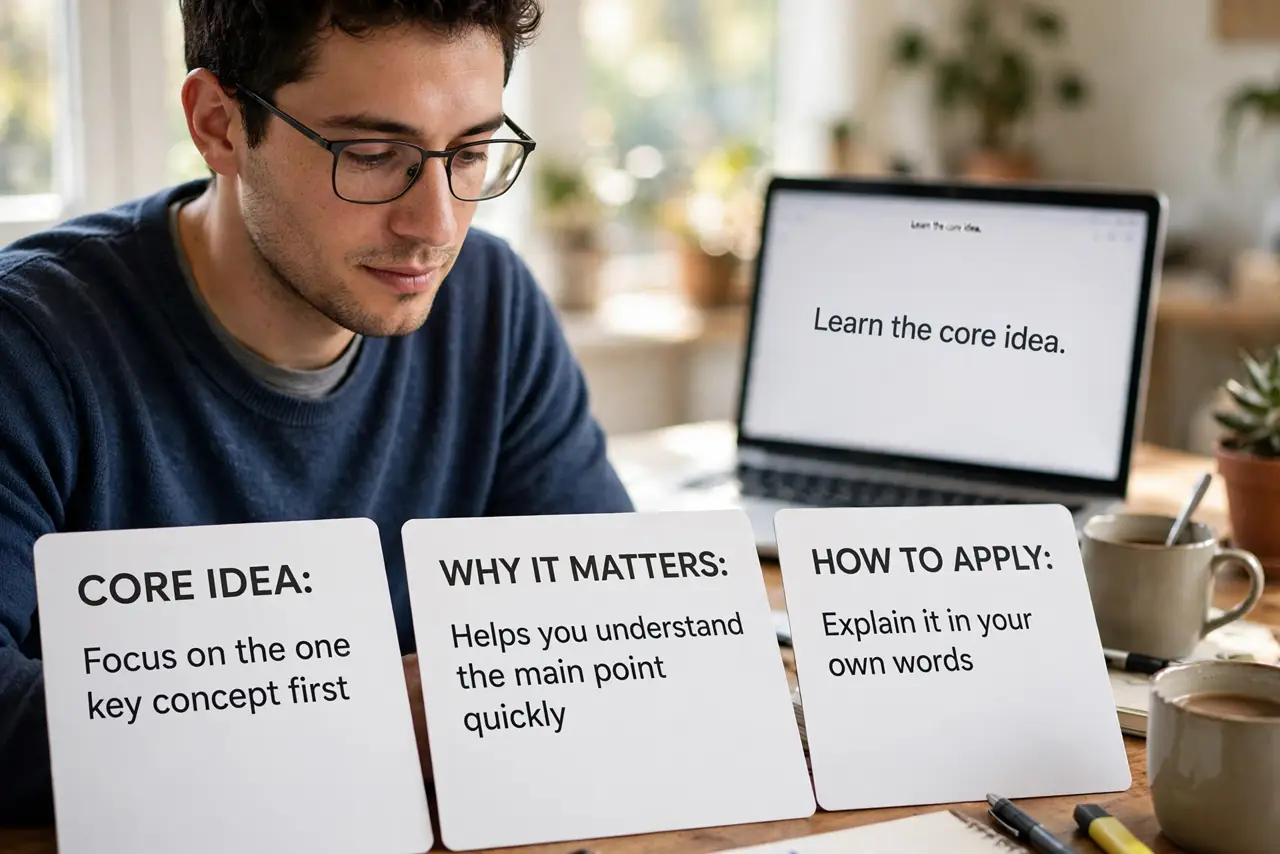
- Learn the core idea. Each review resets the forgetting curve, and each interval gets longer. You review just before forgetting — maximum memory per minute. See the technique.
- Test, do not reread. Close the book and recall. Retrieval is what builds memory; rereading feels productive but barely helps.
- Use simple flashcards. One question per card, one idea per card. Physical cards or any flashcard app work — the schedule matters, not the tool.
- Follow the 1-3-7-14 rhythm. Review after 1 day, 3 days, 7 days, 14 days. Got it right? Push it further out. Missed it? Reset to day one.
- Keep sessions short and daily. Ten to twenty minutes a day beats marathon sessions. Spacing only works if the reviews actually happen.
- Combine with understanding first. Spaced repetition memorizes; it does not explain. Learn the idea properly first — the Feynman technique — then drill it with spacing.
What NOT to do
- Do not reread instead of testing. Recognition is not recall — only self-testing builds durable memory.
- Do not cram the night before. It works for tomorrow's test and evaporates by next month.
- Do not make cards too complex. One idea per card — paragraphs belong in notes, not flashcards.
- Do not skip reviews when busy. Missed intervals collapse the schedule; even five minutes keeps it alive.
Frequently asked questions
What is the best interval schedule?
1-3-7-14 days is a solid default. Adjust based on misses — the system self-tunes.
Paper or app flashcards?
Apps schedule automatically; paper forces discipline. Both work if you follow the intervals.
Does it work for skills, not just facts?
Yes — spaced practice applies to languages, music, and procedures too, not just vocabulary.