Run Personal Sprints
Your big goal — the book, the fitness plan, the career move — has been 'in progress' for eight months with nothing to show. Big goals stall because they are too big to feel urgent. Personal sprints steal the software world's trick: shrink the goal into a two-week sprint with a defined finish line, then run it like it matters. Momentum returns fast.
TL;DR / Quick Fix
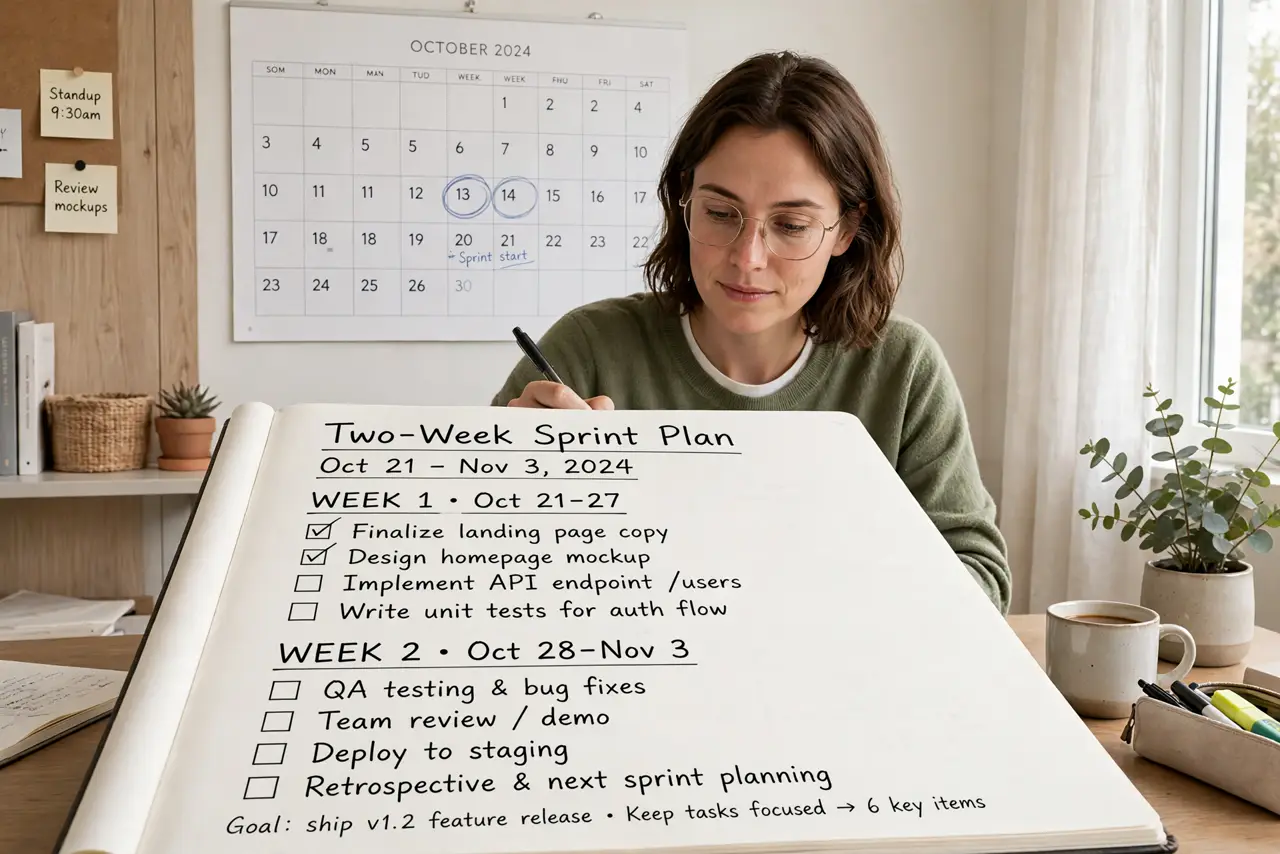
Quick fix: turn a stalled big goal into a two-week sprint — pick one concrete outcome, define what done looks like, and work it in focused daily blocks. Review at the end of the two weeks and start the next sprint. Small finish lines beat grand intentions.
Follow these steps
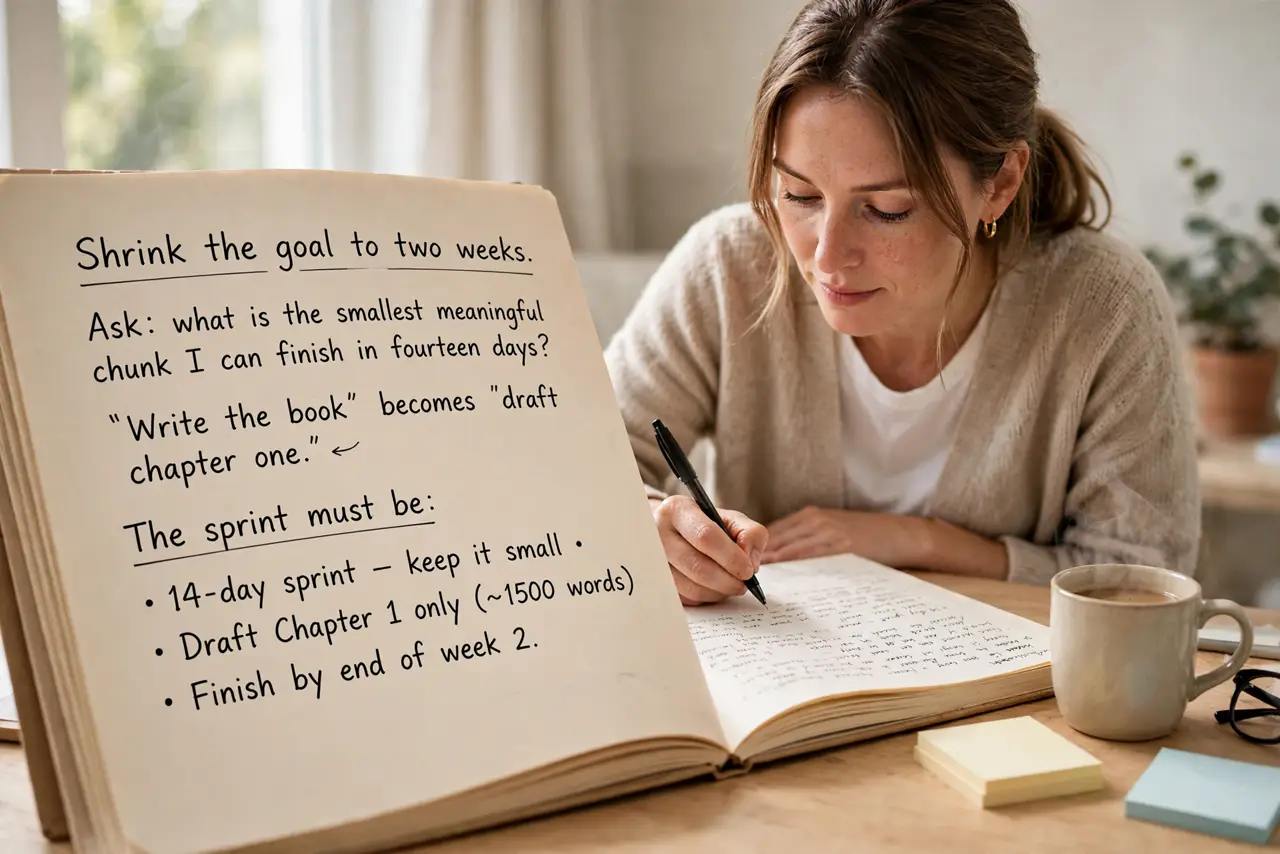
- Shrink the goal to two weeks. Ask: what is the smallest meaningful chunk I can finish in fourteen days? 'Write the book' becomes 'draft chapter one.' The sprint must be finishable — that is the whole mechanism.
- Define done before starting. Write the finish line in one sentence — the definition-of-done habit applies here too. A sprint without a defined end just becomes another two weeks of drifting.
- Time-box daily work. Decide the daily block — 25 minutes, an hour, whatever fits — and protect it. Sprints run on consistency, not heroics; the daily appointment beats the weekend binge.
- Track visibly. A wall calendar with X marks, a checklist, a sticky note — something you see. Visible progress is the fuel; invisible effort evaporates.
- Review at day fourteen. What got done? What blocked you? What changes next sprint? Ten honest minutes of review — the weekly review pattern scales down nicely — doubles the value of the next round.
- Rest between sprints. Take a day or two off before the next sprint. Sprinting forever is just grinding with a new name — the recovery is part of the system.
What NOT to do
- Do not sprint on five goals at once. One sprint, one goal — parallel sprints are just multitasking with better branding.
- Do not skip the review. The sprint without a retrospective is exercise without learning — same effort, half the growth.
- Do not set a sprint you cannot finish. An impossible two weeks teaches learned helplessness; a modest win teaches momentum.
- Do not confuse sprints with hustle culture. The point is focused finishing, not maximum hours — rest is in the design.
Frequently asked questions
How long should a personal sprint be?
Two weeks is the sweet spot — long enough for real progress, short enough to stay urgent. One week works for small goals; a month starts feeling like no deadline.
What if I fail the sprint?
Then the sprint did its job — it gave you data in two weeks instead of eight months. Review honestly, shrink the next goal, and go again.
Can sprints work for habits like exercise?
Yes — 'run three times this week for two weeks' is a perfect sprint. The finish line makes the habit concrete.