Skimmers at Gas Pumps? Spot Them
A tiny device hidden on the pump's card reader copies your card the moment you pay for gas — then criminals clone it and drain your account. Gas stations are prime targets because the pumps sit unattended and the readers are easy to tamper with. A ten-second inspection before you swipe defeats most skimmers.
TL;DR / Quick Fix
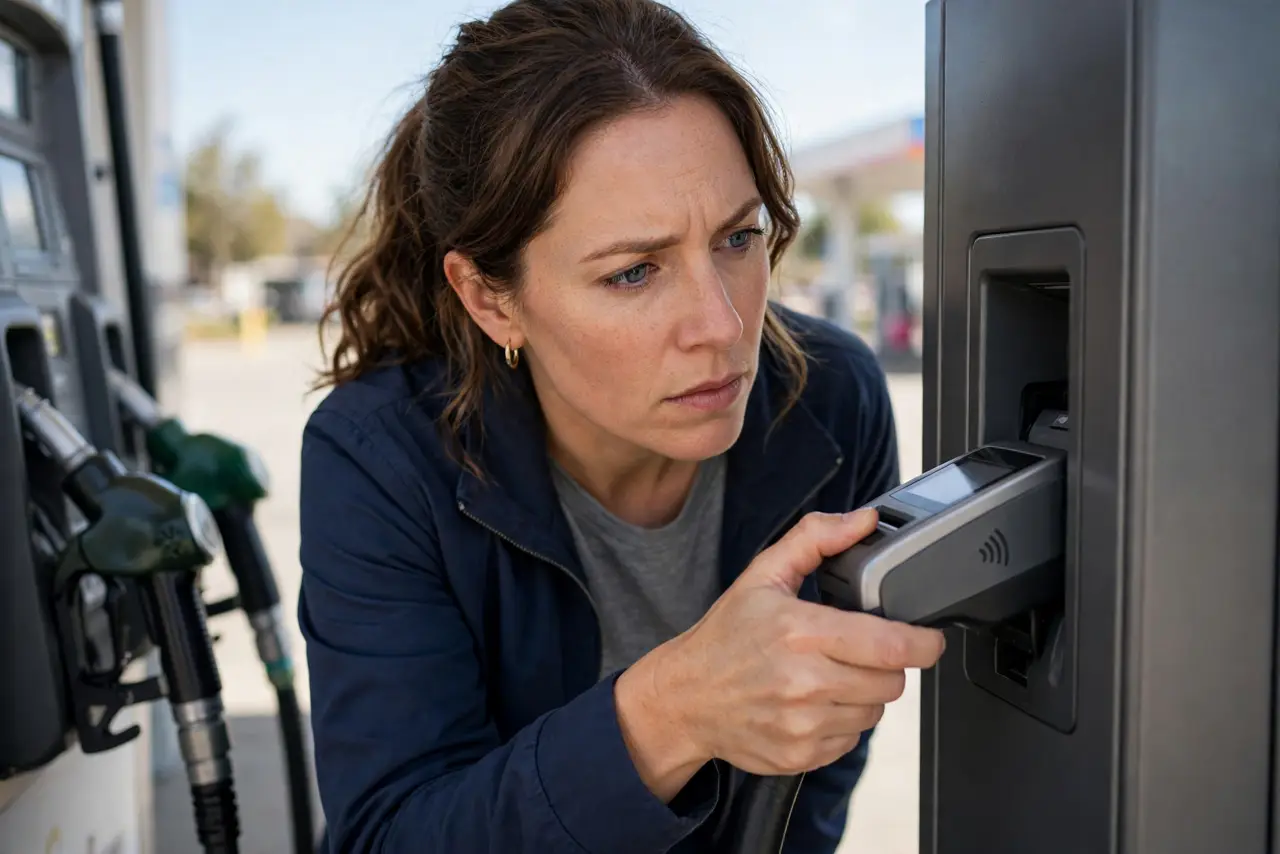
Quick fix: before paying at the pump, tug firmly on the card reader — real readers are solidly built in, while skimmer overlays wiggle or come off. Better yet, pay inside or use tap-to-pay, which skimmers cannot intercept. If anything looks or feels off, move to another pump.
Follow these steps
- Tug the card reader. Grip the card slot and pull firmly. Factory-installed readers do not move; skimmer overlays — thin shells fitted over the real reader — shift, wiggle, or pop off.
- Compare with the neighboring pump. Look at the pump next to yours. Mismatched reader colors, different keypad feels, or extra bulk on one reader means one of them was tampered with.
- Check the security seal. Many pumps have a tamper-evident seal sticker across the cabinet door. A broken, voided, or missing seal means someone opened the pump — pay inside instead.
- Prefer tap-to-pay or pay inside. Contactless payments cannot be skimmed — there is no swipe to intercept. Paying the cashier inside skips the outdoor reader entirely.
- Use credit, not debit, at pumps. If a skimmer does get you, credit card fraud is the bank's money at risk; debit fraud is your money gone until the dispute resolves. See why credit beats debit online — the same logic applies at pumps.
- Watch your statements after fill-ups. Skimmed cards are often tested with a small charge days later. A quick weekly glance at transactions catches the test before the drain.
What NOT to do
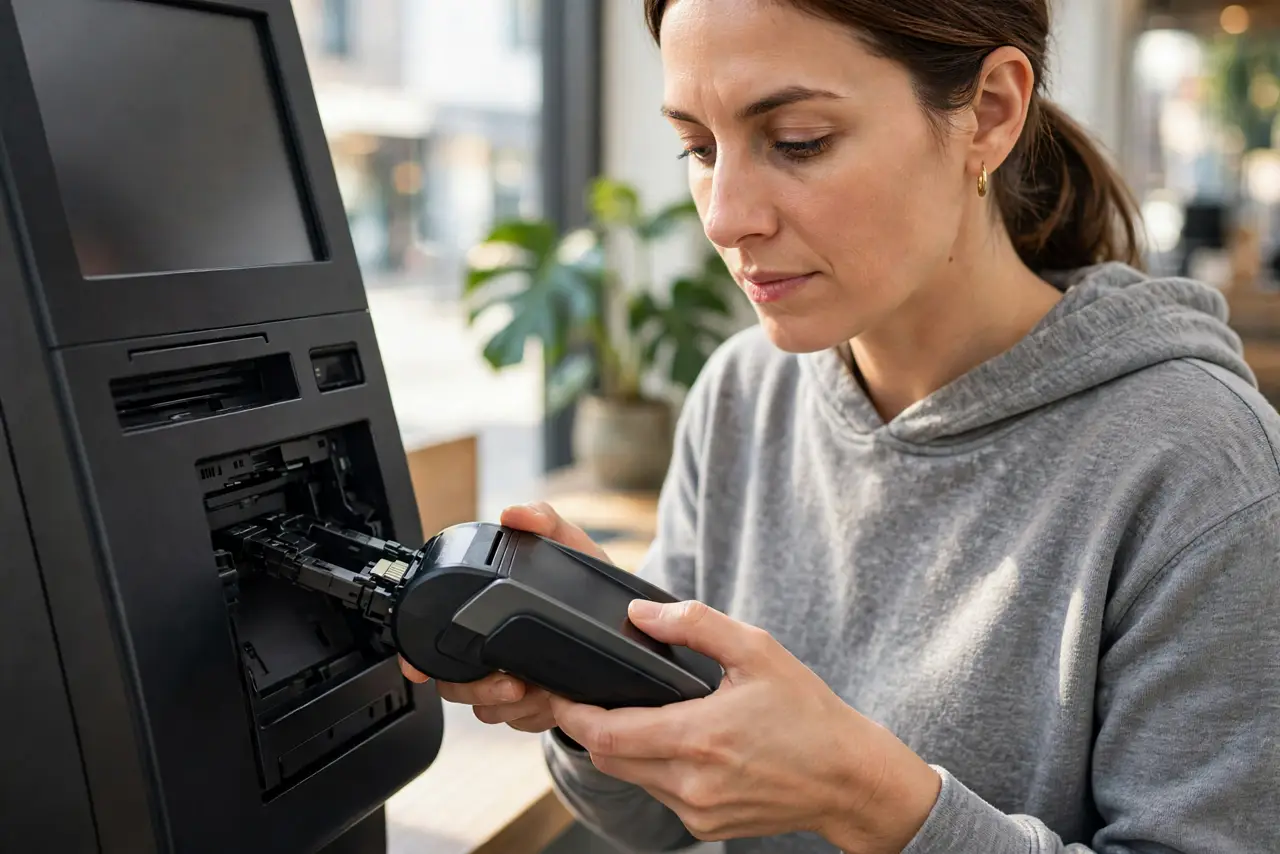
- Do not wiggle a loose reader and then use it anyway. A reader that moves is a reader that was tampered with — walk inside or leave.
- Do not use the pump farthest from the building. Criminals install skimmers where attendants cannot see — the closest, most visible pump is the safest.
- Do not enter your PIN on a compromised-looking keypad. Cover the pad and consider the transaction compromised — then freeze the card and check statements.
- Do not assume chip readers are immune. Skimmers target the swipe slot, but shimmers that attack chips exist — tap-to-pay remains the safest option.
Frequently asked questions
What does a skimmer actually look like?
Usually a thin plastic overlay matching the pump's reader, sometimes with a tiny hidden camera above the keypad to catch PINs. They are designed to blend in — which is why the tug test matters more than the look.
Are some stations safer than others?
Busy, well-maintained stations with security seals and tap-to-pay are safer. Older pumps with only swipe slots at quiet stations are the highest-risk combination.
I think I used a skimmed pump — now what?
Monitor your transactions closely for a few weeks, and consider requesting a replacement card. If any charge appears that you did not make, report it immediately.