Inheritance Email? It's a Scam
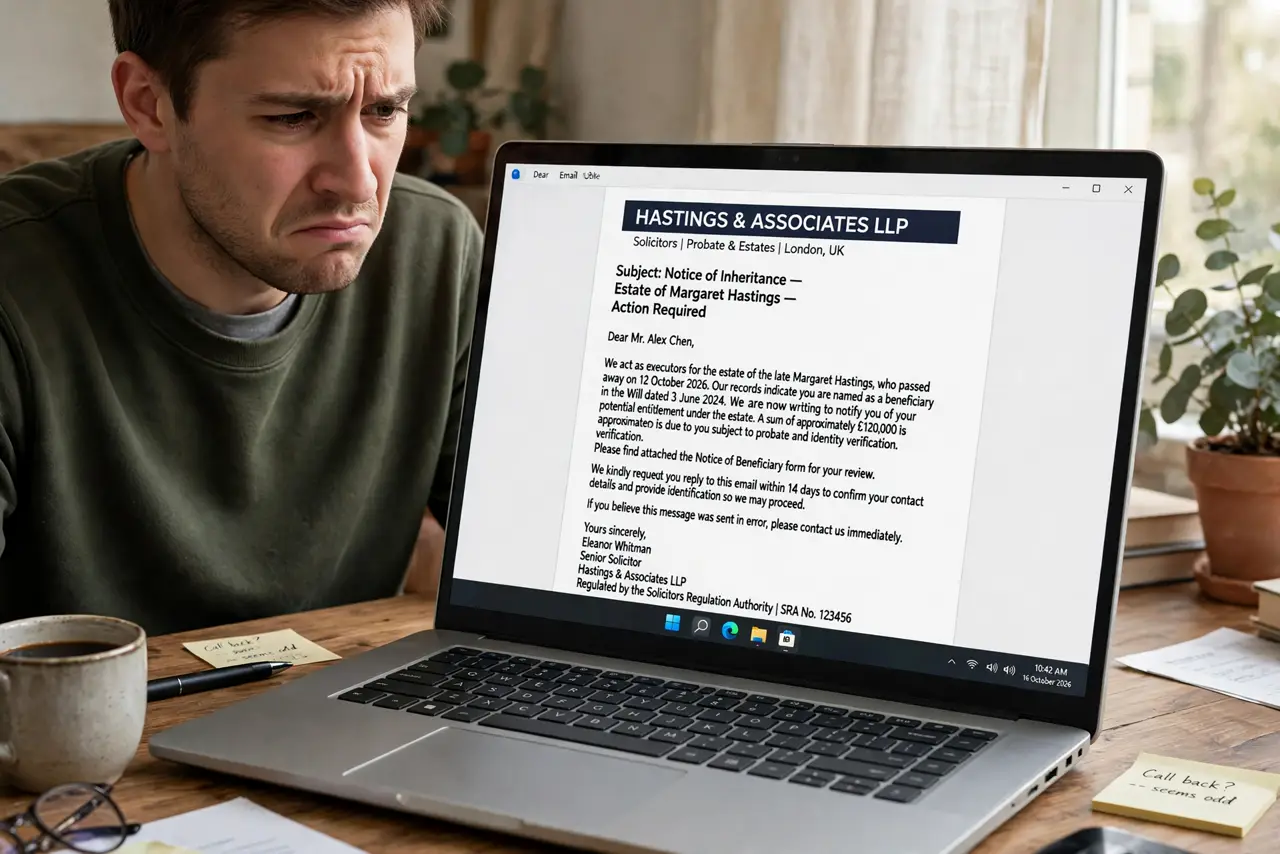
A distant relative you never met left you millions, and a foreign lawyer needs your help — and your bank details — to release it. This is the advance-fee scam, one of the oldest tricks on the internet, still working because the fantasy of sudden wealth short-circuits skepticism. No stranger emails heirs about real inheritances.
TL;DR / Quick Fix
Quick fix: no real lawyer notifies heirs by cold email, and no inheritance requires you to pay fees up front. The release fee is the entire scam — once paid, more fees follow forever. Delete the email and never reply; any reply marks you as a live target.
Follow these steps
- Know the script. A wealthy stranger died, you share a surname, a lawyer or bank official found you. Small legal fees unlock millions. Every version ends the same: fees escalate and the fortune never exists.
- Never reply — not even to refuse. Any reply confirms your address is active and that you read scam bait. You get added to sucker lists sold between scammers. Delete silently.
- Never send documents. Scammers ask for ID scans for the paperwork — then use them for identity theft. A real estate of a real relative goes through probate court, not email attachments.
- Check the story against reality. Search the lawyer's name, the bank, and key phrases from the email. These scams reuse text; victims and warnings are usually already posted online.
- Remember how real inheritances work. Real estates are handled by probate courts with certified mail, court filings, and lawyers you can verify through a bar association. None of it starts with a free email address.
- Report it. Forward it to your country's fraud reporting center and mark it as phishing in your email app. One report will not stop the industry, but it trains filters that protect others.
What NOT to do
- Do not pay any fee, no matter how small or how refundable it sounds. The fee is the product — there is no inheritance.
- Do not share bank details for the transfer. The transfer never comes; the account drain does.
- Do not keep it secret out of embarrassment or hope. Tell a skeptical friend or family member — an outside eye kills the fantasy fast.
- Do not meet anyone in person about it. Some versions escalate to in-person meetings, which add physical danger to financial loss.
Frequently asked questions
Could a real inheritance really arrive by email?
Essentially never. Courts and estate lawyers use verifiable channels — certified mail, court documents, attorneys you can look up. A cold email is not how millions change hands.
Why do they always pick a foreign country?
Distance makes verification hard and the story exotic. It also explains why you never heard of the relative and why local laws require strange fees.
The email had official-looking documents — fake?
Yes. Letterheads, seals, passports, and certificates are trivial to forge or steal. A document attached to a cold email proves nothing.