Smart Lock Security? Basics
A smart lock means no more hiding keys under the mat — but it also means your front door now has software, batteries, and a network connection, each a potential weak point. Most smart lock break-ins are not hacking; they are dead batteries, shared codes that never expire, and weak account passwords. This guide covers the practical defenses.
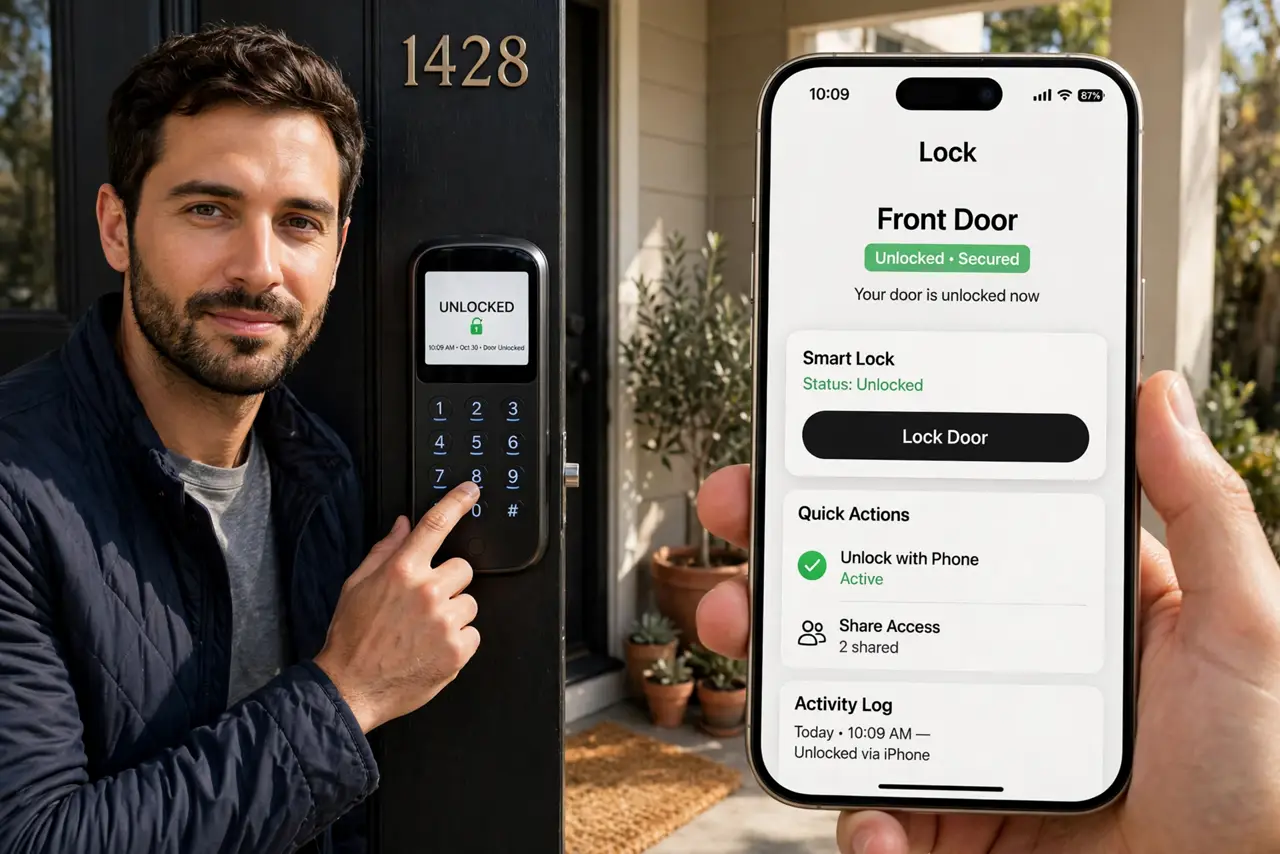
TL;DR / Quick Fix
Quick fix: give every person their own unique code and delete codes you no longer need. Use a strong unique password with two-factor authentication on the lock's account. Change batteries on a schedule, not when the lock dies. Keep a physical key as backup for when technology fails.
Follow these steps
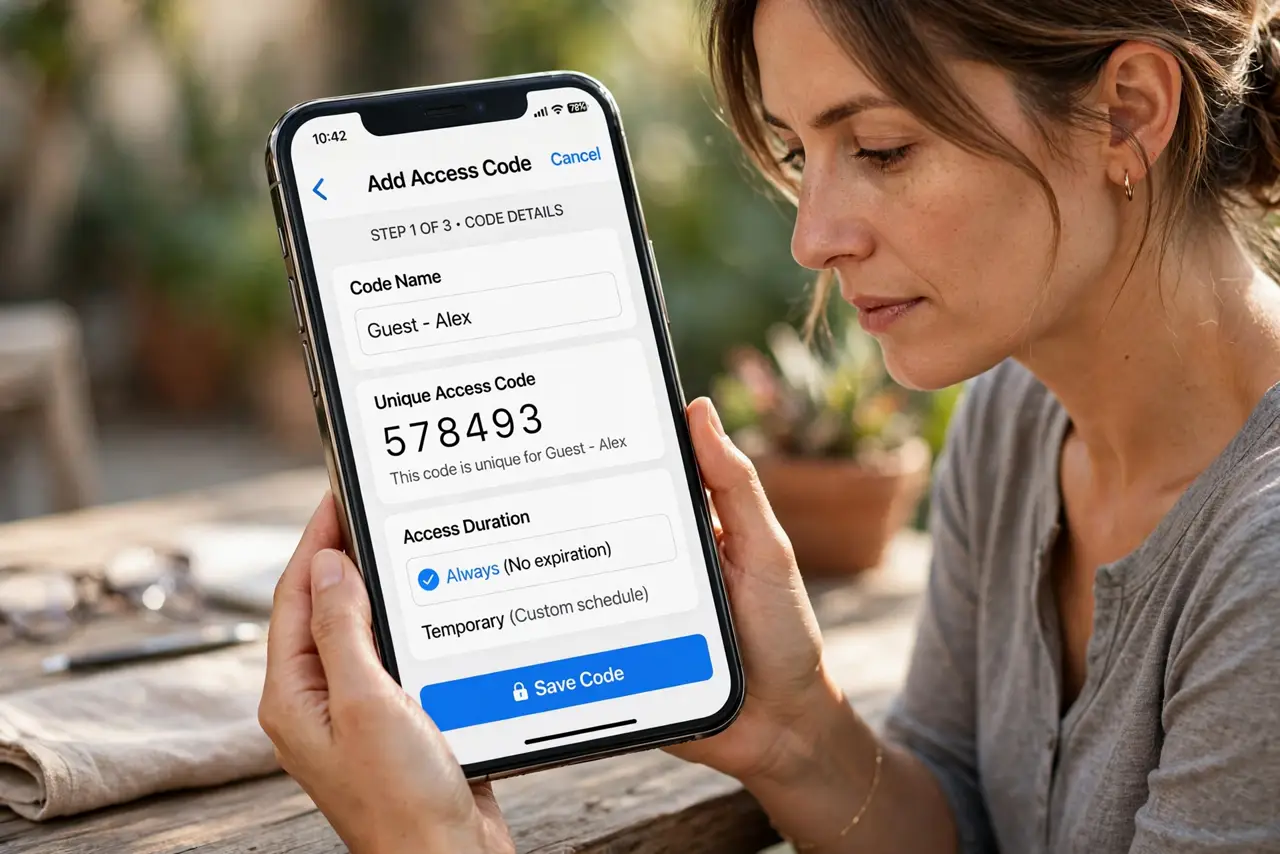
- Give everyone their own code. Unique codes per person let you revoke one without changing everyone's. Never share a single code with the whole household — see why permanent guest codes are a quiet risk.
- Expire temporary codes. Cleaners, dog walkers, and guests get codes with end dates. Review the code list monthly and delete anything that has served its purpose.
- Lock down the account. The app account controls your door — protect it like one. Unique password, two-factor authentication on, and no sharing the login with family members who only need a code.
- Change batteries proactively. Most locks warn at low battery, but warnings get missed. Swap batteries yearly on a memorable date — a dead lock at midnight is a preventable crisis.
- Keep a physical backup key. Hide a real key with a trusted neighbor or in a lockbox — not under the mat. Electronics fail; a key does not need batteries.
- Update the firmware. Lock makers patch flaws through updates. Check the app quarterly — an unpatched lock is the one that makes the news.
What NOT to do
- Do not use one code for everyone. A shared code cannot be revoked for one person without inconveniencing all of them.
- Do not let guest codes live forever. A code for last year's houseguest still opens your door today unless you deleted it.
- Do not ignore low-battery warnings. The lock will not wait for a convenient moment to die — act on the first warning.
- Do not hide the backup key under the mat. The oldest trick is still the first place anyone looks — use a neighbor or a lockbox.
Frequently asked questions
Can smart locks be hacked?
The realistic risks are weak account passwords and unpatched firmware, not movie-style hacking. Strong passwords and updates close nearly all of it.
What happens if the batteries die?
Most locks have an external battery jump point or a physical key override. Know where yours is before you need it at midnight.
Are smart locks safer than regular locks?
They trade picking risk for digital risk. With good codes and updates, they are at least as safe — and you never lose a key again.