Storm-Chaser Contractors? Red Flags
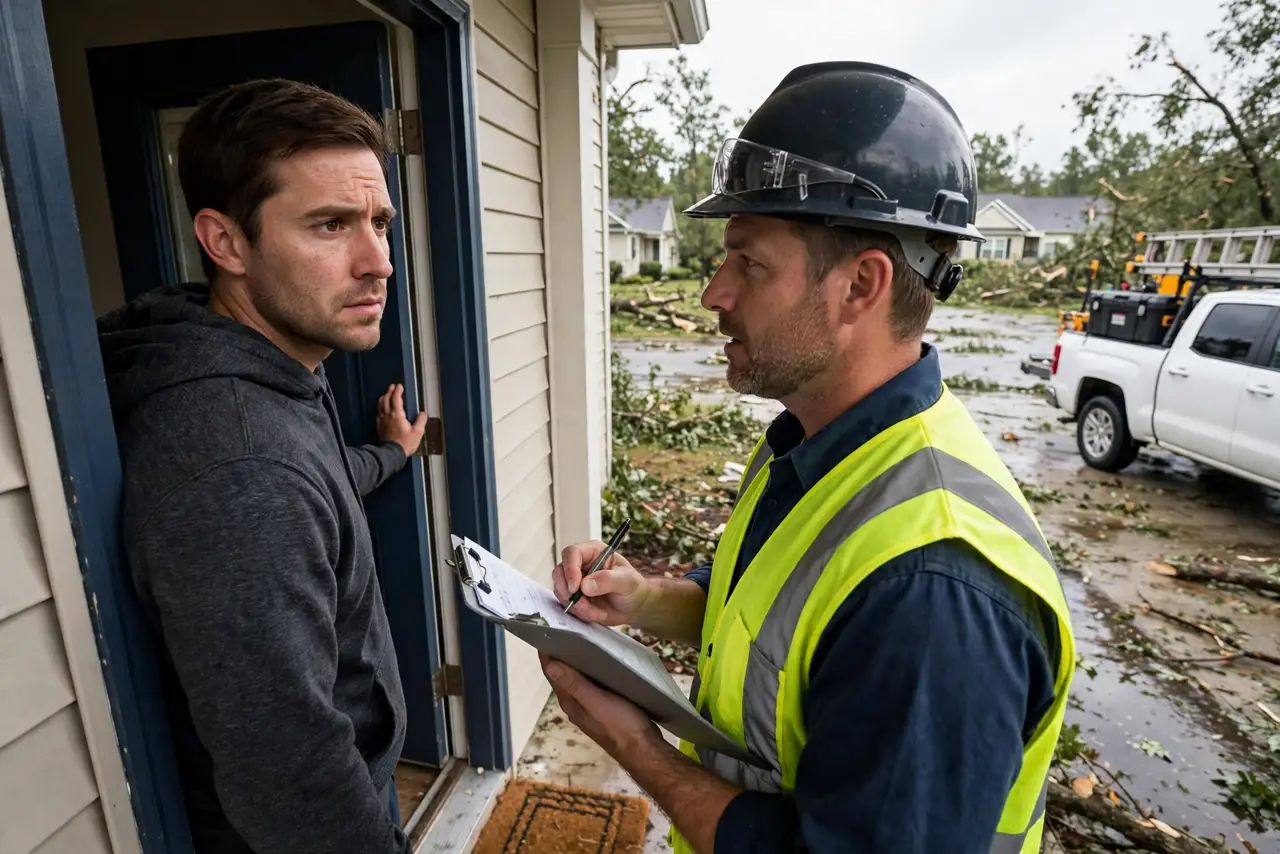
After every big storm, they appear: out-of-state trucks, knocking on doors, offering roof repairs 'today only.' Some are legitimate traveling crews; many are storm chasers who take deposits and disappear, or do shoddy work no warranty will ever cover. After a storm is exactly when your guard should be highest.
TL;DR / Quick Fix
Quick fix: do not hire door-to-door contractors after a storm, no matter the pitch. Get local, licensed, verifiable contractors with local references — and never pay large deposits upfront. Call your insurer before signing anything; they have vetted contractor lists and must approve the claim anyway.
Follow these steps
- Do not answer the door's pitch. Legitimate local contractors are booked solid after storms — they do not need to canvass. The knock itself is the first red flag.
- Call your insurer first. Your policy likely requires insurer-approved repairs anyway. The adjuster documents damage and the insurer's contractor list skips the guesswork.
- Demand local and verifiable. Local address, local license, local references you can visit. Out-of-state plates plus a PO box equals unfindable when the roof leaks in spring.
- Apply the deposit rule. Same as any contractor job: small deposit, milestone payments, everything in writing — see contractor deposit checks. Large upfront money plus a transient crew is the classic vanishing act.
- Document damage before anyone touches it. Photos and video of everything, timestamped. You need your own record regardless of who does the work — for the insurer and for disputes.
- Take your time. 'This price expires today' is pressure, not reality. Storm damage feels urgent; contractor selection should not be. Sleep on every quote.

What NOT to do
- Do not sign anything on the doorstep. Contingency contracts signed under pressure are a storm-chaser specialty — read everything at your kitchen table.
- Do not let them 'inspect' the roof unsupervised. Some create damage to justify the job — a second local opinion protects you.
- Do not pay in full before the work passes inspection. Final payment follows verified completion, not promises.
- Do not skip the insurer to 'save time.' Unapproved work can void the claim — the slow route is the covered route.
Frequently asked questions
Are all traveling contractors scammers?
No — legitimate crews travel to disaster zones. But the burden of proof is on them: local license, verifiable references, and no pressure tactics.
What is a contingency contract?
An agreement letting the contractor pursue your insurance claim, often with you owing the deductible-plus. Read every line — some sign away more rights than homeowners realize.
The damage needs fixing now — what can I do immediately?
Emergency tarping and mitigation to prevent further damage — document it, keep receipts, and save the permanent repair decision for a vetted contractor.