'Like Videos, Earn Money'? Scam
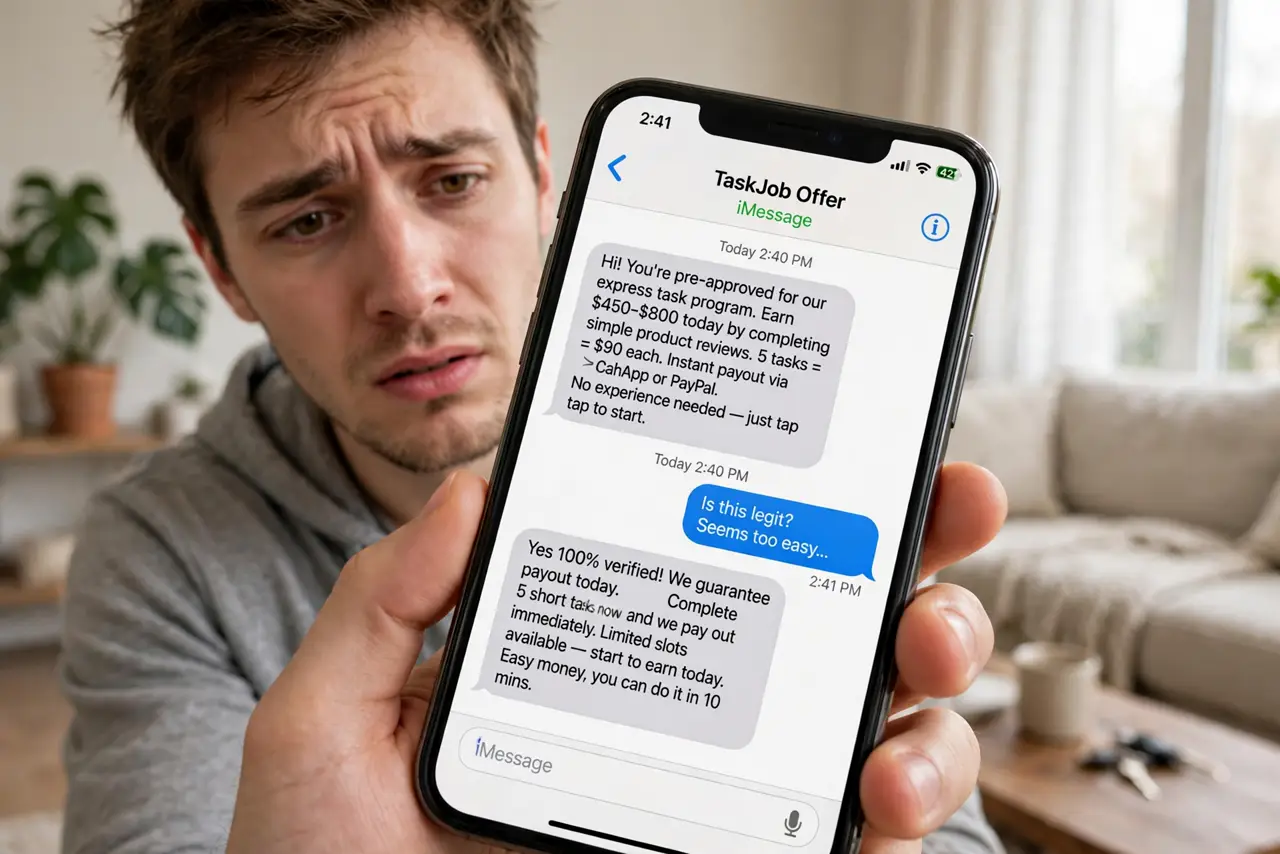
A text offers easy money: like videos, rate products, complete small tasks — paid daily, no experience needed. The first tiny payments even arrive, building trust. Then comes the 'upgrade fee' or 'bigger task requiring a deposit.' That is when the trap closes. Task scams are industrial-scale fraud wearing a job offer's clothes.
TL;DR / Quick Fix
Quick fix: no legitimate job pays you for liking videos or asks for deposits to unlock bigger tasks. If you are in one, stop and do not send more money. The early small payments are bait. Report the contacts, block them, and warn anyone who might get the same pitch.
Follow these steps
- Recognize the pitch. Unsolicited texts or social messages offering easy task-based pay — liking, rating, reviewing. Real employers do not recruit by random text. See job-offer text scams.
- Spot the trust-building phase. Small tasks, small prompt payments. This is deliberate: the scammers spend a little to make the big theft believable.
- Identify the trap moment. The 'deposit to unlock higher-paying tasks' or 'pay a fee to withdraw earnings.' Any job asking you to pay is not a job — see upfront-fee warnings.
- Stop and do not send more. The moment money flows from you to them, it is over. Every additional deposit is gone — 'one more to unlock everything' is the same lie, repeated.
- Cut contact and report. Block the numbers and accounts, report them to the platform and the fraud agency in your country. Do not try to 'get your money back' through them.
- Warn your circle. These spread through friends' referrals and social posts. One warning post saves someone else the tuition you just paid.
What NOT to do
- Do not pay any deposit, fee, or 'verification charge.' Legitimate employers pay you — the money flows one direction.
- Do not trust the early payments. Bait is supposed to work; that is what makes it bait.
- Do not recruit friends into it. Some victims become unwitting recruiters — check whether you were asked to invite others, and warn them instead.
- Do not confuse it with real gig work. Real platforms have verifiable companies, contracts, and no pay-to-work fees.
Frequently asked questions
I already sent money — can I get it back?
Rarely. Report to law enforcement and your bank immediately, but treat it as likely gone — and stop sending more, which is the critical part.
Are all work-from-home task jobs scams?
No, but the legitimate ones never arrive by random text, never pay for liking videos, and never ask for deposits. Those three filters catch nearly all fakes.
Why do they pay at first?
To manufacture trust cheaply. A few small real payments buy the credibility needed for the one large theft — classic advance-fee psychology.