Shielded vs Unshielded Cable?
Ethernet cable comes in two flavors — shielded (STP) and unshielded (UTP) — and the shielded kind costs more and is fussier to install. Most homes never need it, but run cable past a breaker panel or through a workshop and interference becomes real. Here is when the shield earns its price.
TL;DR / Quick Fix
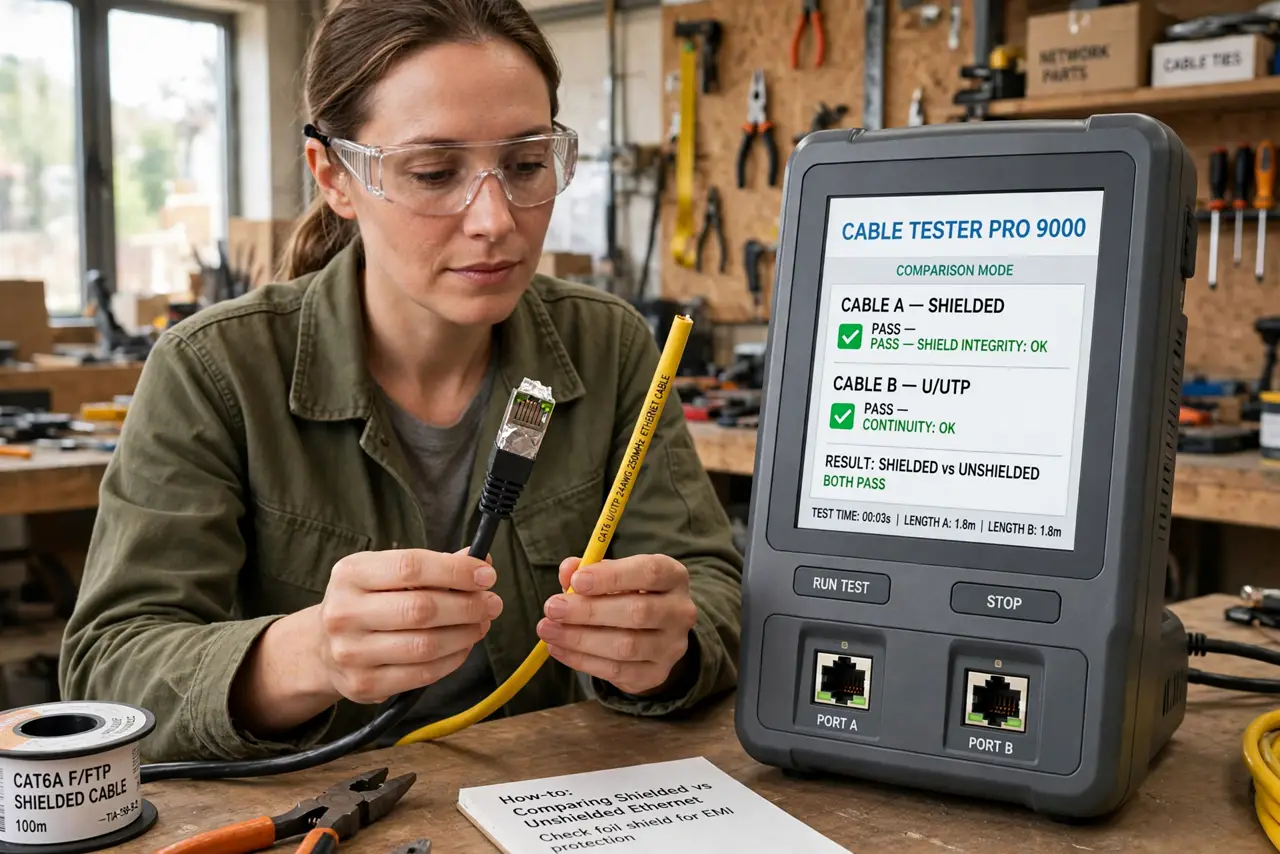
Quick fix: shielded (STP) cable resists interference from power lines, fluorescent lights, and machinery — unshielded (UTP) is fine everywhere else. Most homes never need shielding; buy it only when cables run alongside electrical wiring or through noisy environments. Ground the shield properly or skip it.
Follow these steps
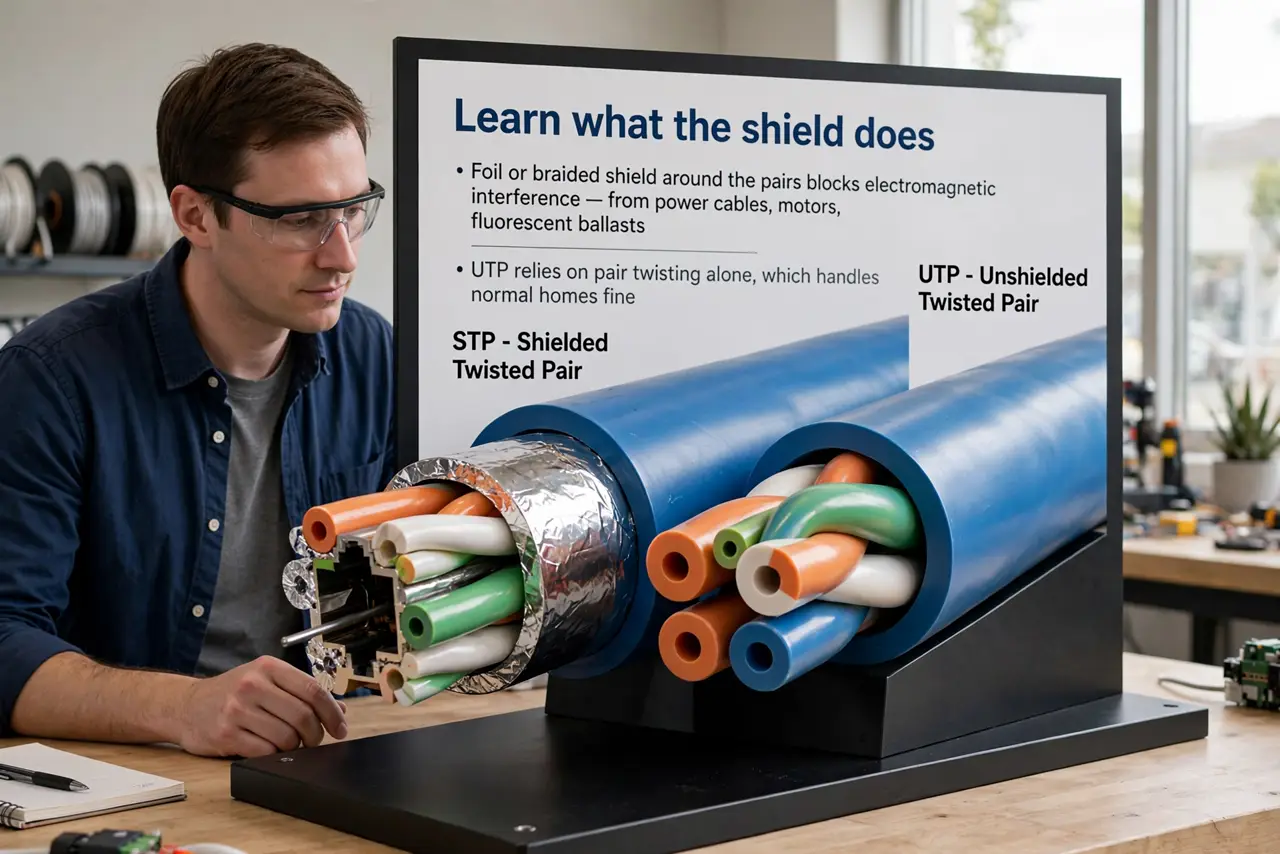
- Learn what the shield does. A foil or braided shield around the pairs blocks electromagnetic interference — from power cables, motors, fluorescent ballasts. UTP relies on pair twisting alone, which handles normal homes fine.
- Know where interference actually lives. Breaker panels, workshops, industrial spaces, long parallel runs next to power lines. A bedroom wall with one lamp nearby? Not it — see cable categories for the baseline first.
- Ground it or do not bother. A shield only works when properly grounded at one end — an ungrounded shield can act as an antenna and make things worse. If you will not ground it, buy UTP.
- Match shielded connectors. Shielded cable wants shielded jacks and plugs to keep the shield continuous. Mixing shielded cable with unshielded ends breaks the chain — the system is only as good as its weakest link.
- Consider Cat6a for 10G. Long 10-gigabit runs pair naturally with shielding — see Cat6 vs Cat6a for when that upgrade makes sense. Shielding and category are separate choices that often travel together.
- Keep it simple by default. When in doubt, quality UTP from a reputable maker beats cheap STP. Most interference fears are theoretical; most real problems are bad terminations, not missing shields.
What NOT to do
- Do not buy shielded ‘just in case.’ Ungrounded shield can hurt more than help — default to UTP unless you have a real noise source.
- Do not run any Ethernet with high-voltage lines. Shield or not, keep data cable separated from mains power — parallel runs are the enemy.
- Do not forget the ground. Shielded without grounding is decoration at best, an antenna at worst — one grounded end, done right.
- Do not kink shielded cable. All Ethernet hates tight bends, but shielded is stiffer and less forgiving — respect the bend radius.
Frequently asked questions
Is shielded cable faster?
No — same speed ratings as unshielded. Shielding fights interference, not slowness; speed comes from the category.
Do I need it near a microwave?
No — brief, occasional interference is handled by Ethernet’s error correction. Shielding is for constant, strong noise sources.
Can I mix shielded and unshielded?
Electrically yes, but the shield chain breaks at the unshielded part. Keep runs consistent for the shielding to mean anything.