Someone Watching Your PIN? Shoulder Surfing
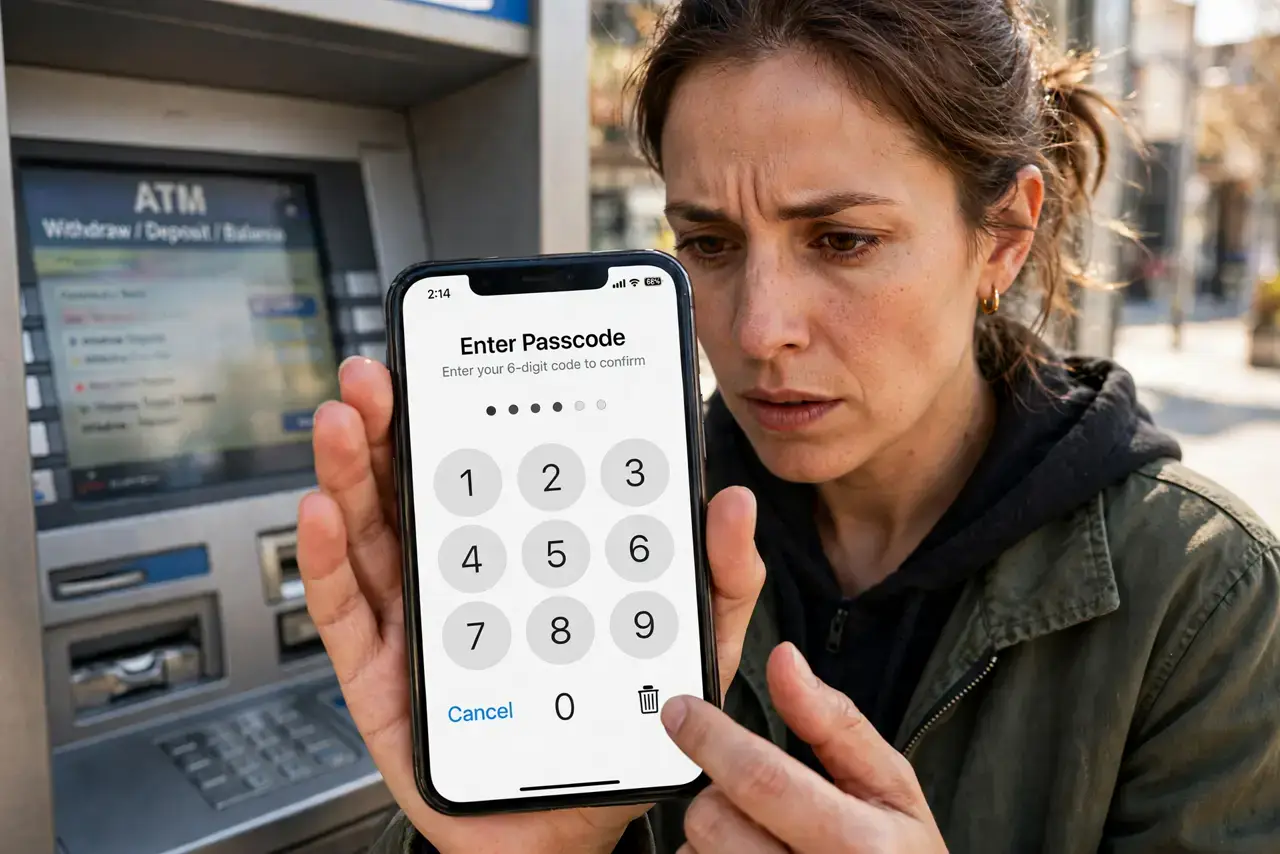
Shoulder surfing is the oldest hack there is: someone simply watches you type your PIN, password, or unlock pattern. It happens at ATMs, checkout lines, and on crowded trains — anywhere your screen is visible. This guide shows the small habits that make your entries unreadable to onlookers.
TL;DR / Quick Fix
Quick fix: shield the keypad with your free hand every time you type a PIN, and switch from a visible unlock pattern to a PIN or password. Turn off lock-screen message previews so codes and texts are not readable at a glance. Awareness is the whole defense.
Follow these steps
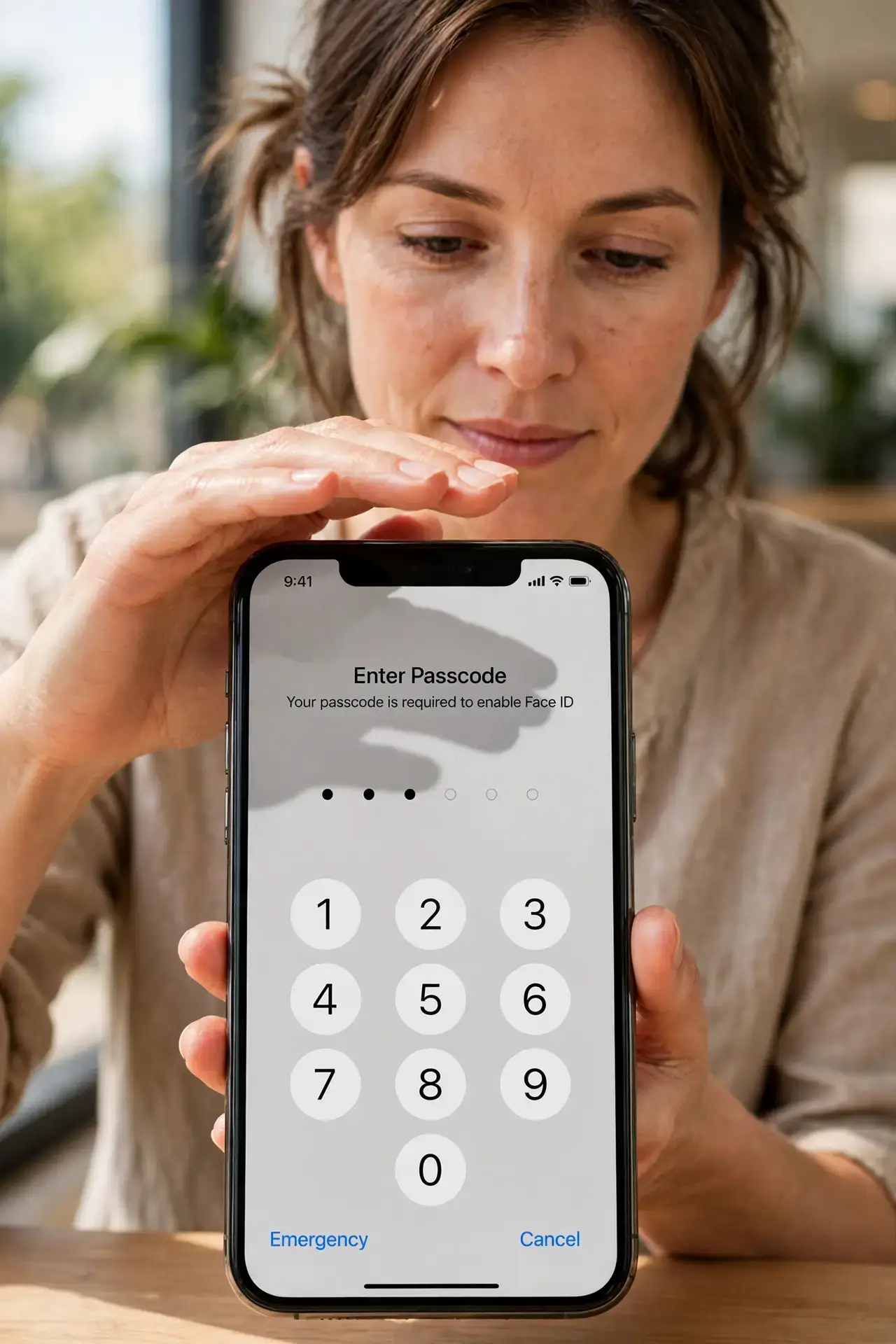
- Shield the keypad with your hand. Cup your free hand over the keypad at ATMs and checkout terminals. It is the single most effective anti-surfing habit and takes zero setup.
- Ditch the visible unlock pattern. Patterns are the easiest to steal from a distance — one glance captures the whole shape. Switch to a PIN or, better, an alphanumeric password.
- Hide lock-screen message content. Turn off message previews on the lock screen so verification codes and private texts are not readable by anyone glancing at your phone.
- Be extra careful in lines and transit. ATMs, ticket machines, and crowded trains are prime surfing spots. Pause and look around before entering anything sensitive.
- Use biometrics where you can. Fingerprint and face unlock cannot be shoulder-surfed. Use them as your primary unlock and keep the PIN as backup only.
- Change a PIN you suspect was seen. If you catch someone watching, change the PIN the same day. A possibly-seen PIN is a compromised PIN — do not wait for proof.
What NOT to do
- Do not type your PIN while someone stands directly behind you. Ask for space or wait — no transaction is so urgent it is worth a stolen PIN.
- Do not use an obvious PIN like your birth year. A surfer who sees one digit can guess the rest if the PIN follows a predictable pattern.
- Do not enter passwords on a screen facing a crowd. Angle your phone or laptop away, or wait until you have privacy.
- Do not reuse the same PIN everywhere. One surfed PIN should not unlock your phone, your bank card, and your voicemail all at once.
Frequently asked questions
What is shoulder surfing?
It is watching someone enter a PIN, password, or pattern — at an ATM, in a checkout line, or over a shoulder on a train — and then using what was seen.
Can someone really memorize my PIN that fast?
Yes. Most people can capture a 4-digit PIN in a single glance, and phone cameras make it even easier from a distance.
Does a longer PIN help?
Somewhat, but shielding your hand helps more. A hidden 4-digit PIN beats a fully visible 8-digit one.