Shred Sensitive Documents
Your trash sits on the curb all night, full of bank statements, medical letters, and pre-approved credit offers — a starter kit for identity theft. Dumpster diving is real and embarrassingly easy. A shredder is cheap insurance, and using it well takes less discipline than you think.
TL;DR / Quick Fix
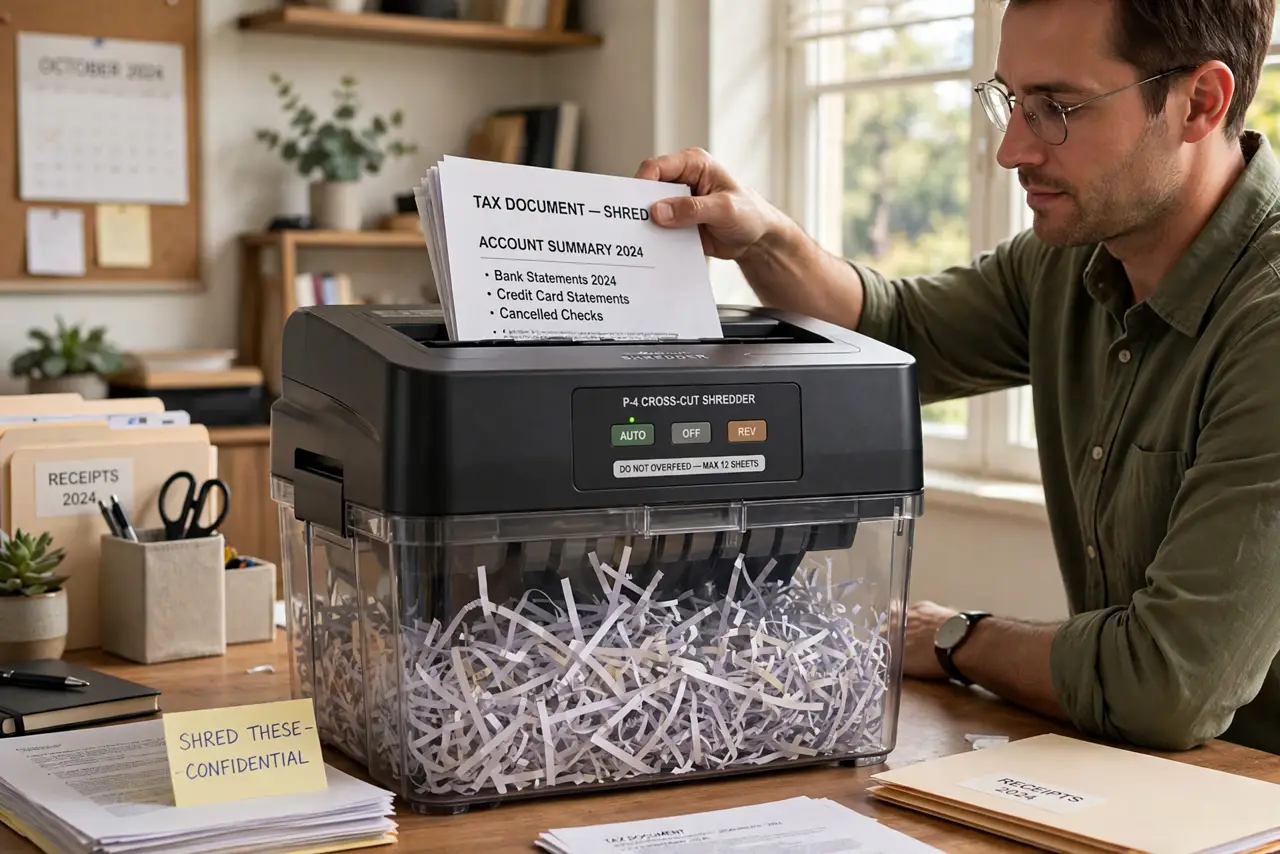
Quick fix: run bank statements, medical letters, tax forms, and old IDs through a cross-cut shredder — never the straight strip kind. Shred junk-mail pre-approvals too, since they carry your personal details. Shred in small batches so the machine doesn't jam, and mix the confetti with other trash.
Follow these steps
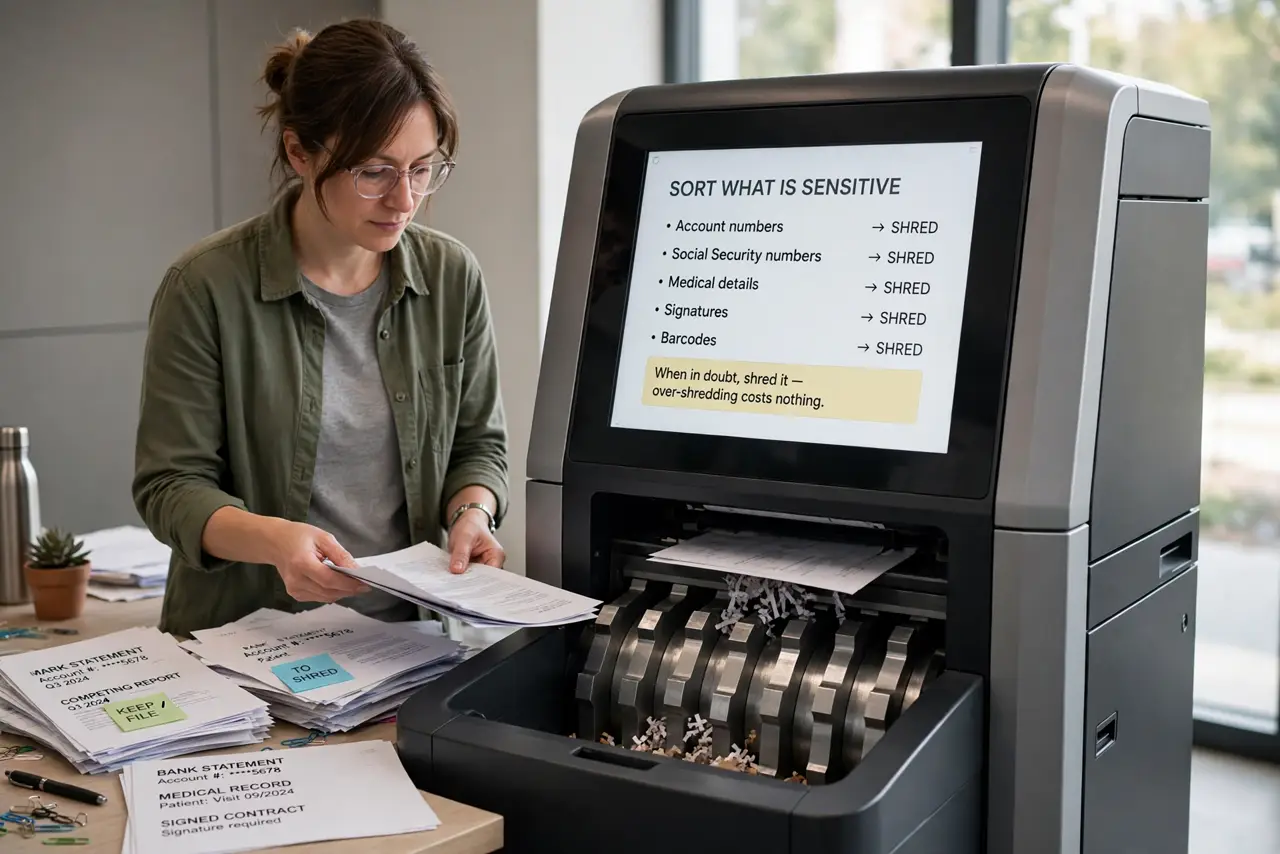
- Sort what is sensitive. Anything with account numbers, Social Security numbers, medical details, signatures, or barcodes gets shredded. When in doubt, shred it — over-shredding costs nothing.
- Buy a cross-cut shredder. Strip-cut shredders make ribbons that can be reassembled; cross-cut makes confetti that cannot. A basic cross-cut model handles a household's needs.
- Shred junk mail too. Pre-approved credit offers and 'you've been selected' letters carry your name and address — exactly what thieves need. They go in the shredder, not the recycling.
- Feed it in small batches. Three to five sheets at a time, staples removed, credit cards only if the manual allows. Jams come from greed, not from the machine.
- Shred digital equivalents. Paper is half the job — delete old scans, wipe sold devices, and shred the sticky notes with passwords. Identity lives in both worlds.
- Dispose of the confetti mixed. Mix shredded paper into regular trash or compost rather than bagging it neatly alone. A bag of pure confetti is still worth sifting through.
What NOT to do
- Do not use a strip-cut shredder for sensitive papers. The ribbons can be taped back together — cross-cut or nothing.
- Do not toss 'harmless' envelopes with your address unopened. Name plus address is the seed of every scam letter.
- Do not shred while the bin overflows. Shredded paper packed tight around the blades is the number-one jam cause.
- Do not forget the mailbox. An overflowing mailbox is a curb-side buffet — collect mail daily or hold it when traveling.
Frequently asked questions
Is burning documents safer than shredding?
It destroys them thoroughly, but open burning is illegal in many places and dangerous. Cross-cut shredding is the practical answer.
Should I shred old tax returns?
Keep them seven years for audit purposes, then shred. Do not hoard decades of statements 'just in case.'
What about documents I only have digitally?
Delete them from devices you sell or discard, and wipe the drive first. A deleted-but-recoverable file is a shredded-then-taped file.