Crosscut vs Strip Shredders?
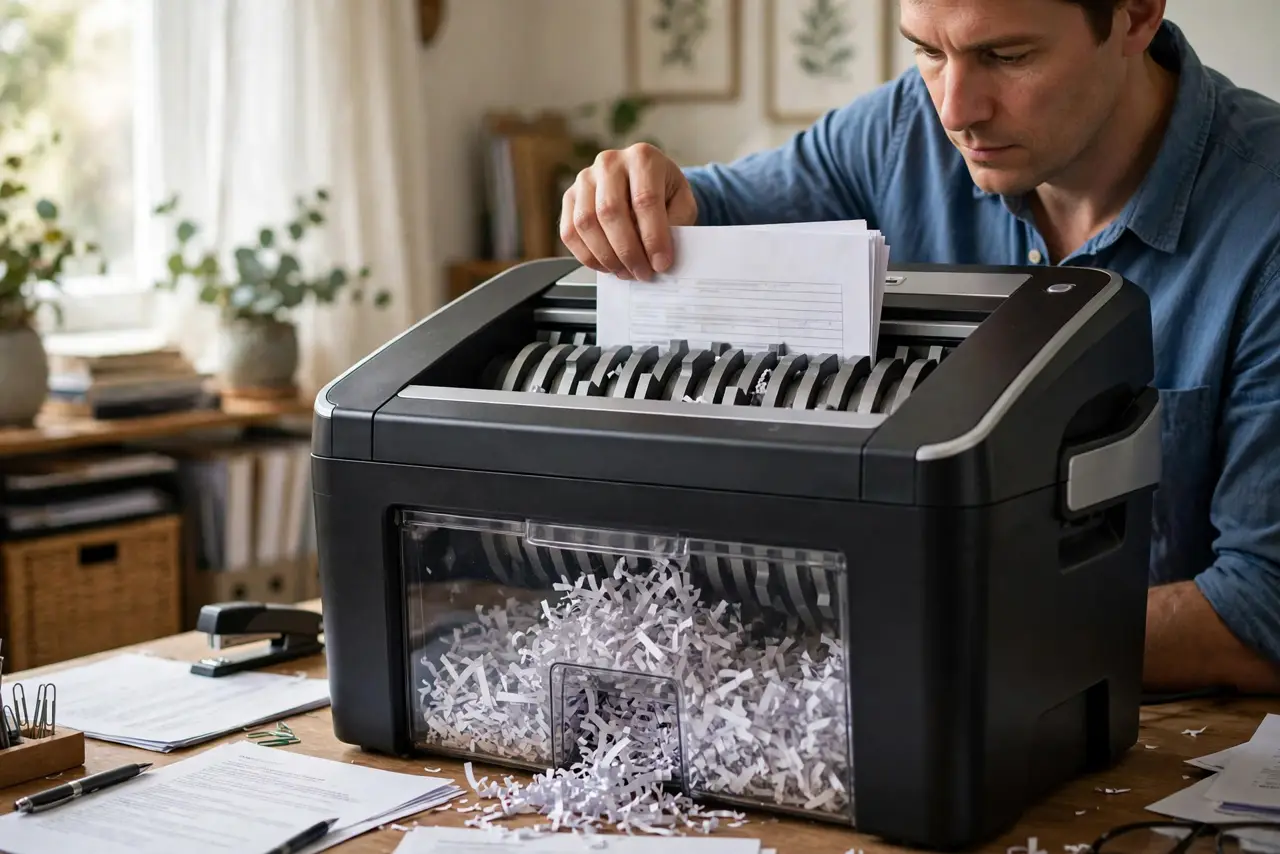
You are buying a shredder to kill junk mail and old statements, and the choice is crosscut or strip-cut. One turns paper into confetti that is genuinely hard to reassemble; the other makes ribbons a patient thief can tape back together. For identity protection, the choice matters.
TL;DR / Quick Fix
Quick fix: buy a crosscut shredder — it cuts paper into confetti that cannot practically be reassembled, while strip-cut makes ribbons that can be. Look for a P-3 or P-4 security rating. Shred bank statements, tax forms, and anything with account numbers.
Follow these steps
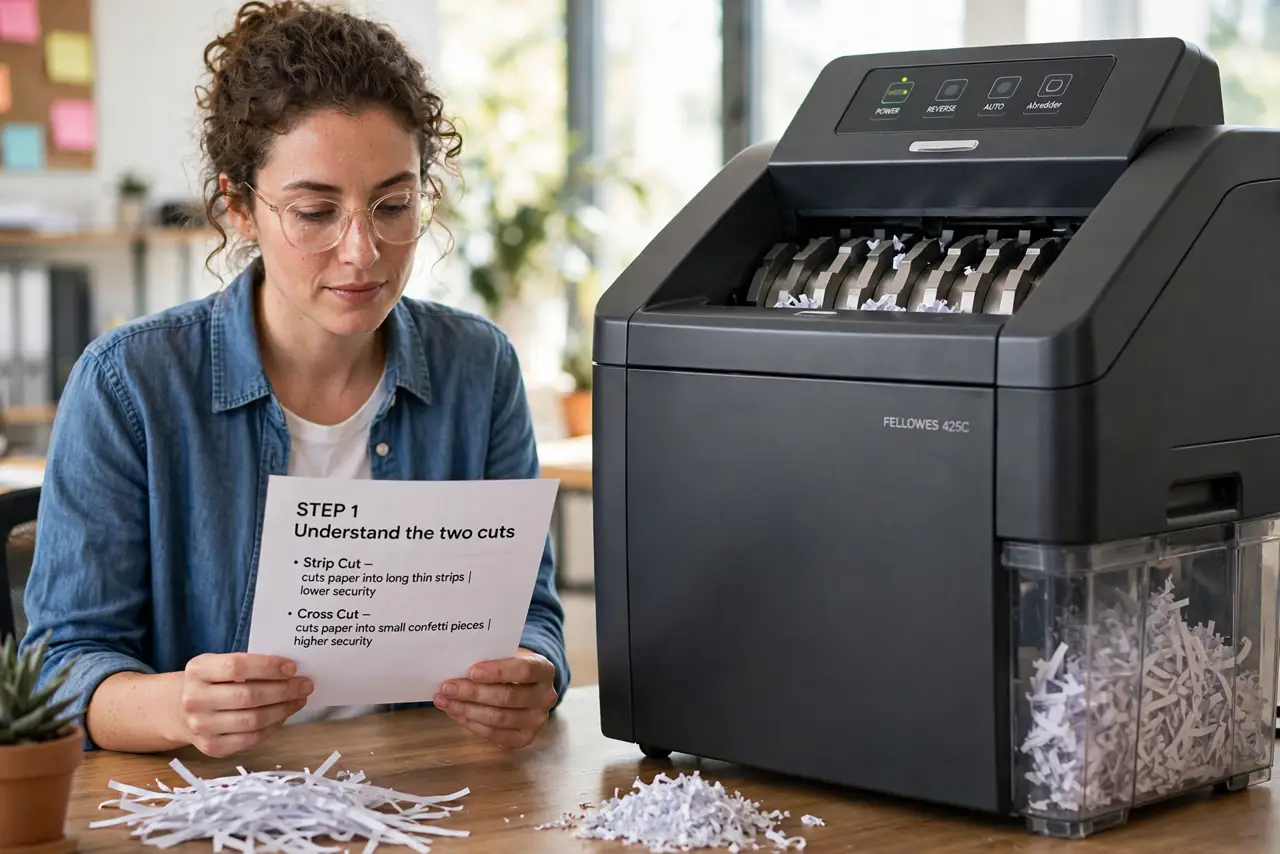
- Understand the two cuts. Strip-cut makes long ribbons; crosscut makes small particles. Ribbons can be reassembled by hand — particles practically cannot.
- Choose crosscut, P-3 or higher. Security ratings run P-1 to P-7. P-3 or P-4 crosscut is the sweet spot for home identity protection — see what to shred.
- Check the sheet capacity. A shredder rated for 8–10 sheets handles real mail piles. Underpowered shredders jam, overheat, and get abandoned.
- Shred the right things. Bank and tax documents, medical forms, pre-approved credit offers, anything with account numbers or your full Social Security number.
- Do not shred what you need. Keep tax returns and major receipts — shred the supporting junk, not the records. When in doubt, scan first, then shred.
- Maintain it lightly. Oil the cutters occasionally with shredder oil sheets and empty the bin before it packs solid. Ten minutes of care doubles its life.
What NOT to do
- Do not buy strip-cut for sensitive documents. Ribbons are reassemblable — that defeats the purpose.
- Do not shred your only copy of anything. Scan important documents before they go in.
- Do not force too many sheets. Jams are the number one shredder killer — respect the rating.
- Do not forget digital equivalents. Shredding paper while leaving statements in an unprotected inbox is half a job — pair with a credit freeze.
Frequently asked questions
What do the P ratings mean?
Paper shred security levels, P-1 (basic) to P-7 (maximum). P-3/P-4 suits home use.
Can I shred credit cards?
Many crosscut shredders handle one card at a time — check the manual. Cut through the chip.
How often should I oil it?
Every 30 minutes of use, or monthly for light users. Oil sheets make it trivial.