Smart Smoke Detectors Explained
Your smoke alarm chirps at 3 AM, and you cannot tell if it is a dying battery, dust, or the unit's ten-year expiration screaming for retirement. Smart smoke detectors replace the mystery with phone alerts, self-tests, and hush-from-the-app — plus they tell you which room is alarming when you are not home.
TL;DR / Quick Fix
Quick fix: replace aging alarms with smart smoke detectors that send phone alerts when you are away and hush false alarms from the app instead of a broom handle. Interconnect them so one alarm triggers all. Test monthly with the test button and replace units every ten years.
Follow these steps
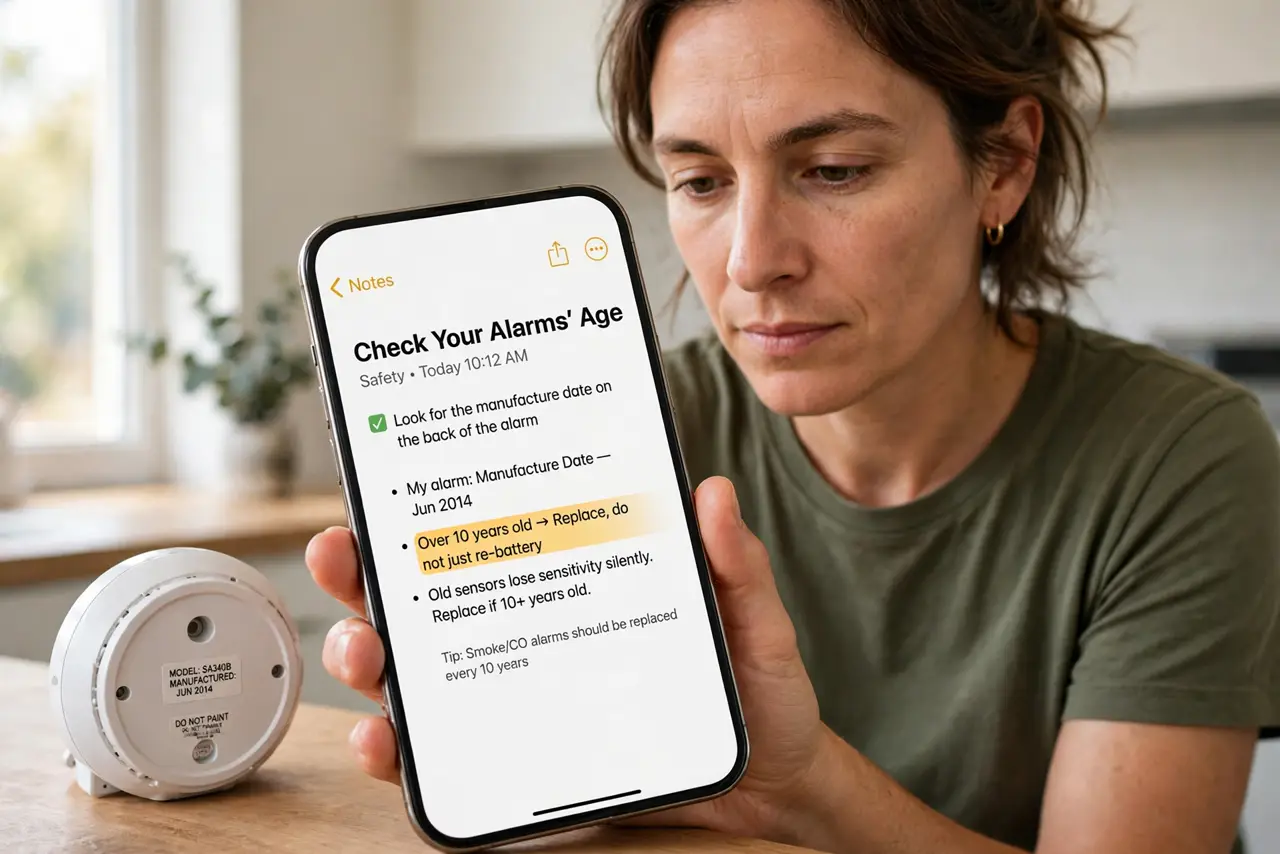
- Check your current alarms' age. Look for the manufacture date on the back — over ten years old means replace, not re-battery. Old sensors lose sensitivity silently.
- Choose interconnected units. Smart detectors link wirelessly so one alarm sounds them all. A fire in the basement should wake the upstairs — interconnection is the safety feature that matters most.
- Install one per level and bedroom. Hallway outside bedrooms, each floor, and the kitchen area (a bit away from the stove). Follow local code — it exists because it saves lives.
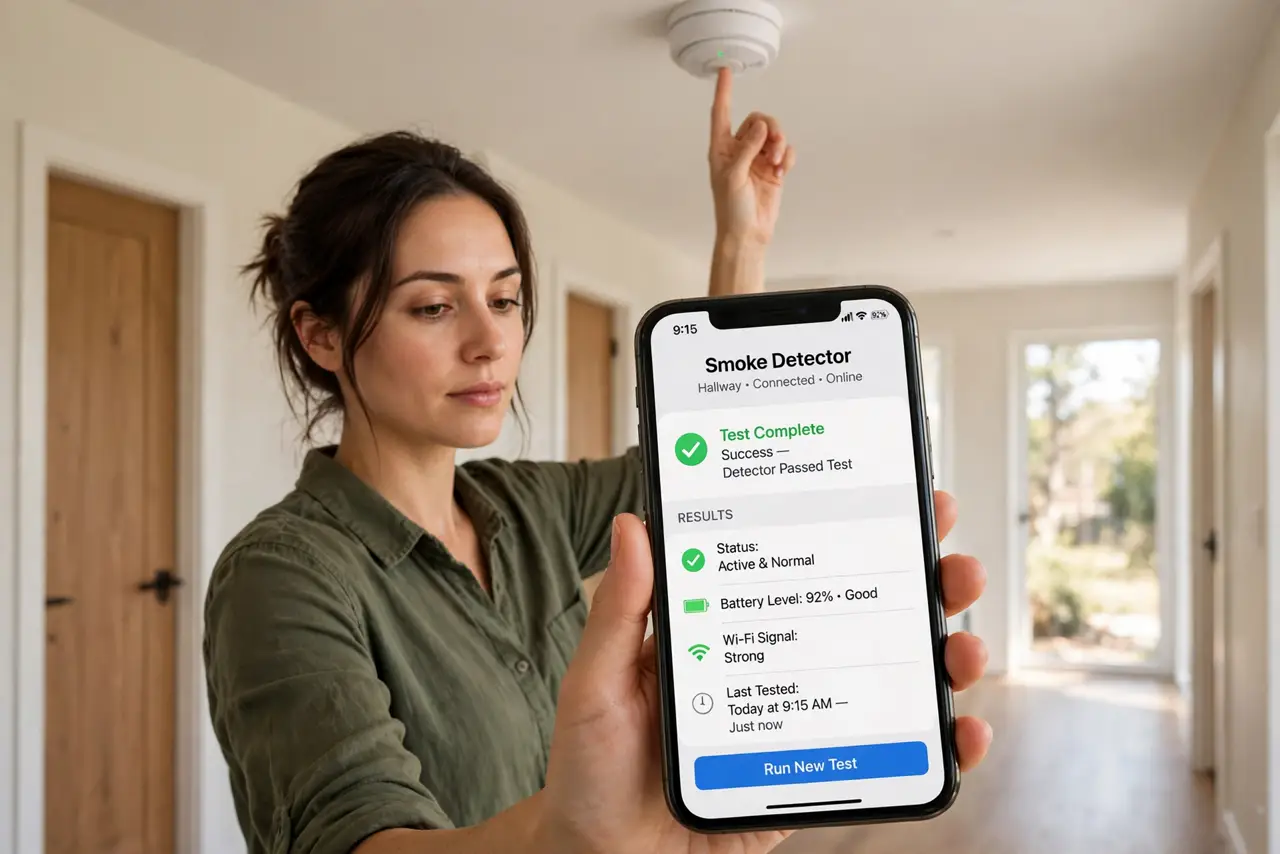
- Connect to Wi-Fi and the app. Pair each detector and confirm phone alerts work. Test by pressing the test button — your phone should notify within seconds, even on mobile data.
- Use app-hush for false alarms. Burnt toast? Hush from the app instead of yanking the battery — which people forget to replace. Never disable a detector over cooking.
- Pair with leak detection. While you are placing safety sensors, add water leak detectors under sinks and the washer — one safety afternoon covers both.
What NOT to do
- Do not ignore the 3 AM chirp. It means low battery or end-of-life — replace the battery or the unit that day, not 'this weekend.'
- Do not paint over detectors. Paint clogs the sensor chamber and can silence the alarm permanently.
- Do not install only ionization or only photoelectric everywhere. Kitchens want photoelectric (fewer false alarms); bedrooms benefit from both — many smart units combine them.
- Do not remove batteries to stop false alarms. A disabled detector protects no one — fix the cause (usually placement near the kitchen) instead.
Frequently asked questions
Why does my alarm chirp with a new battery?
The unit itself is likely past its ten-year life — chirping with fresh batteries is the end-of-life signal. Replace the whole unit.
Do smart detectors work in a power outage?
Yes — they run on batteries with Wi-Fi alerts queued until connection returns. The local alarm always sounds regardless.
Can I mix smart and dumb detectors?
They will not interconnect with each other. For whole-house alerting, make them all the same smart system.