Spot Lottery Scams
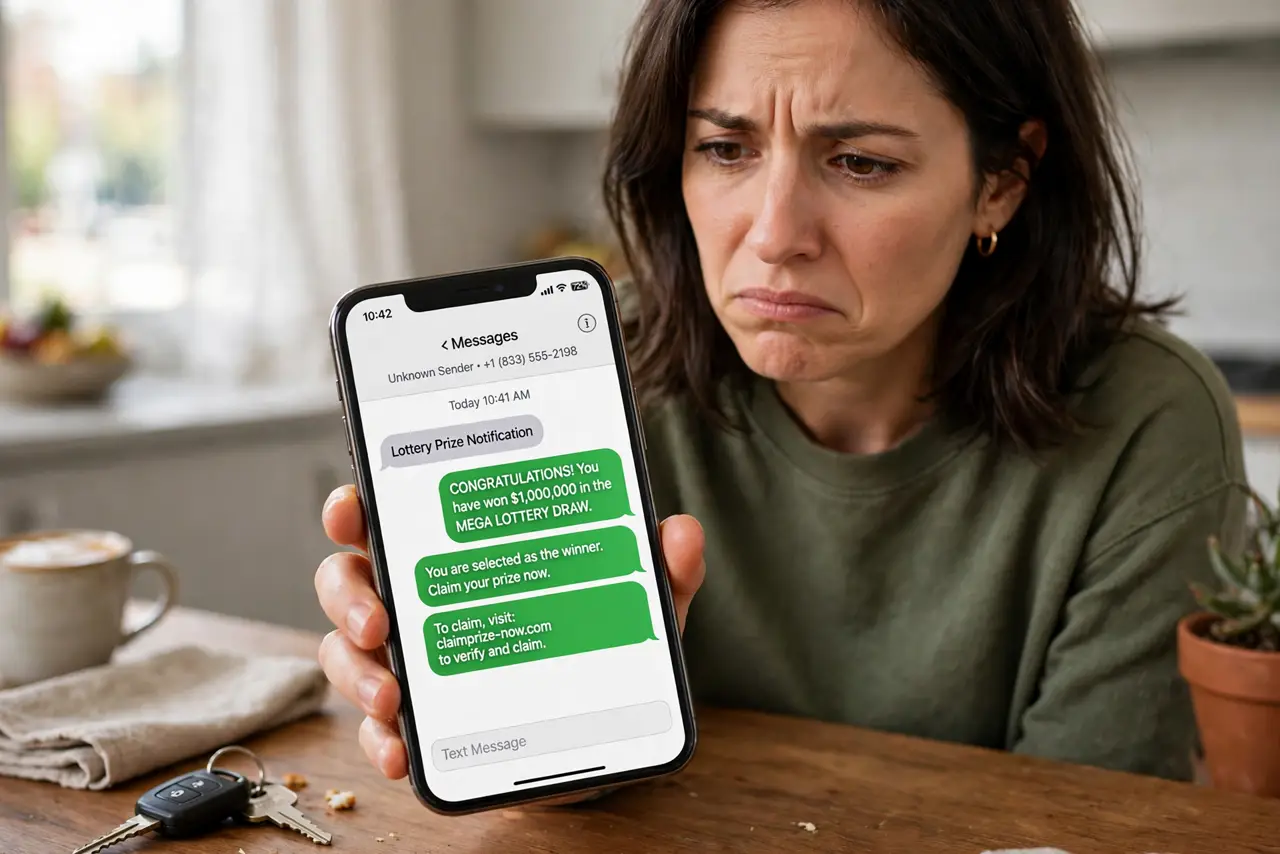
You won a lottery — except you never bought a ticket. The email, text, or call says a fortune is waiting, and all you need to do is pay a small fee to release it. This is one of the oldest scams still running, because hope is a powerful drug. Real lotteries do not notify winners they have never heard of, and they never ask for fees upfront. The shape is the same as every advance-fee con.
TL;DR / Quick Fix
Quick fix: you cannot win a lottery you never entered — that single fact kills every version of this scam. Real winnings never require upfront fees, gift cards, or wire transfers to release. Delete the message, do not reply, and never send money or personal details to claim a prize.
Follow these steps
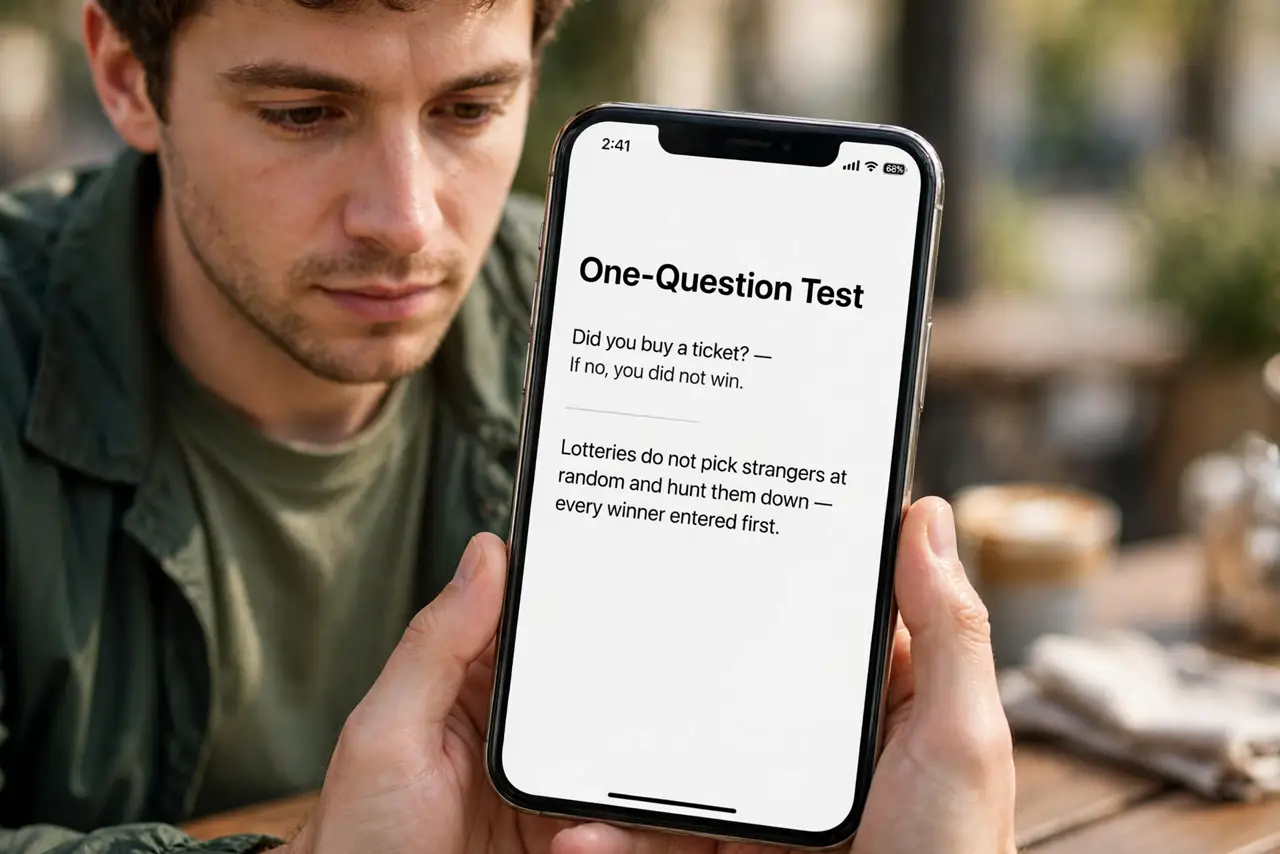
- Apply the one-question test. Did you buy a ticket? If no, you did not win. Lotteries do not pick strangers at random and hunt them down — every winner entered first.
- Recognize the fee trap. The scam always needs a payment from you: processing fees, taxes, transfer charges. Real winnings deduct costs from the prize; they never ask the winner to pay first.
- Spot the contact red flags. Official lotteries do not notify winners by random text, social media DM, or calls from unknown numbers. Vague organization names and free email addresses are giveaways.
- Never send money or details. No fees, no gift cards, no wire transfers, no bank details to claim. Any request for money or sensitive information to release winnings is the scam revealing itself.
- Check independently. If a message names a real lottery, look up that lottery's official site yourself and check their winner process. You will find they never operate this way — the message was lying about them.
- Delete and do not engage. Do not reply, do not click links, do not call back. Engagement confirms your number is live and invites more attempts — silence is the best response.
What NOT to do
- Do not pay any fee to release winnings. Taxes, processing, transfer charges — every upfront fee is the actual theft.
- Do not believe it because the message looks official. Logos and letterheads are trivial to fake; the fee request is the tell.
- Do not keep it secret out of hope. Tell someone — saying it out loud usually exposes how impossible it sounds.
- Do not click links in the message. They lead to fake claim sites designed to harvest your details.
Frequently asked questions
What if the message names a real lottery?
Scammers borrow real names for credibility. Contact that lottery through its official site — not through the message — and you will confirm they never notify winners this way.
I already paid a fee. What now?
Stop immediately and do not pay more — the fees never end. Report to local authorities and your bank; recovery of fees is unlikely but reporting helps.
Can a real lottery ever ask for money?
Legitimate lotteries deduct taxes and fees from winnings. They never ask winners to wire money or buy gift cards to claim a prize.