Spot Toll Scams
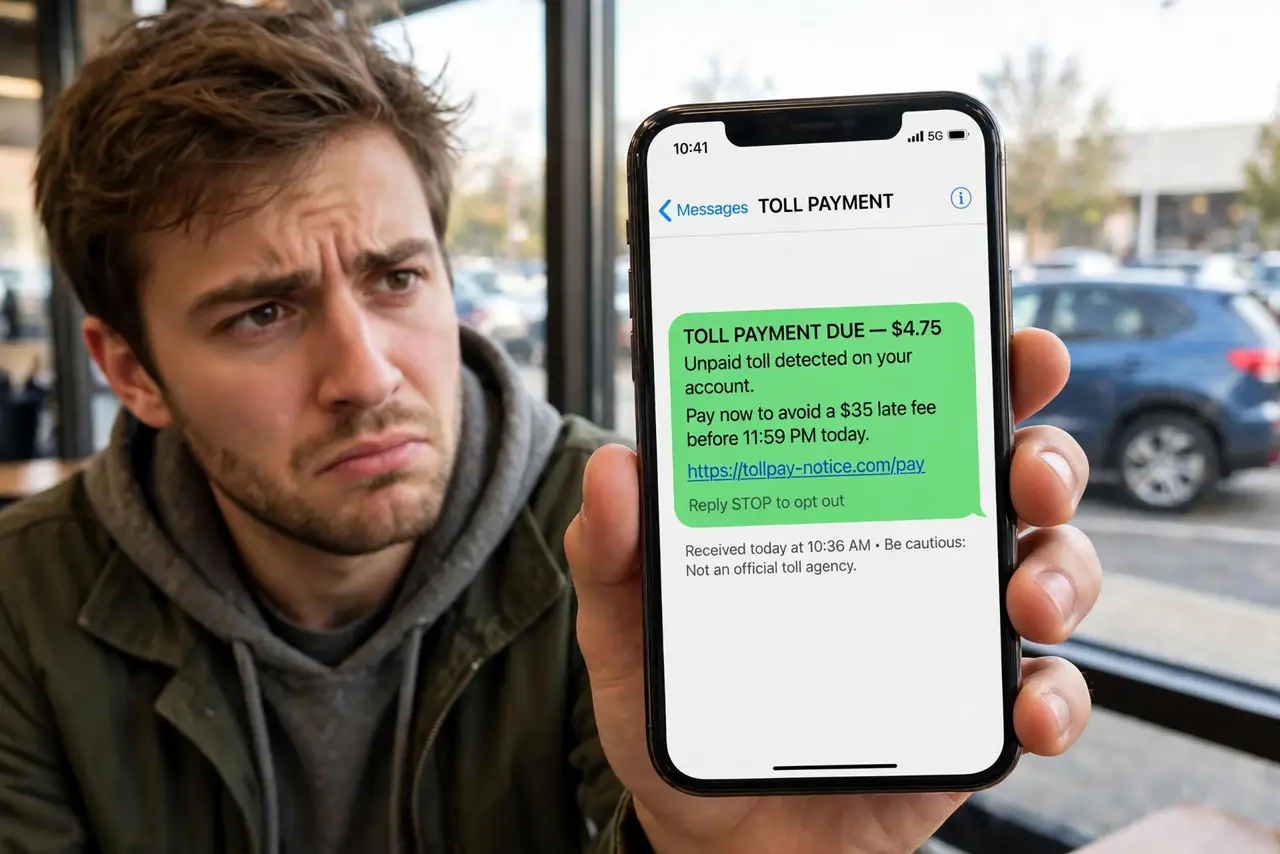
You owe a toll. Pay now or face fines. The text names no road you drove, links to a sketchy site, and demands card details — because it is the toll-road cousin of the package delivery scam, blasted to millions of numbers hoping a few bite. Real toll agencies do not collect this way. This guide shows the tells and the safe way to check a real toll balance. For the sibling scam, learn to spot package scams.
TL;DR / Quick Fix
Quick fix: toll agencies do not demand payment by surprise text with a link. Do not click — check your balance by typing the agency's official website yourself or opening their app. Delete and report the text to 7726. If you paid, call your bank immediately.
Follow these steps
- Recognize the pattern. Vague agency name, no license plate or road named, urgent fine threat, link to a non-official domain. Real toll bills reference your plate and the specific road — scammers cannot, because they text everyone.
- Do not click the link. The link leads to a phishing page built to harvest card details. No legitimate toll payment happens through a link in an unexpected text.
- Check your real balance directly. Type your toll agency's official website yourself or open their app and log in. If you truly owe something, it will be there with your plate number attached.
- Report the text. Forward it to 7726 (SPAM). Toll agencies actively collect these reports — the campaigns get shut down faster when people report.
- Warn family members. Older relatives pay these out of fear of fines. A two-minute conversation — real tolls never work this way — saves them real money.
- Act fast if you paid. Call your card issuer to dispute the charge and reissue the card. Watch for follow-up scams: paying once marks you as a willing target.
What NOT to do
- Do not pay to avoid a 'fine' from a text. The urgency is manufactured — real agencies send proper bills with plate details.
- Do not trust the text because it knew your state. Blasting every number in an area code is cheap; local knowledge proves nothing.
- Do not call the number in the message. It connects to the scammers, not the toll agency.
- Do not ignore it silently if family might get the same text. One forwarded warning protects the whole group chat.
Frequently asked questions
I do use toll roads — could it be real?
Check the official site or app directly. A real balance shows your plate and trips; the text alone proves nothing either way.
Why do they threaten fines?
Fear short-circuits judgment. The fine threat is there to make you pay before thinking — which is exactly why you should pause.
Can they get my info just from my reply?
Replying confirms your number is active, inviting more scams. Best practice: do not reply, just report and delete.