Try the Two-Minute Rule
Small tasks pile up because each one feels too minor to schedule — reply to that text, file that receipt, water that plant. The Two-Minute Rule says: if it takes less than two minutes, do it now instead of writing it down. It sounds trivial, but it is the highest-leverage habit in personal productivity. Here is how to use it without it eating your whole day.
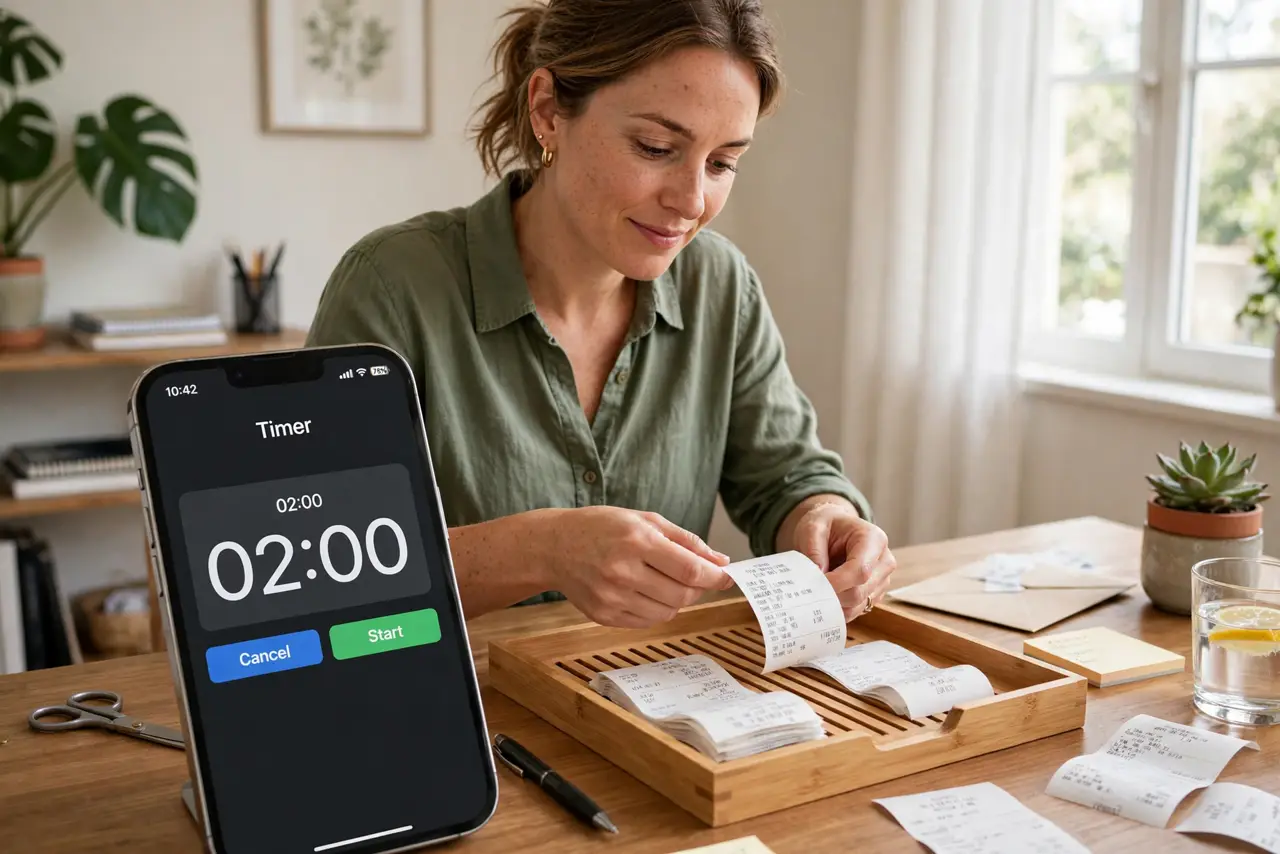
TL;DR / Quick Fix
Quick fix: when a new task appears, ask if it takes under two minutes — if yes, do it now instead of listing it. Batch quick tasks into set windows, like after lunch, so they do not fragment deep work. If everything feels urgent, your real problem is triage.
Follow these steps
- Learn the actual rule. If a task takes less than two minutes, do it immediately rather than capturing it. The overhead of tracking a tiny task exceeds the cost of just doing it.
- Apply it at capture time. When the thought arrives — during email, after a call, walking past the mess — decide on the spot. Two minutes or less: do it. More: write it down properly and move on.
- Batch it to protect focus. Do not let two-minute tasks interrupt deep work all morning. Collect them mentally and run a batch after lunch or between meetings — the rule still applies, just on your schedule.
- Watch for rule creep. If just two minutes stretches to twenty, you misjudged. Stop, put it on the real list, and return to what you were doing. The pile-up pattern starts exactly here.
- Pair it with a real system. The rule handles the small stuff; bigger tasks still need a list or calendar. Two minutes clears the underbrush so your system can handle the trees.
- Teach it to your household. Shared spaces stay clean when everyone does their two-minute tasks on sight. One person practicing it alone just becomes the household's unpaid task-doer.
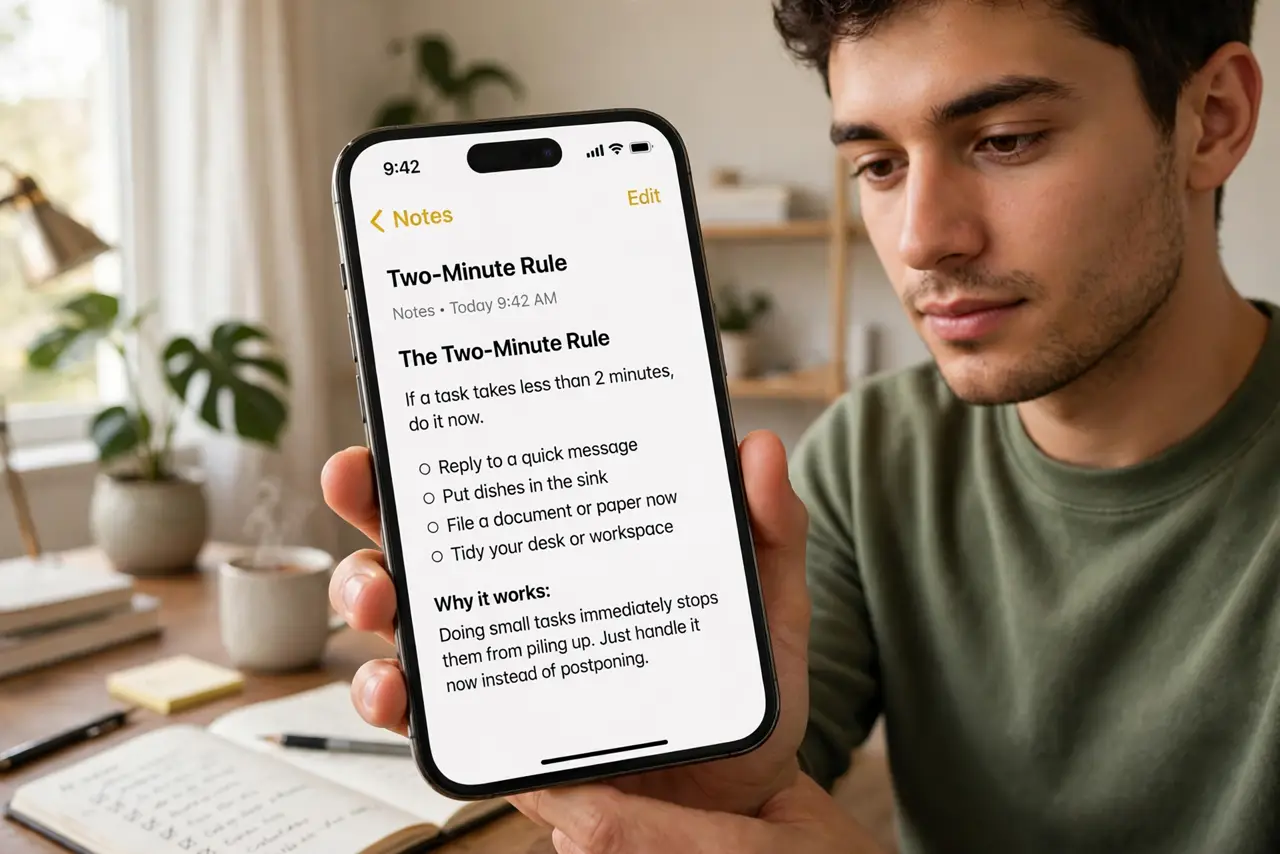
What NOT to do
- Do not use the rule during deep work. Interrupting focus for a two-minute task still costs far more than two minutes.
- Do not let the rule become procrastination. Doing tiny tasks to avoid a big scary one is productive-looking avoidance.
- Do not time yourself obsessively. Two minutes is a feel, not a stopwatch event — estimating is the whole point.
- Do not apply it to other people's tasks. Their two-minute favor becomes your open-ended commitment.
Frequently asked questions
What counts as a two-minute task?
Replying to a short message, filing a document, starting the dishwasher, deleting obvious spam. If you have to think about whether it fits, it probably does not.
Does the Two-Minute Rule really work?
For clearing small-task backlog, yes — dramatically. It fails only when people use it to dodge important work or apply it during focused time.
What if I have fifty two-minute tasks?
Then batch them into a dedicated hour. Fifty times two minutes is nearly two hours — at that scale it is a project, and it deserves a scheduled block.