USB or XLR Mic?
Starting a podcast and the first rabbit hole is the microphone: USB or XLR? The honest answer is boring — USB for simplicity, XLR for the upgrade path. Most beginners should buy USB and spend the savings on the room, not the gear. See the quiet mic fix and whether you need a pop filter.
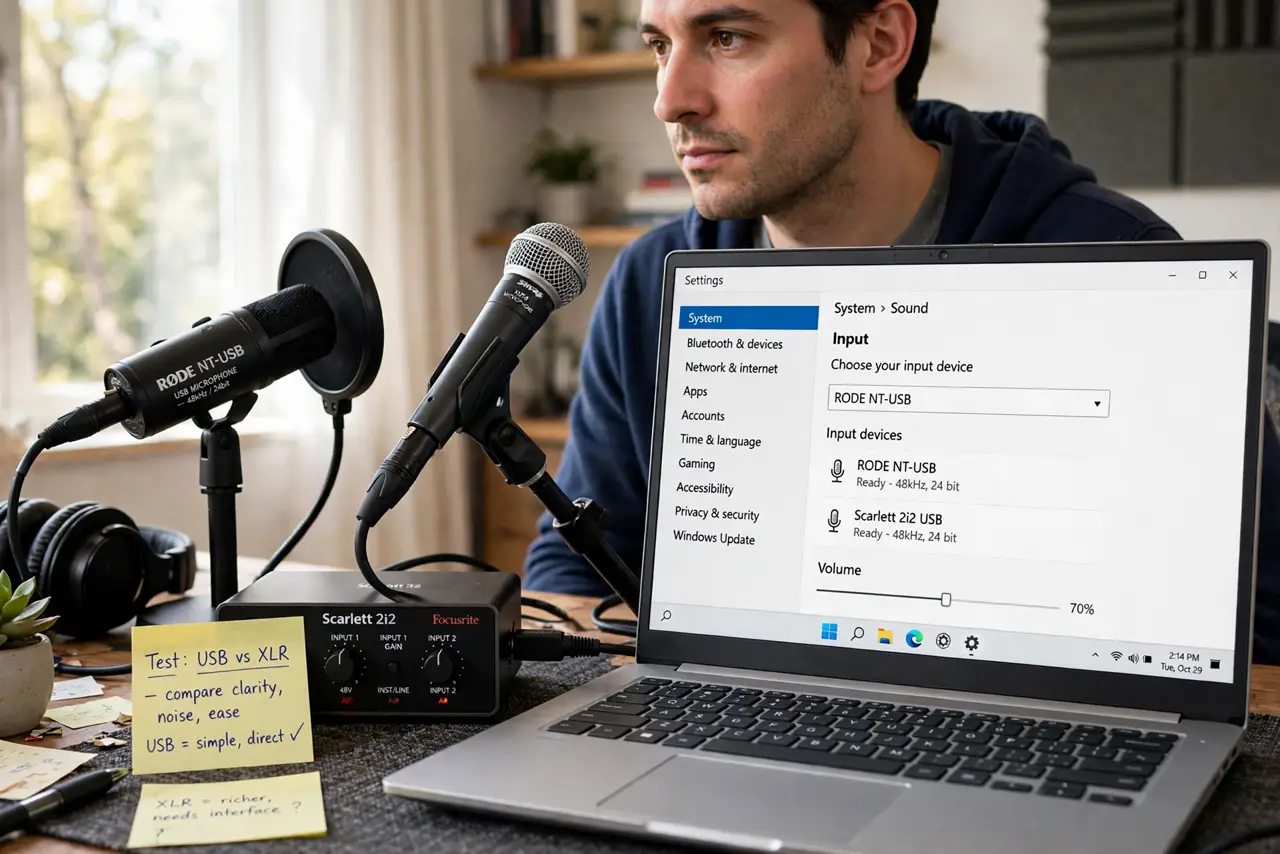
TL;DR / Quick Fix
Quick fix: buy a USB mic if you want simple plug-and-play recording — one cable and you are live. Choose XLR only if you already own (or plan to buy) an audio interface and want the upgrade path. For first podcasts and calls, USB wins on simplicity every time.
Follow these steps
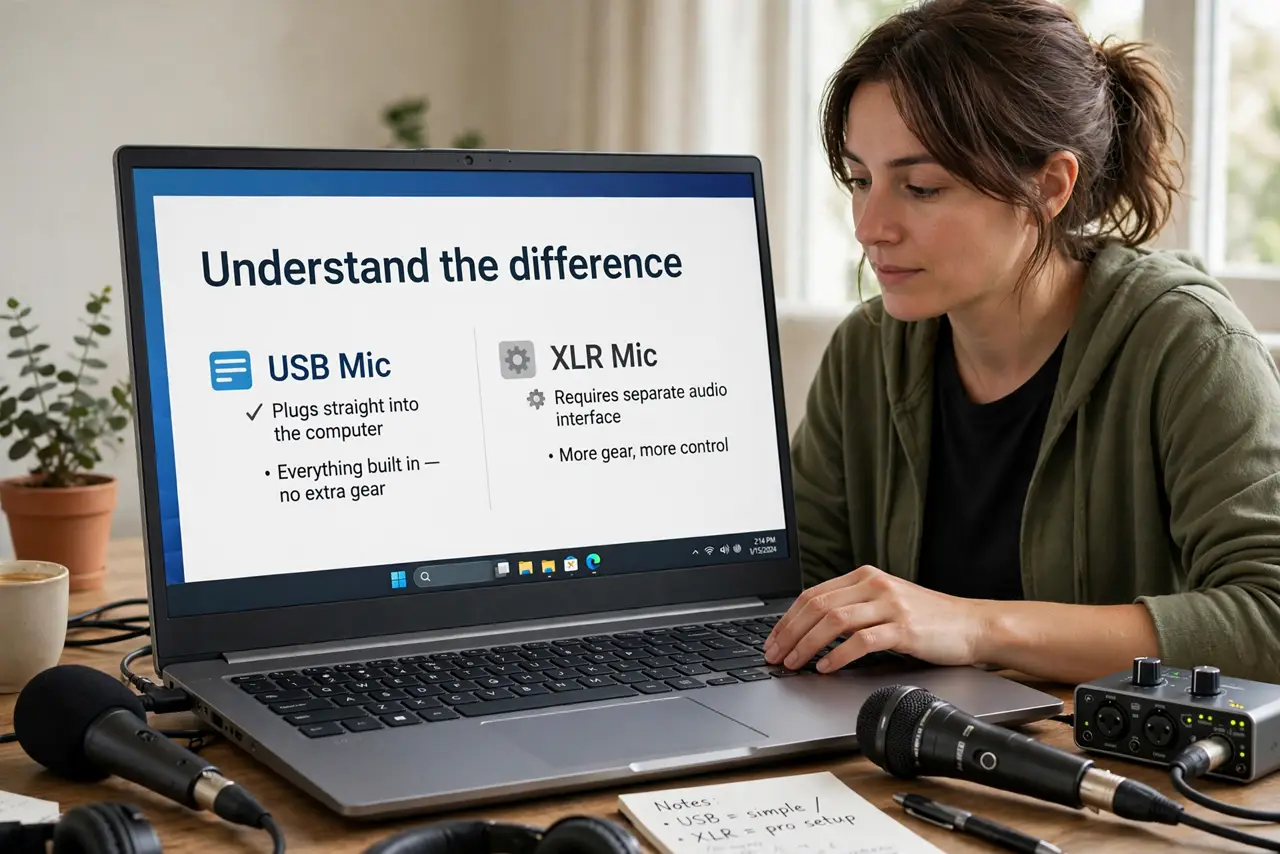
- Understand the difference. USB mics plug straight into the computer with everything built in. XLR mics need a separate audio interface — more gear, more control.
- Start with USB. One cable, no interface, recording in minutes. For podcasts, calls, and streaming, a good USB mic is genuinely enough.
- Consider XLR for the future. XLR plus an interface gives cleaner gain, more mic choices, and room to grow. It is the enthusiast path, not the beginner requirement.
- Budget the whole chain. XLR means mic plus interface plus cables plus stand. USB means mic plus stand. Compare total costs, not just the mic price.
- Treat the room first. A quiet, soft room improves any mic more than upgrading the mic. Blankets and closets beat expensive capsules.
- Test before committing. Borrow or try both if you can. The mic that sounds good in your room on your voice is the right one.
What NOT to do
- Do not buy XLR as a beginner flex. The interface learning curve delays your first episode by weeks.
- Do not neglect the room. An expensive mic in an echoey room sounds worse than a cheap mic in a closet.
- Do not forget the accessories. Stand, cable, and pop filter are not optional — budget them from the start.
- Do not chase the perfect mic. Recording consistently with a good mic beats waiting for the ideal one.
Frequently asked questions
Can I upgrade from USB to XLR later?
Yes — many podcasters start USB and switch when the hobby sticks. Nothing is wasted; the USB mic becomes the travel mic.
Do I need an interface for USB?
No. That is the point — the interface is built into the mic. Plug in and record.
Which sounds better?
A good USB mic beats a bad XLR chain. Quality within each category matters more than the category itself.