'Your IP Is Exposed' Ads? The Truth
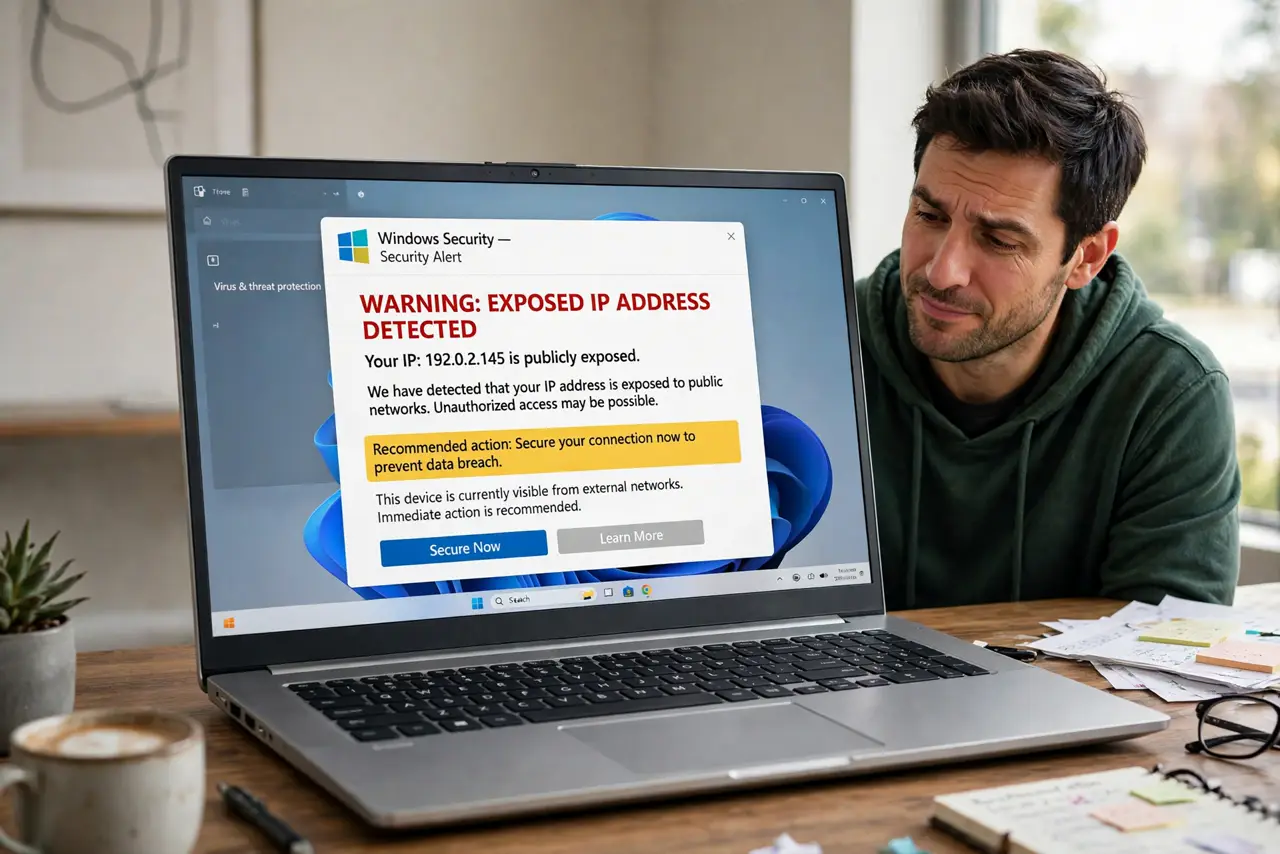
Ads screaming 'YOUR IP IS EXPOSED!' want you scared enough to buy something — usually a VPN you may not need. The truth is calmer: your IP address is visible by design, it reveals far less than the ad claims, and 'exposed' is not a meaningful danger by itself. This guide gives you the facts behind the fear.
TL;DR / Quick Fix
Quick fix: ignore 'your IP is exposed' ads — they are marketing, not warnings. Your IP address is supposed to be visible; every website you visit sees it. Learn what an IP actually reveals, and only consider a VPN for specific reasons like public Wi-Fi.
Follow these steps
- Recognize the ad's job. The ad is not a security alert — it is a sales pitch. 'Exposed' sounds dangerous, but your IP is exposed to every site you visit by design.
- Understand what sites always see. Every website you open sees your IP address; that is how the internet routes replies back to you. It is normal, not a breach.
- Learn what an IP actually reveals. Roughly your city and your internet provider — not your name, address, or identity. The full details are far less dramatic than the ads suggest.
- Do not buy from fear. If you want a VPN, research calmly and choose a reputable one for a real reason — public Wi-Fi safety or regional content — not because a countdown timer scared you.
- Check the advertiser's claims. Ads that claim hackers 'have' your IP are nonsense: millions of websites 'have' your IP right now, including this one.
- Treat it like any scare popup. Same playbook as fake infection warnings: urgency, fear, a product. Close it and move on.
What NOT to do
- Do not install a VPN from a scare ad. Rushed installs from alarming ads are how people end up with shady VPNs that log everything.
- Do not believe 'hackers are watching you right now.' Your IP alone gives an attacker almost nothing to work with — the ad is inventing the danger.
- Do not pay for 'IP protection' popups. Legitimate VPNs do not advertise by terrifying you about your normal, visible IP address.
- Do not confuse your public IP with a leak. Seeing your own IP displayed is not a leak — it is just a website reading what you always send it.
Frequently asked questions
Is my IP address really exposed?
Yes — and that is normal. Every website, game server, and video call sees it. 'Exposed' in these ads just means 'visible,' which is how the internet works.
Can someone hack me with just my IP?
Practically no. An IP alone reveals your rough location and provider; turning that into an actual attack requires far more.
Do I need a VPN then?
Only for specific reasons: untrusted public Wi-Fi, work requirements, or accessing regional content. Fear of your visible IP is not one.
What to read next
- What Does Your IP Reveal? Less Than Ads Say
- 'Your Computer Is Infected' in the Browser? Fake