What Do 80 Plus Ratings Mean?
Power supply boxes wear medals — Bronze, Silver, Gold, Platinum, Titanium — and the marketing implies each step is a big leap. 80 Plus is simply an efficiency certification: how much wall power becomes PC power instead of heat. The tiers are real, but the practical difference between them is smaller than the shiny labels suggest. Here is what you are actually paying for.
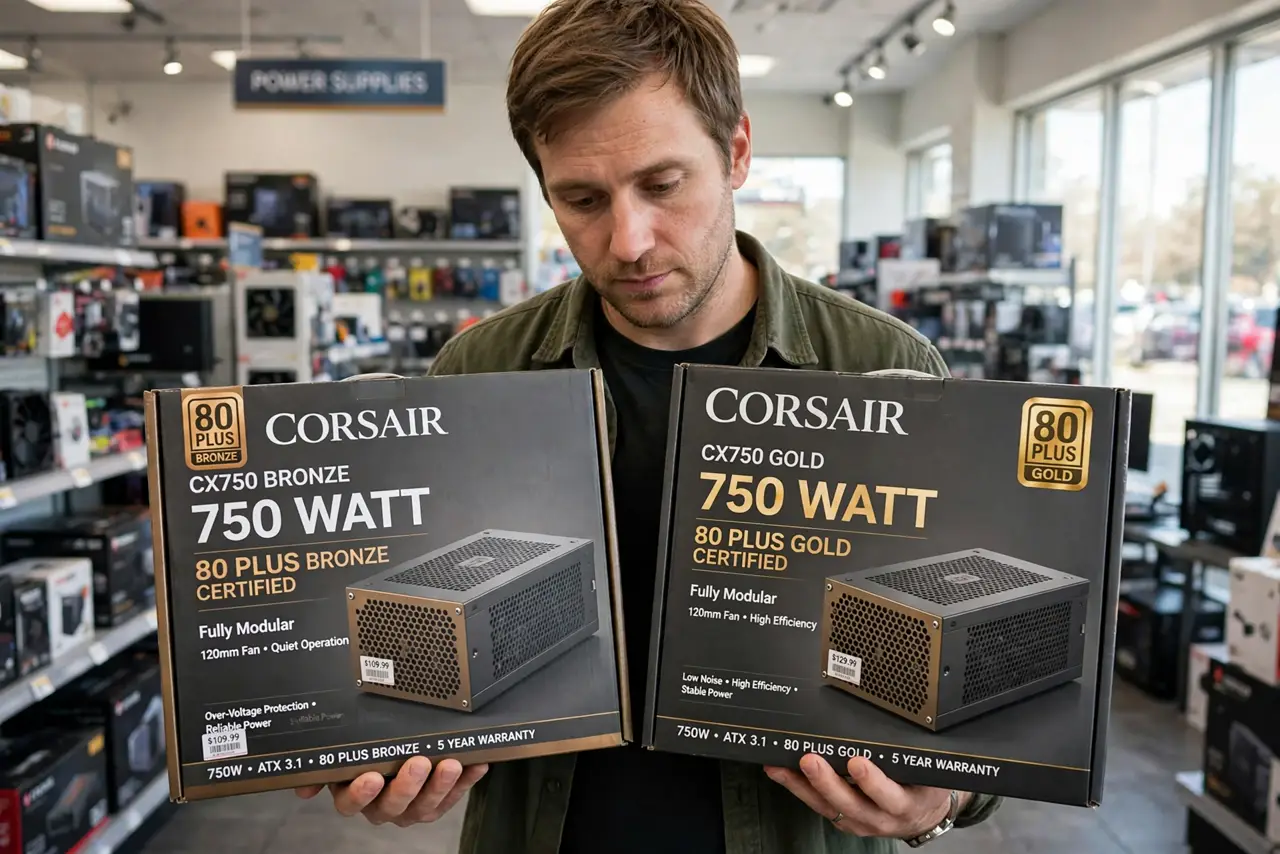
TL;DR / Quick Fix
Quick fix: 80 Plus certifies efficiency — a Bronze PSU wastes more power as heat than a Gold one. For most builds, Bronze or Gold from a good brand is the sweet spot. Higher tiers save a few dollars on electricity; they matter most for PCs that run all day.
Follow these steps
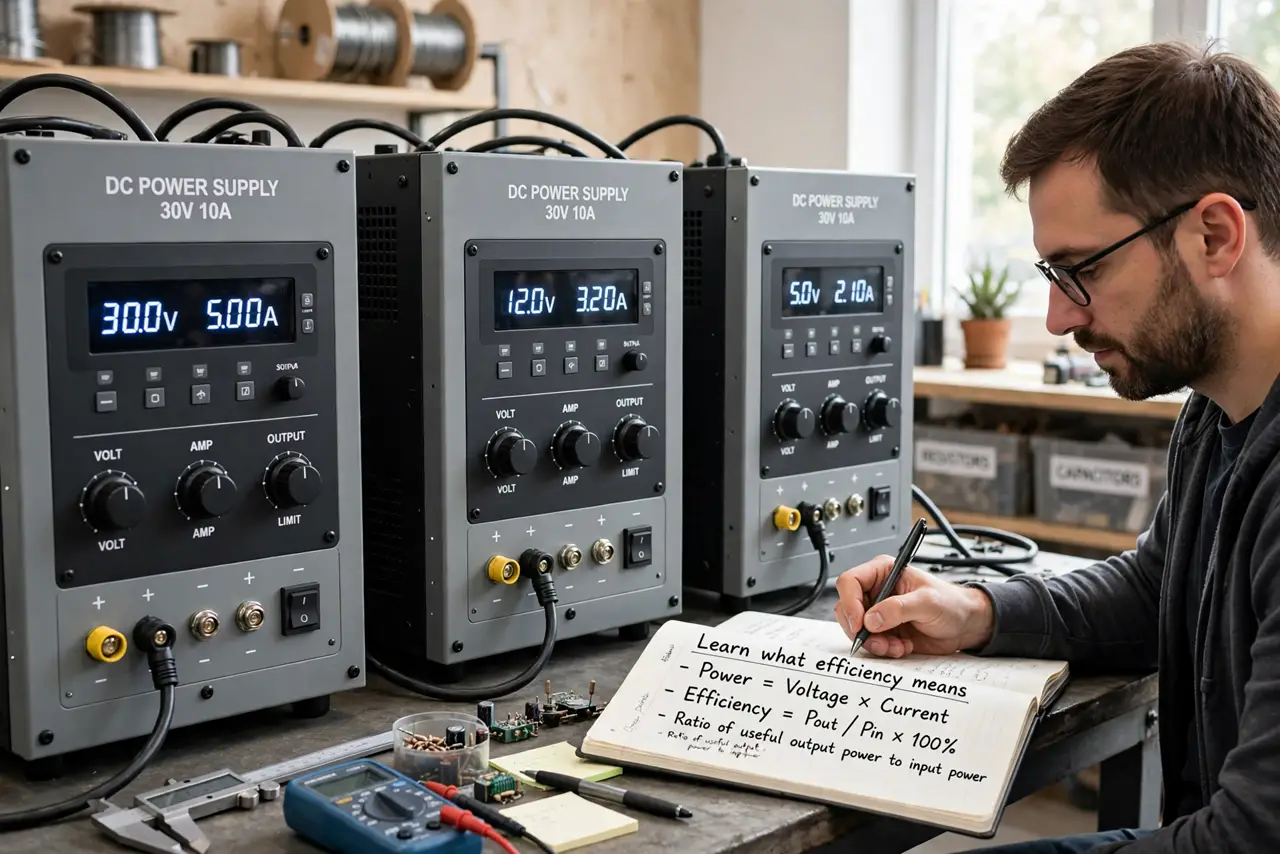
- Learn what efficiency means. A PSU converts wall power to PC power, losing some as heat. 80 Plus certifies that at least 80% becomes useful power under standard loads — the rest warms your room. Higher tiers waste less.
- Know the tier order. Standard, Bronze, Silver, Gold, Platinum, Titanium — each step demands higher efficiency. Bronze is the honest baseline; Gold is the enthusiast sweet spot; Titanium is for servers and silence fanatics.
- Do the electricity math. The gap between Bronze and Gold on a typical gaming PC is a few dollars a year. If the Gold unit costs much more, the payback takes longer than the PSU's warranty — buy the tier that pays for itself.
- Treat it as a quality signal. Chasing certification costs money, so certified units tend to be honestly engineered. An 80 Plus badge does not guarantee greatness, but its absence on a cheap unit is a warning.
- Match the tier to the workload. A PC running eight hours a day benefits more from Gold than a PC used twice a week. Servers and mining rigs justify Platinum; casual desktops do not.
- Do not buy the tier instead of the brand. A Gold unit from a dubious brand can still be worse than a Bronze from a trusted one. Certification measures efficiency, not build quality — check reviews for the rest.
What NOT to do
- Do not pay double for Titanium in a casual PC. The electricity savings will never repay the premium at a few hours a day.
- Do not assume Gold means reliable. Efficiency and reliability are different tests — a Gold badge says nothing about capacitors or protections.
- Do not trust an 80 Plus badge on a no-name unit blindly. Counterfeit badges exist; verify the model on the official 80 Plus list if the brand is unfamiliar.
- Do not confuse wattage with rating. 80 Plus says how efficiently it delivers power, not how much — a 450W Gold and a 750W Bronze answer different questions.
Frequently asked questions
Is 80 Plus Bronze good enough?
Yes for most builds — it is the honest baseline from reputable brands. Gold is nicer; Bronze is fine.
Does a higher rating mean quieter?
Often, indirectly — less wasted heat means the fan spins slower. But fan quality and design matter more than the badge alone.
What about Cybenetics ratings?
Cybenetics tests efficiency and noise more rigorously than 80 Plus. When a PSU carries both, the Cybenetics report is the more informative read.